

Kamal Rayamajhi/RSS
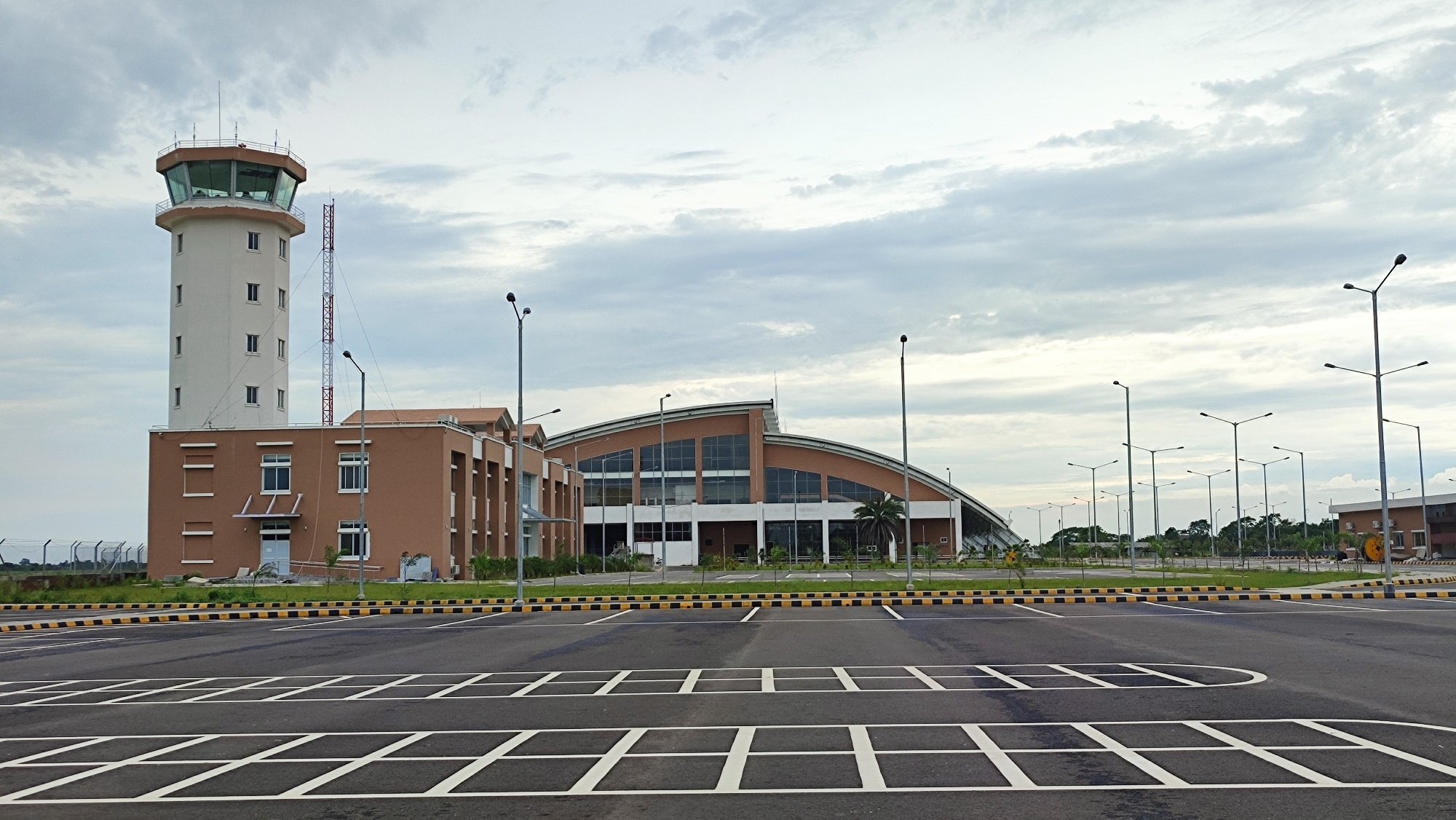
RUPANDEHI: With Nepal and India agreeing to operate the Bhairahawa air route two-way, hope has been revived among tourism and businesspersons in Rupandehi as well as the entire Lumbini Province, amidst the long-awaited plan to expand international flights from Gautam Buddha International Airport.
This agreement made during Prime Minister Balendra Shah’s state visit to India (November 22 and 23) is seen as an important achievement in terms of the full utilization of Gautam Buddha International Airport, promotion of international tourism in Lumbini, and expansion of economic activities in the border areas.
According to the bilateral agreement between Prime Minister Shah and his Indian counterpart Narendra Modi, the currently one-way Kathmandu–Bhairahawa–Lucknow air route will be made two-way. Before this, India had not allowed planes to come into Bhairahawa using this route from India.
The joint statement issued at the conclusion of the state visit mentioned that for this, technical officials from both countries will hold further consultations to finalize the necessary operational procedures and modality.
This pact is expected to make the entry and exit of international flights at Gautam Buddha International Airport smoother.
For Nepal, which has been raising the issue of international air access for over a decade, this agreement is seen as an important step in expanding air connectivity.
Even after the construction of the Gautam Buddha International Airport, the expected number of international flights couldn’t happen, so investments, infrastructure, and business opportunities could not be fully utilized.
The new agreement has increased the possibility of developing the airport as a hub for regular international flights.
Netra Prasad Acharya, president of Siddhartha Chamber of Commerce and Industry, Rupandehi, has called the agreement on air routes reached during the Prime Minister’s visit to India an important achievement for Nepal’s tourism development.
He viewed that since air connectivity is the main foundation of tourism development, it is positive that an environment has been created for easy air travel from India to Bhairahawa.
According to him, after Gautam Buddha International Airport started operating, the local industrialists, business community, tourism operators, and the general public were expecting an expansion of international flights in the area.
But due to the lack of sufficient air connectivity and the availability of only one-way air route, the airport could not operate at the expected pace. Now, he believes that the agreement to make the air route two-way will help increase the airport’s utilization, attract foreign tourists, and make private sector investment more profitable.
Sagar Adhikari, former president of Nepal Association of Travel Agents (NATA), mentioned that if air connections from Bhairahawa to various tourist and religious destinations in India can be expanded, it could bring a big change in Nepal’s tourism sector.
He mentioned that for the development of tourism in Nepal, along with building airports, easy air travel and international connections are necessary, and he emphasized that the process of starting flights from Bhairahawa to destinations in India should be sped up.
According to him, to increase the number of tourists coming to Lumbini, transportation connections with major religious and tourist cities in India should be convenient.
Especially, if Indian destinations under the Buddha Circuit and Nepal’s Lumbini area are connected in a single tourism package, tourists would stay longer, which would boost business activity in hotels, travel, transportation, restaurants, and other tourism businesses.
Tourism entrepreneurs say that Nepal’s Lumbini region can be connected with Buddhist and religious destinations in India such as Lucknow, Varanasi, Sarnath, Kushinagar, Shravasti in Uttar Pradesh, and Bodh Gaya, Nalanda, and Vaishali in Bihar.
“If we can develop easy travel packages that bring religious tourists from cities like Ayodhya and Varanasi to Lumbini, Tilaurakot, Devdah, and Ramgram, both Nepal and India have the potential to benefit from tourism.
Suraj Ghimire, who teaches at Lumbini Buddhist University, said that Lumbini, the birthplace of Gautam Buddha, is not just a pilgrimage site for Buddhists but also an important centre for spreading the message of peace, non-violence, positive thinking, meditation, and human welfare around the world.
He mentioned that millions of people from different countries around the world are eager to visit places associated with Buddha’s life and philosophy, and if easy air connections are established from India, traveling to Lumbini will become more convenient for tourists.
According to him, the Buddhist tourism route connecting Buddha’s birthplace Lumbini, the place where he attained enlightenment Bodh Gaya in India, the site of his first sermon Sarnath, and his final nirvana site Kushinagar is one of the world’s most important Buddhist religious and cultural tourism circuit.
He mentioned that by focusing on Lumbini in Nepal and connecting it with Tilaurakot, Devdaha, and Ramgram in Kapilvastu, a long-term tour package could be developed for tourists interested in knowing more about the Buddhist philosophy, history, and civilization.
Under Nepal’s Buddha Circuit, important destinations include Lumbini, the ancient Kapilvastu’s Tilaurakot, Devdaha, and Ramgram. In Lumbini, there are the Mayadevi Temple, the Ashoka Pillar, the sacred pond of Pushkarini, the international monastery area, and various monasteries and viharas representing Buddhist culture from different countries.
The operation of two-way air routes at Gautam Buddha International Airport is expected to benefit not just tourism, but also industries, trade, hotels, agriculture, construction, transportation, and the service sector.
If the number of foreign tourists increases, it will create jobs in hotels and resorts, and also boost demand for local products, handicrafts, food items, and other services.
The smooth operation of international flights to and from the Bhairahawa International Airport will also help promote international conferences, Buddhist studies, meditation and yoga camps, and religious tourism programmes with the international participation.
There is also a possibility of bringing tourists, especially from Sri Lanka, Thailand, Myanmar, Vietnam, China, Japan, South Korea, and other countries with a majority of Buddhists, to Lumbini via India’s major airports and religious destinations.
Coordination will be needed between international airlines, tourism operators, and the relevant authorities of both countries for turning this possibility into reality.