

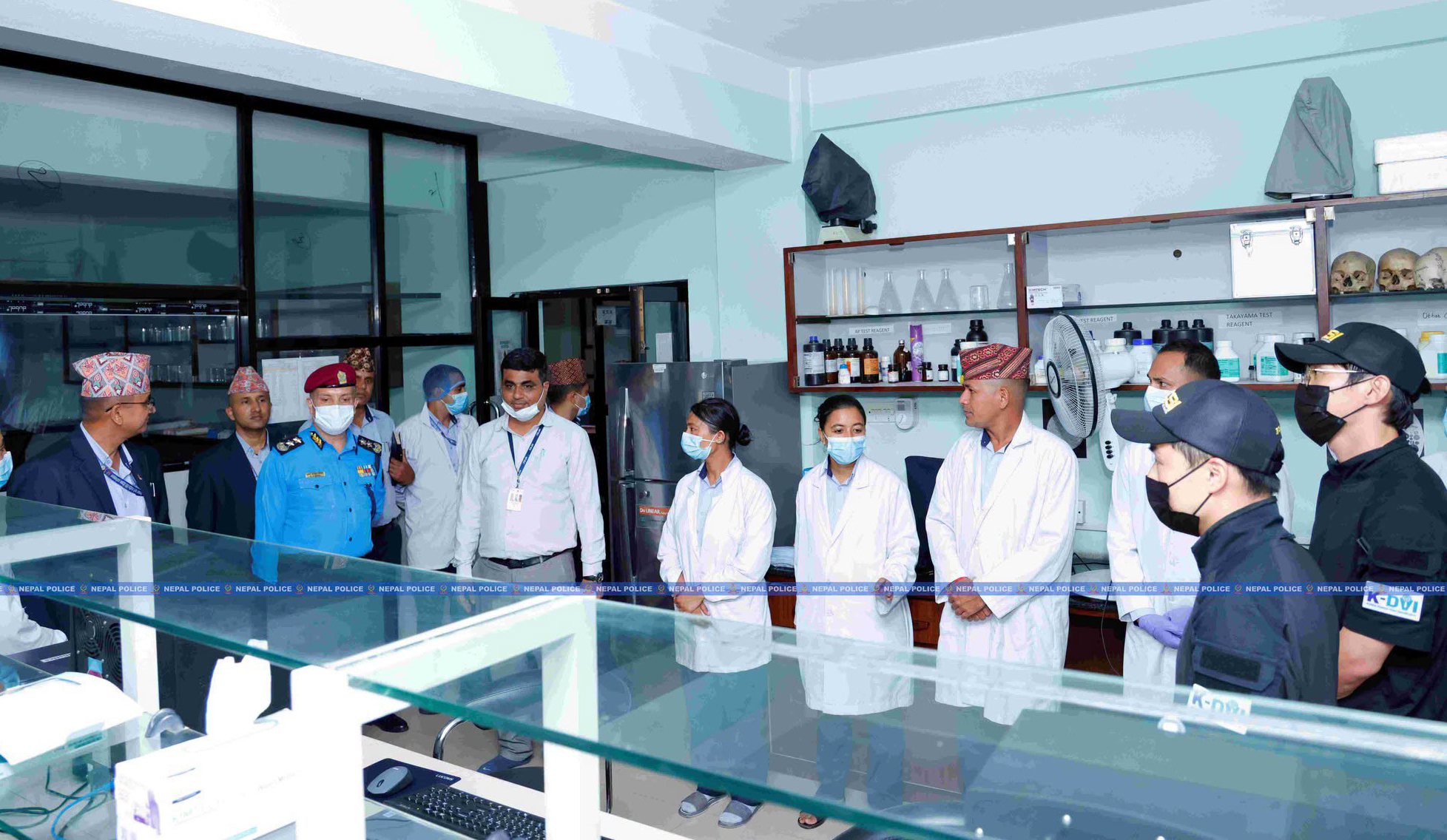
KATHMANDU: The DNA or deoxyribonucleic acid test of samples collected to identify the bodies of those who perished in the Bhote Koshi floods is being carried out in full swing at different forensic laboratories.
Central Police Spokesperson Abinarayan Kafle told RSS that DNA testing is being conducted at the Nepal Police’s Central Forensic Science Laboratory and the laboratory of the Nepal Academy of Science and Technology (NAST) in Khumaltar.
Experts from China, India, Singapore and South Korea are here to assist the Nepal Police’s specialist team. Indian and Korean teams are assisting at the police forensic laboratory, while Indian and Chinese teams are providing support at the Khumaltar laboratory.
According to experts, DNA testing using the deceased’s bones and teeth takes up to four days. To extract DNA from teeth and bones, the samples are pulverized into powder, which is then placed in a special chemical solution and processed after 72 hours.
As of bodies recovered up to Saturday afternoon, necessary procedures—including DNA sample collection—were completed, and 1,230 bodies were buried. A total of 3,065 DNA samples—comprising 1,286 from the deceased and 1,779 from their relatives—have been collected for body identification.
Currently, 25 to 30 samples are being tested daily, according to Deputy Inspector General (DIG) Kafle. The police said so far, DNA testing has been performed on over 400 samples.
Preparations are also being made to bring a laboratory into operation at the Bagmati Province Police Office in Hetauda to accelerate the DNA testing process.
The ‘Combined DNA Index System’ (CODIS) software is being used to match DNA by comparing samples collected from recovered bodies with those from the close relatives of the missing persons.
Meanwhile, Chief of the Nepal Police Central Forensic Science Laboratory in Samakhushi, Senior Superintendent of Police (SSP) Yog Bahadur Pal, noted that samples collected from the deceased in flood-affected areas and from their relatives are continuing to arrive.
The Nepal Police has adopted three methods to identify the recovered bodies. Police Spokesperson Kafle explains that the identification process involves DNA testing, fingerprint analysis, and photo matching.
The police have also developed ‘Disaster Victim Identification’ software to compare photographs of missing persons with those of the recovered bodies.
“We have obtained fingerprints from some of the bodies and are digitally processing them to search for potential matches,” he said.