

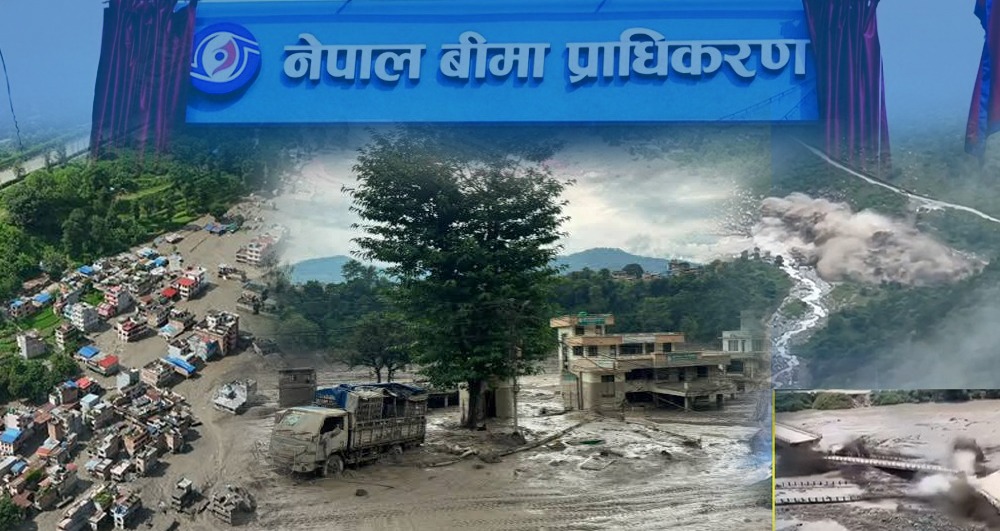
KATHMANDU: The scale of insurance claims arising from the devastating Bhotekoshi floods in Rasuwa has emerged as a major concern for Nepal’s insurance sector, with damage reported across hydropower, vehicles, cargo, homes, businesses and agricultural assets.
Insurers are currently estimating losses based on initial notifications from policyholders. However, the final claim bill could take time to emerge as surveyors have yet to reach several affected areas. Valuing homes and commercial structures buried or swept away by the floods is expected to be particularly difficult.
Sunil Ballabh Pant, secretary general of the Nepal Insurers’ Association, said insurers are collecting initial loss notifications and reporting them to the Nepal Insurance Authority. Because physical inspections remain difficult, information received through social media, telephone and WhatsApp is also being recorded.
Pant said insurers and the regulator would discuss the payment mechanism once more reliable loss estimates become available. Under the Insurance Claim Payment Guidelines, 2024, insurers can make advance payments of up to 50 percent of the estimated liability.
Claims could exceed previous disasters
The Bhotekoshi disaster is expected to generate significantly larger insurance claims than several recent crises because the damage has spread across multiple asset classes.
The 2015 earthquake caused around Rs 900 billion in total economic damage, but insurers ultimately faced claims of roughly Rs 17 billion. During the 2025 Gen-Z movement, total public and private damage was estimated at more than Rs 84 billion, while insurance liabilities exceeded Rs 23 billion.
This time, the floods have damaged hydropower and solar projects, vehicles, cargo containers, imported goods, homes, bank branches, crops and livestock. Energy entrepreneurs estimate that projects with around 900 MW of generating capacity have been affected.
The scale of damage means insurers could face substantially higher claims than during previous disasters.
Reinsurers to absorb much of the risk
Despite concerns over insurers’ ability to meet a potentially large wave of claims, officials at the Nepal Insurance Authority say there is no immediate solvency concern.
Nepali insurers transfer a significant portion of their risks to reinsurers. Under the Insurer Reinsurance Directive, 2023, insurance companies must reinsure at least 20 percent of their total sum insured with Nepal Reinsurance Company.
Insurers retain only a limited portion of risk based on their net worth. For non-life insurers, the maximum net retention per risk is 5 percent of net worth, while the limit for catastrophe risk is up to 10 percent of net worth.
As a result, a substantial portion of large claims-particularly those involving major hydropower projects-will ultimately be borne by domestic and foreign reinsurers.
The regulator expects insurers to remain capable of meeting their obligations, although the unprecedented scale of claims could put pressure on insurers’ balance sheets. It could also push up reinsurance premiums and reduce commissions in the coming years.
The immediate question is now how large the Bhotekoshi insurance bill will become and how quickly policyholders can receive compensation. The final figure will become clearer only after detailed field assessments are completed.