



A free Wi-Fi connection in a library, hotel or shopping centre can look like one of the most ordinary conveniences of modern life. In China, however, recent developments suggest that the same connection can also become another point through which online activity is identified, logged and subjected to official scrutiny.
The issue came into sharper focus in July when Hunan Library temporarily shut its public Wi-Fi after authorities detected readers using circumvention software to reach overseas websites.
The episode offered a glimpse into how routine internet access can intersect with China’s broader system of digital controls.
A report by The Epoch Times, citing a Chinese network engineer identified only by his surname, Zhao, said public wireless systems can identify connected devices and record information such as access times, device details and internet addresses.
Zhao advised users to avoid public Wi-Fi where possible, particularly networks requiring mobile-number verification.
The incident has raised fresh questions about how far China’s surveillance architecture reaches into everyday digital activity and how much anonymity remains when a person connects to the internet through a public network.
Hunan Library episode exposes the mechanics
On July 21, Hunan Library announced that it would temporarily suspend its public Wi-Fi from the following day for security checks and system upgrades.
The library said some users had connected to its network and used circumvention software to access what it described as “overseas illegal websites”.
According to the library, the activity had been detected by its technical system and recorded by the cyberspace authorities. Chinese-language reporting on the announcement said the library also disclosed part of the telephone numbers associated with some of the users.
The incident is significant because it occurred not at a military facility or a government communications centre but at a public library. It demonstrated that internet controls can operate through ordinary infrastructure used by members of the public.
The episode also illustrates the practical reach of China’s censorship system. Users attempting to circumvent the country’s internet restrictions can potentially leave identifiable technical traces when they connect through managed networks.
Public Wi-Fi has long been subject to controls
The monitoring of public internet access in China did not begin with the Hunan Library incident.
Chinese regulations have for years required various internet service providers and public-access operators to maintain user information and network logs.
The country’s Cybersecurity Law requires network operators to implement measures to monitor and record network operations and retain relevant network logs for at least six months. It also requires real-identity information for specified internet services.
Rules governing police supervision of internet services similarly provide for inspections of whether providers record and retain user registration information and online logs.
Authorities can also require operators to provide technical support and assistance for legally conducted national-security, counterterrorism and criminal investigations.
Tibet has operated under particularly stringent rules. Regulations published by the Tibet regional authorities require internet users in public-access venues, including hotels and airports, to provide genuine identity information.
Public internet providers must verify and register users and operate security-management systems. The rules also require records covering online times, user accounts and internet addresses or domains.
These measures mean that the concept of anonymous public internet access has long been limited in parts of China.
Router becoming part of the surveillance architecture
Zhao told The Epoch Times that Chinese-made routers and wireless network management equipment commonly include detection and auditing functions capable of identifying smartphones, tablets and computers connected to public networks.
According to him, such systems can record when devices connect, information about the devices and the internet addresses they access.
He said similar monitoring technology had been used in China for more than a decade, although the capabilities of newer network equipment had expanded.
However, there is an important technical distinction.
A Wi-Fi operator can routinely observe metadata such as a connected device’s network identity, connection times, traffic volumes and, depending on the configuration and encryption used, destination information.
HTTPS protects the contents of most modern web sessions from simple interception.
A properly configured VPN can also hide the final destination from the local network, although the network can still see that a VPN connection is being used and can collect connection metadata.
Zhao nevertheless claimed that public networks can detect websites accessed even when users employ VPNs.
That claim is broader than what ordinary network monitoring can establish in every technical circumstance, but the underlying issue remains: public Wi-Fi operated within China’s regulated telecommunications environment is not equivalent to anonymous internet access.
Mobile-number verification adds another layer
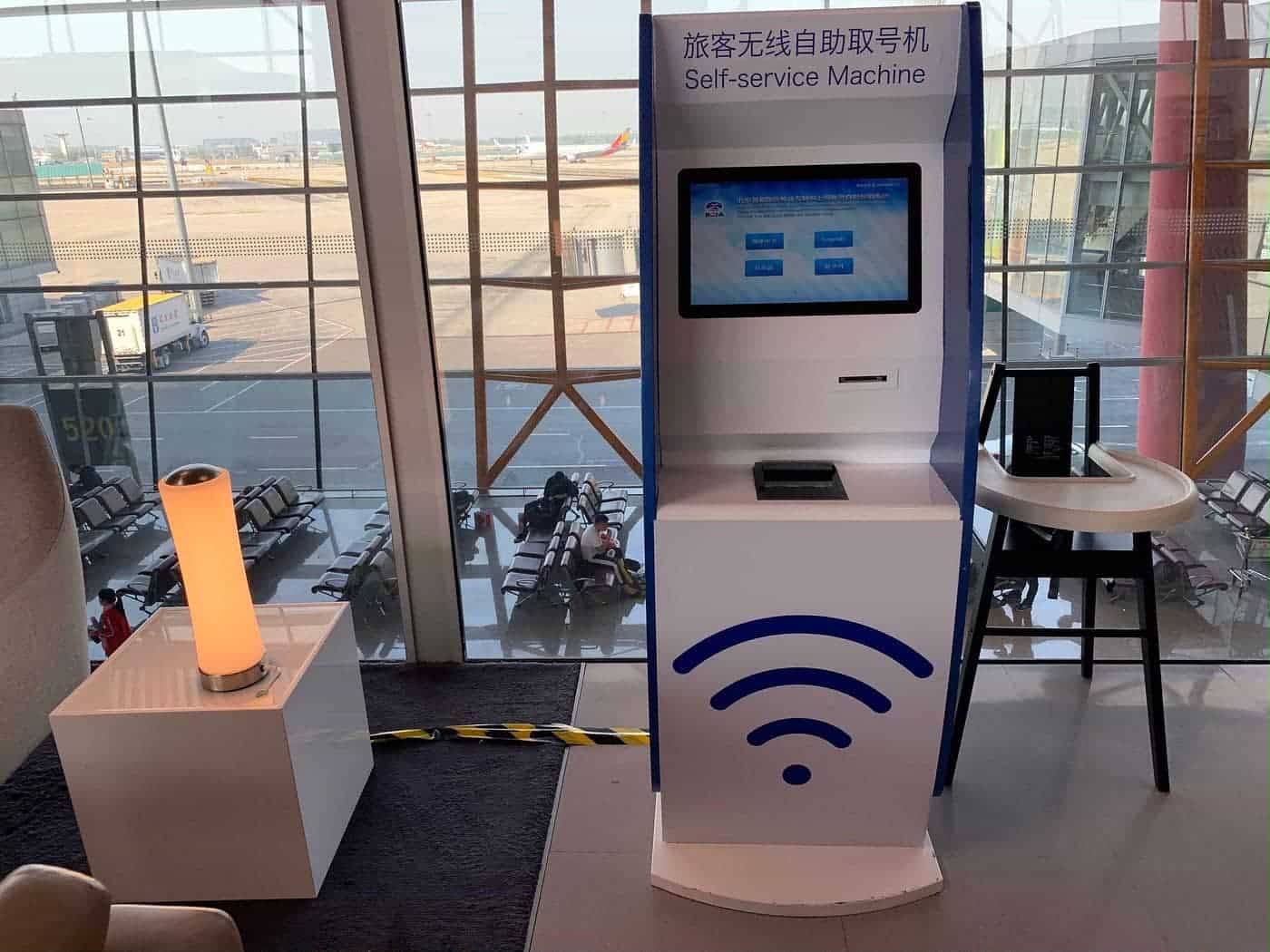
Public Wi-Fi in major Chinese venues often requires users to enter a mobile number and receive a verification code before obtaining access.
Such systems create a direct link between an internet session and an identifiable subscriber.
The connection does not necessarily mean that every action performed online is automatically attributed to a particular individual, but it gives network operators and authorities a stronger mechanism for associating network activity with a user.
China has also expanded formal systems for digital identity verification. In May 2025, the Cyberspace Administration of China published rules governing the national online identity authentication public service.
The framework allows internet services that are legally required to verify users’ real identities to use a government-backed network identity number or digital certificate.
Freedom House said the system began operating in July 2025 and warned that centralised identity verification could increase the state’s ability to track online activity and enforce censorship.
The Great Firewall is only one part of the system
China’s internet controls are often associated with the Great Firewall, the country’s extensive system for blocking foreign websites and services. But the surveillance architecture extends beyond blocking access.
Freedom House gave China an internet freedom score of just 9 out of 100 in its 2025 Freedom on the Net assessment, classifying the country as “Not Free”.
It said Chinese internet users faced severe legal and extralegal consequences for online activity and that authorities exercised extensive power to censor and manipulate online content.
The organisation also documented the widespread use of real-name requirements, state surveillance, restrictions on anonymous communication and the monitoring and collection of user data.
In its 2026 assessment, Freedom House said Chinese social-media platforms routinely require real-name identification and noted that police have access to broad categories of personal information.
It also said surveillance cameras and facial-recognition systems cover large parts of urban China and public transport, while devices capable of extracting and scanning smartphone data have spread nationwide.
Public Wi-Fi therefore sits within a much larger surveillance ecosystem rather than functioning as an isolated technology.
Circumvention itself can attract scrutiny
The Hunan Library episode also highlights the importance Chinese authorities place on attempts to bypass internet controls.
China blocks numerous international websites and platforms, while authorities have repeatedly restricted the use of unauthorised VPNs and other circumvention tools.
Freedom House has documented penalties for bypassing censorship and restrictions on anti-censorship technologies.
The consequence is that an attempt to access blocked information can become more than a technical matter. Once a user connects through a monitored public network, the act of attempting to circumvent censorship may itself generate a detectable event.
That distinction is crucial. The surveillance system does not necessarily require authorities to read every message or webpage a person views.
Identifying a device, recording a connection, detecting an unusual traffic pattern or associating an account with a particular network session can provide information that may later be used for further scrutiny.
Surveillance reaches beyond political activists
China’s digital controls have traditionally attracted international attention because of their impact on political dissent, journalism, human rights activism and discussion of sensitive subjects. But the expansion of network monitoring affects a much wider population.
A person using Wi-Fi at an airport, hotel, hospital, library or shopping centre is not necessarily engaged in political activity. Yet the infrastructure through which that person accesses the internet can still be subject to identity verification, logging and technical monitoring.
That makes the public Wi-Fi question part of a larger transformation in China’s digital environment: the gradual reduction of the distinction between ordinary connectivity and monitored connectivity.
The government’s national online identity framework, real-name registration requirements and network-log obligations all contribute to an environment in which anonymous digital activity is increasingly difficult.
From convenience to traceability
The significance of the Hunan Library incident lies in its ordinariness. There was no sophisticated cyberattack and no extraordinary security operation. Users connected to a public Wi-Fi network, attempted to reach websites blocked by China’s internet controls, and the activity was detected.
That is precisely what makes the episode revealing.
China’s internet restrictions are no longer limited to the visible walls of the Great Firewall. They increasingly operate through the infrastructure that connects individuals to the internet: identity systems, network operators, routers, public-access terminals, logging requirements and surveillance technologies.
The result is an online environment in which connectivity can also mean traceability.
For users, the question is no longer simply whether a public Wi-Fi network provides free access to the internet. It is also what information the network can record, whom that information can be linked to and how the resulting data can be used within China’s broader system of digital control.