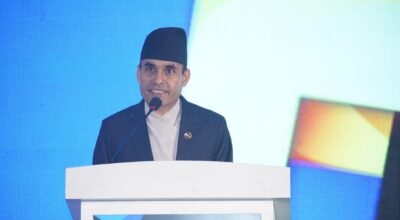


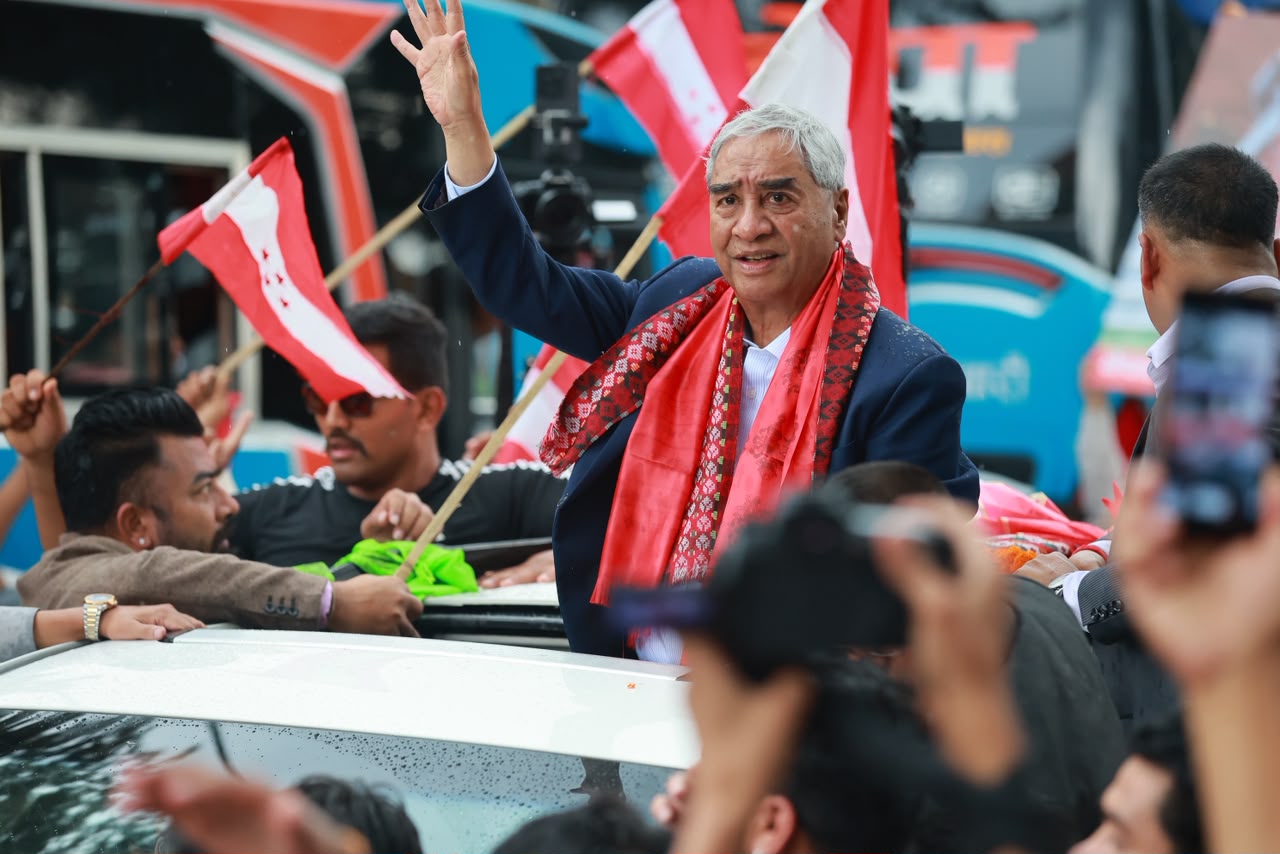
KATHMANDU: Former Nepali Congress president and former prime minister Sher Bahadur Deuba returned to Nepal on Thursday after nearly five months of medical treatment abroad and immediately issued a lengthy written statement calling for unity, reconciliation and cooperation within the party.
In the statement, Deuba said the time had come to end internal divisions and disputes in the Nepali Congress and rebuild the party as a united democratic force. He described the Congress not merely as a political party but as an institution closely linked to Nepal’s democratic history, struggles and political transformation.
Recalling the party’s long contribution to democracy, Deuba warned that continued factionalism and conflict within the Congress could weaken not only the party but also the country’s political stability and democratic achievements.
He stressed that the Nepali Congress should remain united while working in consensus and cooperation with all other active political forces in the country. According to him, dialogue and collaboration among political parties are essential for protecting the Constitution, strengthening democracy and building national consensus.
Reflecting on his own political journey, Deuba signaled that he was positive about transferring responsibility to a new generation of leaders. He said younger leaders should learn from both the experience he gained while remaining politically active and the ups and downs the party had faced in the past.
Deuba did not reject the ongoing debate over generational change and leadership transition within the Congress. Instead, he argued that the party would become stronger by combining the contribution of the experienced generation with the energy of younger leaders.
“Many party colleagues are currently in a state of disappointment,” he said. “The time has come to reconnect the emotions of party members and raise their morale once again.”
He recalled that he had worked through dialogue and cooperation with different political forces in the past and said political differences should continue to be resolved through dialogue. Stating that he had witnessed many political upheavals in Nepal’s history, he indicated that he was prepared to hand over responsibility to a new generation on the basis of experience.
The statement also carried a tone of self-reflection regarding the Congress’s internal disputes. Deuba said party leaders and cadres should identify their weaknesses and move forward with reforms. “If we have deviated somewhere, we will correct ourselves; if we have faltered, we will rise again,” he said, describing the Congress’s journey as one of continuous improvement.
He paid tribute to the contributions of B.P. Koirala, Subarna Shumsher Rana, Ganesh Man Singh, Krishna Prasad Bhattarai and Girija Prasad Koirala, saying the party must not forget the path shown by those leaders and the trust placed in it by the people.
Deuba also recalled the Congress’s role from the 1990 People’s Movement to the establishment of the federal democratic republic, saying party unity was essential for protecting democratic achievements.
Addressing the younger generation, he said the aspirations and desire for change among youths must not be ignored. The Congress, he argued, should seriously listen to young voices and ensure their meaningful participation.
He also suggested that the dissatisfaction and questions raised by youths during recent political developments should be taken seriously. Referring to public suffering and events linked to political movements, he said political parties must internalize the people’s desire for change.
Deuba said he was ready to acknowledge past weaknesses while recalling the Congress’s struggles for democracy, freedom and the rights of different castes, regions, communities and citizens. He stressed that national development required reconciliation and cooperation among all sides.
National unity was another major theme of the statement. Recalling B.P. Koirala’s return to Nepal from exile in India, Deuba said he had long advocated cooperation among democratic forces and the strengthening of national unity.
“Let us heal the wounds of past divisions and disputes; let us choose the path of reconciliation, not revenge,” he said, calling for consensus and cooperation among political forces.
Deuba also claimed that throughout his public life he had placed the country, democracy, citizens, the Constitution and the rule of law above all else. Describing his life as an open book, he said he had never acted against constitutional, legal or moral values.
The statement is being viewed as politically significant amid ongoing disputes within the Nepali Congress, the debate over leadership transition and discussions about the party’s future direction. With intense discussions continuing over leadership, generational change and the party’s future course, Deuba’s message appears to place unity, reconciliation and cooperation at the center of his priorities.
Concluding the statement, Deuba said he had always given priority to the party, democracy and national unity over position and prestige. He expressed commitment to transferring responsibility to a new generation, uniting the party and creating an environment of cooperation among all political forces.
“I have returned not as a leader, but as a citizen with faith in the nation-ready to serve with humility, dedication and love,” Deuba said. His message is now being closely watched for how it may influence the ongoing power struggle within the Nepali Congress and shape his relationship with younger leaders, including party president Gagan Thapa.