

BANGKOK: Nepal has proposed three measures to strengthen regional cooperation in satellite-based climate risk monitoring and early warning systems, including continuous surveillance of Himalayan hazards, better use of satellite data and equitable access to space technology.
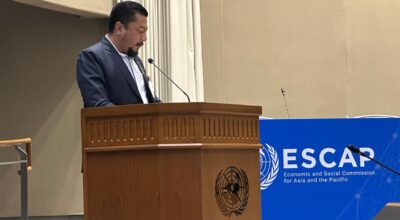
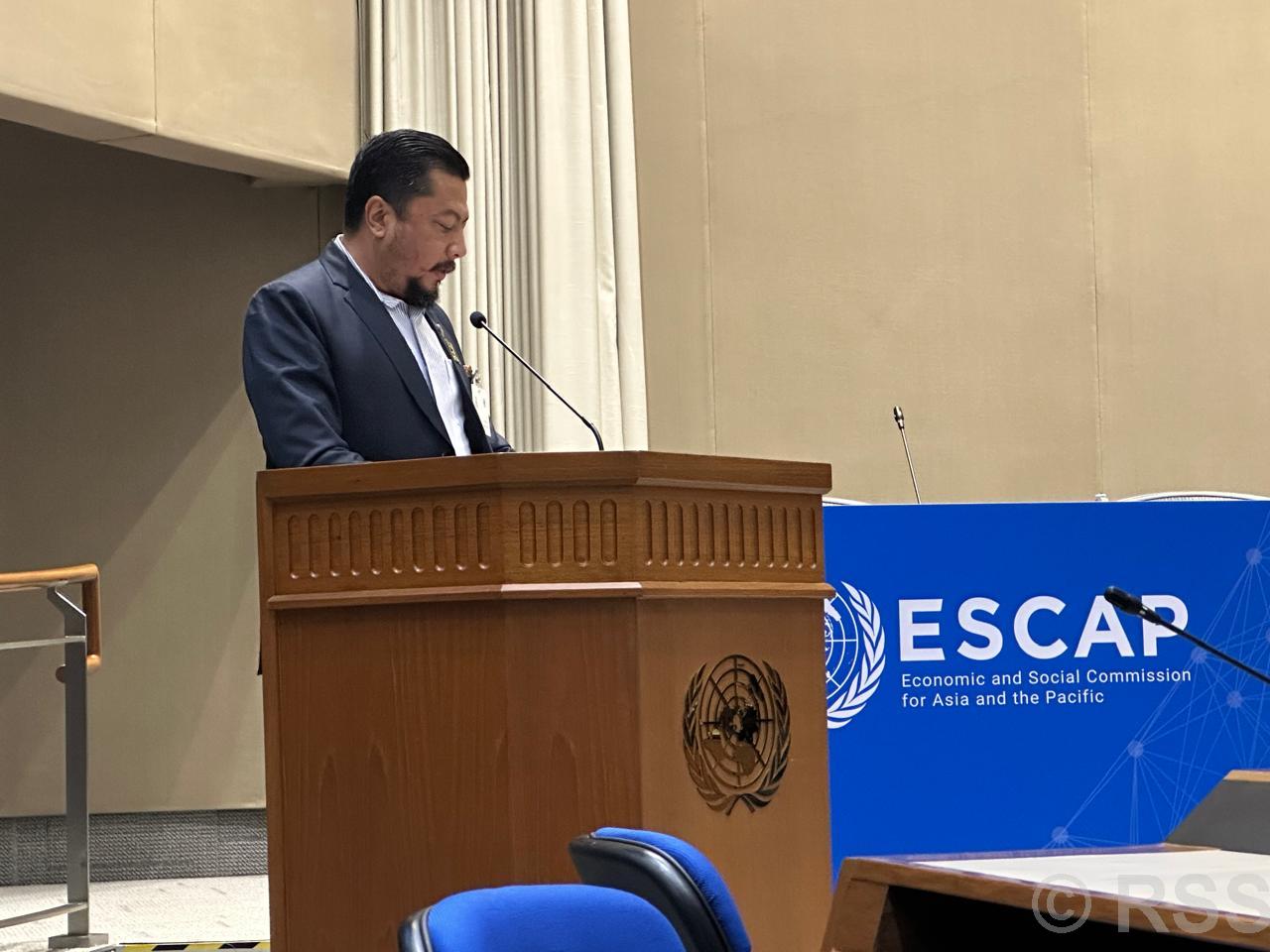
Minister of Energy, Water Resources and Irrigation Biraj Bhakta Shrestha presented the proposals at the Fifth Ministerial Conference on Space Applications for Sustainable Development in Asia and the Pacific, organized by the United Nations Economic and Social Commission for Asia and the Pacific (UN ESCAP) in Bangkok, Thailand.
Shrestha called for systematic satellite monitoring of vulnerable mountain slopes and glacial lakes, stronger analytical capacity to turn satellite data into actionable information, and access to space-based services for all countries, regardless of whether they operate their own satellites. He stressed that detecting hazards alone is insufficient unless timely warnings reach communities at risk.
Citing Nepal’s disaster response, Shrestha said early warning text messages had helped evacuate more than 900,000 people to safety in August and October. He also highlighted the use of satellite imagery and drone assessments in remote areas, improvements in river flood forecasting and preparations to introduce cell broadcasting for simultaneous emergency alerts to phones in high-risk areas.
He said 21 of the 47 glacial lakes identified as high-risk in the Hindu Kush Himalaya by the International Centre for Integrated Mountain Development (ICIMOD) and the United Nations Development Programme (UNDP) are in Nepal. Water-level lowering operations have begun at Tsho Rolpa, Lower Barun, Lumding and Hongu glacial lakes, he added.
Nepal is ready to pursue joint projects and regional initiatives to protect communities across the Hindu Kush Himalaya, home to around 2 billion people, and advance the Asia-Pacific Plan of Action by 2030, Shrestha said.
Nepal and UN ESCAP are also scheduled to jointly hold a workshop on Thursday on lessons from the Bhote Koshi-Trishuli disaster to prevent cascading disasters across the region. Shrestha will separately address a seminar hosted by the Asian Institute of Technology on Nepal’s recovery and reconstruction needs. He is scheduled to return home on Saturday.