


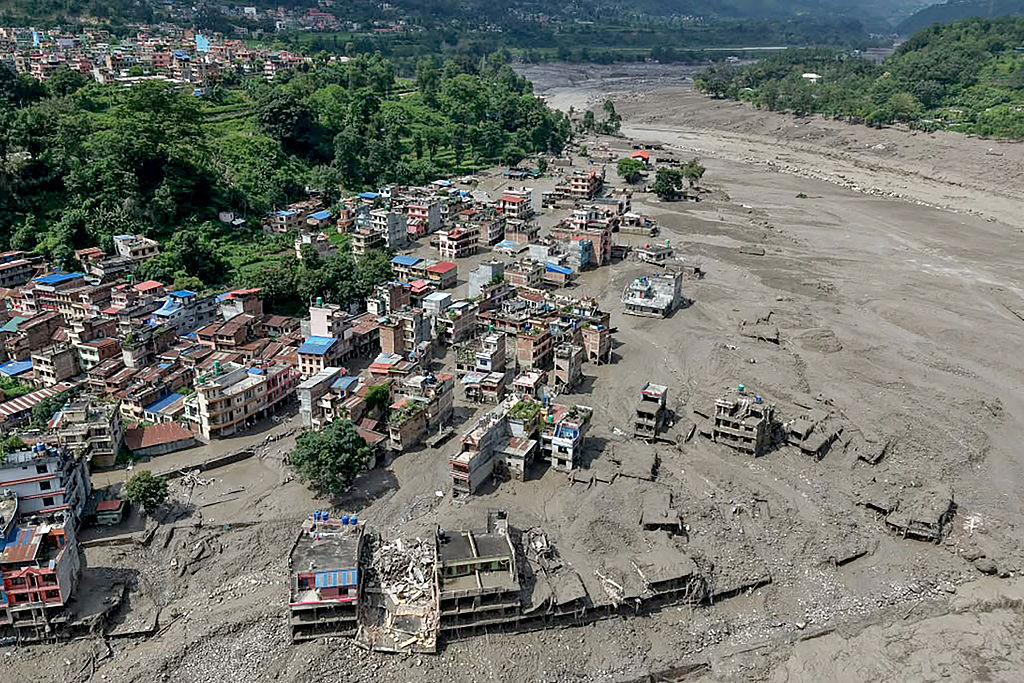
KATHMANDU: Devastating floods that struck the Bhote Koshi river on Aug. 26 have caused severe agricultural damage in Rasuwa, Nuwakot, and Dhading districts.
According to the Food and Agriculture Organization (FAO), approximately 1,800 hectares of arable land have been destroyed, with an estimated loss of 7,700 metric tons of agricultural production.
FAO Deputy Director-General Beth Bechdol reported that the floods have resulted in significant loss of life and displaced thousands, severely impacting the livelihoods of rural communities. The flooding has buried fields in silt and debris, destroyed fish ponds, and damaged critical agricultural infrastructure and food storage facilities. The destruction of roads and bridges has further disrupted the supply of food, livestock feed, and essential agricultural materials.
The affected 11 municipalities were home to approximately 350,000 cattle, sheep, and goats, along with over 1.6 million poultry before the disaster. FAO estimates that livestock and poultry populations have suffered losses between 5 and 10 percent. ‘For a farming family, losing an animal is not just losing an immediate food source, it is also losing the basis for future income and production,’ Bechdol stated.
The FAO is currently working in coordination with the Nepal government to conduct a detailed assessment of the damage to crops, livestock, fisheries, and agricultural infrastructure. The assessment utilizes both field observations and satellite remote sensing technology. The organization has identified an urgent need for seeds, livestock feed, and veterinary services. With the heightened risk of disease outbreaks following the floods, the FAO emphasized the immediate necessity for vaccination, medical treatment, and disease surveillance to protect remaining livestock.