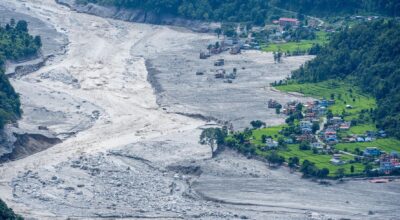


KATHMANDU: The devastating floods and landslides along the Bhotekoshi River in Rasuwa have disrupted Kathmandu Valley’s supply chain after the Prithvi Highway and Rasuwagadhi border point were blocked.
With the main transport routes disrupted and thousands of vehicles stranded, the supply of food, vegetables and other daily essentials has been affected, raising concerns over possible shortages and price increases.
The disruption along the Muglin–Kathmandu section of the Prithvi Highway and several feeder roads has prevented large containers carrying food and LPG gas bullets from entering the Valley. Authorities have warned that panic buying and excessive stockpiling could create artificial shortages.
The Ministry of Industry, Commerce and Supplies said, however, that there is sufficient stock of essential food items in the market to meet immediate demand.
Ministry spokesperson Netra Prasad Subedi said alternative routes, including the Tokha–Chhahare–Nuwakot road and the Kanti Highway, were being used to transport essential goods using smaller vehicles. The ministry said stocks held by the Food Management and Trading Company, Salt Trading Corporation and private sector were sufficient to meet Kathmandu Valley’s demand for two to three months.
Sharmila Subedi, acting chief executive officer of the Food Management and Trading Company, said its Thapathali outlet had 3,000 metric tonnes of rice, 1,200 quintals of pulses and more than 500 quintals of sugar in stock.
According to Salt Trading Corporation, it has enough iodised salt to last around seven months and sugar for nearly two months. Information officer Kumar Rajbhandari said arrangements were also being made to bring additional supplies through alternative routes.
Consumer rights activist Prem Lal Maharjan warned that traders could exploit the disruption to create artificial shortages and raise prices. He called for stronger market monitoring to protect consumers from potential exploitation.
The Department of Commerce, Supplies and Consumer Protection said it was closely monitoring the market to prevent unjustified price increases and artificial shortages caused by disruptions in the supply chain.