


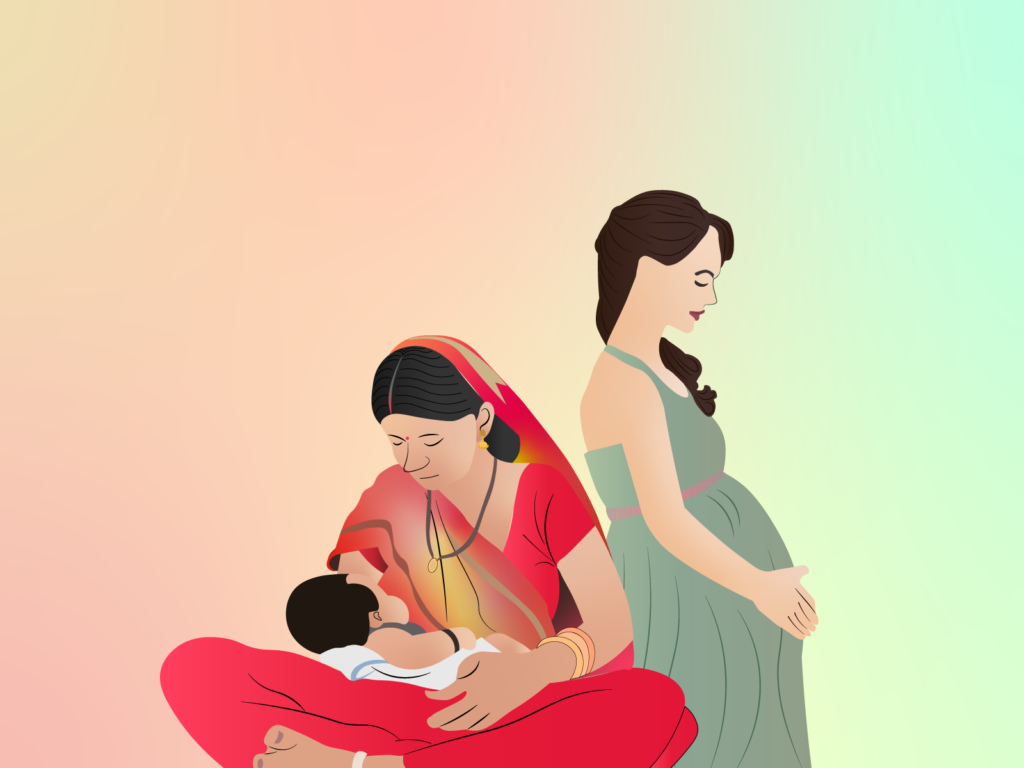
There was a time when childbirth in many parts of India remained as much a test of the healthcare system as it was a moment of hope for families.
Over the past decade—and particularly in the years following the COVID-19 pandemic—that narrative has steadily changed.
Across villages, district hospitals and tertiary care centres, improvements in maternal healthcare have become increasingly visible through better infrastructure, wider institutional deliveries, stronger antenatal care, digital health monitoring and a rapidly expanding network of specialised maternal and newborn services.
The latest national and international data suggest that this transformation is not confined to isolated programmes. Instead, it reflects a broader strengthening of India’s public health architecture that has accelerated progress towards the Sustainable Development Goals (SDGs).
India’s maternal mortality ratio (MMR), one of the most important indicators of a country’s healthcare system, has fallen sharply over the past three decades, with the pace of improvement significantly outstripping the global average.
Combined with expanding healthcare infrastructure and post-pandemic investments, the country is steadily moving closer to the United Nations target of reducing maternal mortality to fewer than 70 deaths per 100,000 live births by 2030.
A 3-decade decline that outpaces the world
Maternal mortality refers to the death of a woman during pregnancy, childbirth or within 42 days after the termination of pregnancy from causes related to or aggravated by pregnancy or its management. It remains one of the most closely watched indicators of healthcare accessibility, quality of medical services and social development.
India’s progress has been substantial. According to the latest Sample Registration System (SRS) 2021–23 released by the Registrar General of India and cited by the Ministry of Health and Family Welfare, the country’s Maternal Mortality Ratio has declined to 88 maternal deaths per 100,000 live births, a remarkable improvement from previous decades.
The longer-term trend is even more striking. Government data presented in Parliament show that India’s Maternal Mortality Ratio has declined by 83 percent during the past 30 years, compared with a global decline of 42 percent over the same period.
More recent estimates by the United Nations Maternal Mortality Estimation Inter-Agency Group indicate that India has achieved an 86 percent reduction since 1990, significantly surpassing the global average decline of 48 percent.
The Lancet Global Burden of Disease Study 2023 also reflects this trajectory.
According to the study, India’s maternal mortality ratio declined from 508 deaths per 100,000 live births in 1990 to 116 in 2023, while the total number of maternal deaths fell from nearly 119,000 to about 24,700 over the same period.
These improvements place India among the countries making the fastest progress in maternal health globally and strengthen its prospects of achieving the SDG target well before the 2030 deadline.
Post-COVID health system transformation
While maternal mortality had been declining steadily before 2020, the COVID-19 pandemic fundamentally altered India’s approach to healthcare capacity, surveillance and emergency preparedness.
The unprecedented public health crisis triggered massive investments in healthcare infrastructure, digital health platforms, laboratory networks, disease surveillance systems and frontline health workers.
Many of these improvements have continued to strengthen maternal and child healthcare long after the pandemic subsided.
The expansion of digital monitoring systems, telemedicine, electronic health records and real-time beneficiary tracking has enabled health authorities to monitor high-risk pregnancies more effectively.
Greater coordination between primary health centres, district hospitals and referral institutions has improved continuity of care throughout pregnancy and childbirth.
Post-pandemic investments have also accelerated the operationalisation of critical care facilities, maternal intensive care units and referral mechanisms that are now benefiting expectant mothers across the country.
Rather than representing a temporary response to COVID-19, these investments have evolved into permanent improvements in India’s public healthcare delivery system.
Institutional deliveries become the new normal
One of the strongest contributors to falling maternal mortality has been the steady rise in institutional childbirth.
According to the National Family Health Survey-5 (2019–21), institutional deliveries increased from 79 percent during NFHS-4 (2015–16) to 89 percent nationally.
Several states, including Kerala, Goa, Tamil Nadu, Puducherry and Lakshadweep, have achieved 100 percent institutional deliveries, while eighteen other States and Union Territories have crossed the 90 percent mark.
Perhaps even more significant is the progress achieved in rural India. Nearly 87 percent of births in rural areas are now conducted in healthcare institutions, while urban institutional deliveries stand at 94 percent.
This transition represents a fundamental shift in maternal healthcare delivery. Institutional births provide access to skilled medical personnel, emergency obstetric care, blood transfusion services and neonatal support—all of which substantially reduce maternal and neonatal risks.
The expansion of ambulance networks, referral systems and maternity transport under various government initiatives has further strengthened this ecosystem.
Better antenatal care improves pregnancy outcomes
The journey towards safe motherhood begins well before childbirth, making antenatal care one of the strongest predictors of maternal health.
India has recorded significant improvements in this area as well.
The proportion of pregnant women receiving their first antenatal check-up during the first trimester increased from 59 percent in 2015–16 to 70 percent in 2019–21, according to NFHS-5.
Meanwhile, the proportion of women receiving the recommended four or more antenatal visits increased from 51 percent to 59 percent during the same period.
Early antenatal registration enables timely diagnosis of anaemia, hypertension, gestational diabetes and other pregnancy-related complications. Regular monitoring also facilitates nutritional counselling, immunisation, birth preparedness and referral of high-risk pregnancies.
These improvements have become possible through nationwide implementation of programmes such as the Pradhan Mantri Surakshit Matritva Abhiyan (PMSMA), which provides free, quality antenatal care on the ninth day of every month.
The programme has expanded significantly since its launch. According to the Ministry of Health and Family Welfare, more than 5.9 crore pregnant women had received examinations under PMSMA by March 2025.
The Extended PMSMA initiative has further strengthened the identification and continuous tracking of high-risk pregnancies until safe delivery, ensuring that women requiring specialised care receive additional medical attention.
Building a comprehensive maternal healthcare ecosystem
India’s maternal health progress is not the outcome of a single intervention but rather the result of multiple complementary programmes working together across different stages of pregnancy.
The National Health Mission has integrated maternal health within the broader Reproductive, Maternal, Newborn, Child, Adolescent Health and Nutrition (RMNCAH+N) strategy, creating a continuum of care from pregnancy to childbirth and neonatal services.
Flagship schemes such as Janani Suraksha Yojana have encouraged institutional deliveries, particularly among economically vulnerable women.
Janani Shishu Suraksha Karyakaram (JSSK) has reduced financial barriers by providing free deliveries, medicines, diagnostics, blood, diet and transport at public healthcare facilities.
The Surakshit Matritva Aashwasan (SUMAN) programme has further strengthened the commitment to providing dignified, respectful and quality healthcare services without denial of treatment for pregnant women and newborns.
Complementing these initiatives are programmes like LaQshya, which focuses on improving labour room quality and maternity operation theatres, alongside continuous capacity building for doctors, obstetricians and anaesthesia specialists.
Together, these initiatives have helped create a healthcare ecosystem that increasingly prioritises quality, accessibility and timely intervention throughout the maternal care journey.
Strengthening health infra beyond the pandemic
One of the defining features of India’s post-COVID healthcare strategy has been the strengthening of public health infrastructure, particularly for maternal and newborn care.
While the pandemic exposed the importance of resilient healthcare systems, it also accelerated investments that continue to benefit routine healthcare services today.
The Ministry of Health and Family Welfare has expanded specialised facilities across the country to ensure that mothers and newborns receive timely and quality care.
According to Health Minister J.P. Nadda, 1,087 Special Newborn Care Units (SNCUs) and 2,868 Newborn Stabilisation Units (NBSUs) have been established in hospitals nationwide to improve maternal and infant health outcomes.
These facilities provide specialised treatment for premature babies, low birth-weight infants and newborns requiring intensive medical attention, substantially reducing neonatal complications while complementing maternal healthcare services.
Alongside neonatal care, the government has strengthened Maternal and Child Health (MCH) Wings, upgraded delivery points with better equipment and trained personnel, operationalised Obstetric Intensive Care Units (ICUs) and High Dependency Units (HDUs) at tertiary hospitals, and improved First Referral Units (FRUs) capable of handling obstetric emergencies.
These measures have enhanced the healthcare system’s ability to manage high-risk pregnancies and complicated deliveries closer to where people live.
The expansion of emergency obstetric care, blood storage facilities and referral transport systems has also improved the continuum of care from primary health centres to district and tertiary hospitals, ensuring faster interventions during critical situations.
Technology is becoming an enabler of safe motherhood
India’s post-pandemic healthcare transformation has also been shaped by digital technologies that are improving continuity of care throughout pregnancy.
The Reproductive and Child Health (RCH) Portal, a web-enabled tracking system, allows health authorities to monitor every registered pregnancy from antenatal care through delivery and postnatal follow-up.
This name-based tracking helps ensure that pregnant women receive timely check-ups, immunisation, nutritional support and institutional delivery services.
Frontline health workers—including Accredited Social Health Activists (ASHAs), Auxiliary Nurse Midwives (ANMs) and Anganwadi workers—now increasingly use digital tools to identify high-risk pregnancies, maintain records and improve follow-up visits.
These systems facilitate early intervention and strengthen accountability within public healthcare delivery.
The Mother and Child Protection (MCP) Card and Safe Motherhood Booklet continue to play an important role in educating pregnant women about nutrition, danger signs, birth preparedness and government support schemes.
Combined with digital monitoring, these initiatives create an integrated framework that follows mothers throughout pregnancy and after childbirth.
Technology has therefore become more than an administrative tool; it has evolved into an essential component of preventive maternal healthcare.
Nutrition and financial protection strengthen maternal health
Improving maternal health extends beyond hospitals and delivery rooms. Nutrition, financial security and community outreach are equally important determinants of safe pregnancy.
India has continued to strengthen these pillars through several flagship programmes.
The Pradhan Mantri Matru Vandana Yojana (PMMVY) provides maternity benefits that support pregnant women during their first pregnancy and offers additional incentives for the birth of a girl child under the revised PMMVY 2.0 guidelines.
Financial assistance encourages better nutrition, adequate rest and regular antenatal care during pregnancy.
Similarly, the Janani Shishu Suraksha Karyakaram (JSSK) removes financial barriers by providing free deliveries—including caesarean sections—along with diagnostics, medicines, blood, transport and diet at public health facilities.
By reducing out-of-pocket expenditure, the programme has strengthened equitable access to maternal healthcare across socio-economic groups.
The Anaemia Mukt Bharat initiative has further complemented maternal health efforts by promoting screening, treatment and prevention of anaemia among pregnant women, recognising maternal nutrition as a cornerstone of healthy pregnancies.
Monthly Village Health, Sanitation and Nutrition Days (VHSNDs) have also expanded outreach services in rural communities, bringing antenatal care, nutrition counselling and maternal health awareness directly to villages.
Together, these interventions reinforce maternal healthcare before, during and after pregnancy, creating a comprehensive public health ecosystem.
Several states have achieved SDG benchmark
India’s progress is also reflected in the performance of several states that have already achieved the Sustainable Development Goal target for maternal mortality.
According to the Ministry of Health and Family Welfare, Kerala, Maharashtra, Telangana, Andhra Pradesh, Tamil Nadu, Jharkhand, Gujarat and Karnataka have reduced their Maternal Mortality Ratios below 70 maternal deaths per 100,000 live births, thereby meeting the SDG benchmark well ahead of 2030.
Several state-level innovations have contributed to these outcomes.
Tamil Nadu’s emergency obstetric referral system has long been recognised for ensuring timely access to specialised maternal healthcare, while Madhya Pradesh’s ‘Dastak Abhiyan’ has demonstrated how community-based surveillance and early identification of maternal health risks can improve outcomes through timely medical intervention.
Such innovations illustrate how state-specific solutions, when integrated within national health programmes, can accelerate improvements in maternal healthcare.
Maternal health as part of India’s SDG journey
The Sustainable Development Goals adopted by the United Nations in 2015 recognise maternal health as central to broader human development.
SDG 3 seeks to ensure healthy lives and promote well-being for all, while Target 3.1 specifically aims to reduce the global maternal mortality ratio to fewer than 70 deaths per 100,000 live births by 2030.
India’s current trajectory suggests that the country is steadily moving towards this objective, and the broader transformation underpinning these gains is equally important.
Improvements in maternal health are closely linked with expanding financial inclusion, improved nutrition, stronger public health systems, women’s empowerment, education, sanitation and digital governance.
India’s progress reflects not only advances in healthcare delivery but also the cumulative impact of social and economic development over the past decade.
As maternal mortality declines, the benefits extend beyond individual families. Safer pregnancies contribute to healthier children, stronger communities and a more productive workforce, reinforcing the interconnected nature of the Sustainable Development Goals.
Long-term impact
India’s maternal health journey over the past decade tells a broader story of healthcare transformation.
The decline in maternal mortality has been supported by expanding institutional deliveries, better antenatal care, stronger healthcare infrastructure, digital monitoring systems, financial protection schemes and sustained public investment in maternal and newborn services.
The post-COVID period has further strengthened this momentum by accelerating investments in health infrastructure, emergency preparedness and technology-enabled service delivery.
Rather than being temporary responses to a global crisis, these improvements have become enduring components of India’s public health architecture.