

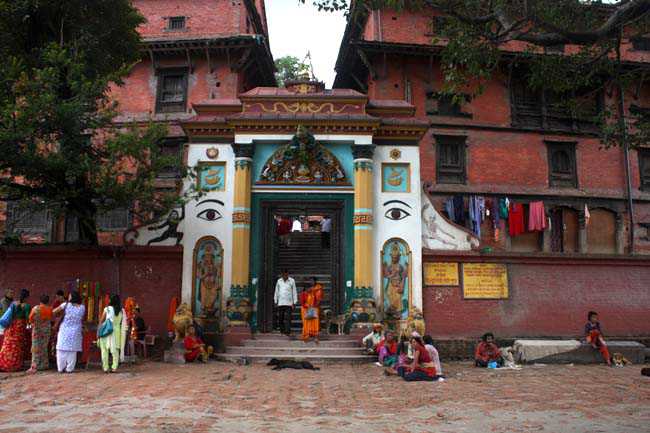
KATHMANDU: The Kathmandu Metropolitan City (KMC) has begun paving the Gaurighat-Guhyeshwari area with stone as part of an effort to restore the traditional character of one of the Kathmandu Valley’s culturally significant neighbourhood.
Around 1,700 square metres of the area will be stone-paved in the first phase, shared Ashaman Sangat, Chairperson of KMC ward no. 8 which, he said, is estimated to cost Rs 8.7 million.
He informed that existing asphalt is being removed and replaced with traditional stone paving. According to him, the KMC has also initiated the procurement process for a second phase, under which another 1,100 square metres will be paved at an estimated cost of Rs 9 million.
Furthermore, roads in several historically and archaeologically significant parts of the ward that had previously been asphalted are being restored using traditional construction methods and materials.
“Pashupati, Jayabageshwori, Nawali Tole and Guhyeshwari are part of our ward’s identity. We have launched a campaign to restore the original character of these places,” he asserted.
The Gaurighat-Guhyeshwari area lies within the wider cultural landscape surrounding the Pashupatinath Temple complex, one of Nepal’s most revered Hindu temple dedicated to Lord Shiva. Guhyeshwari Temple, located at the banks of Bagmati River, is regarded as a sacred shrine.
It is believed to mark the sport where the hips or yoni of Goddess Sati fell, making it a site of profound Tantric significance.
Similarly, Gaurighat along the Bagmati River has long been associated with religious rituals and pilgrimage. Stone paving has already been completed at Setodhoka, Jayabageshwori, the Pashupati gate, the lanes of Nawali Tole and roads and alleys in Tilganga Deula Tole.
Work is also set to begin around Jayabageshwori Umakunda and nearby lanes. According to Sangat, around Rs 45 million has so far been spent on restoring roads and public spaces in the ward to their traditional form.
Under the ongoing work along the Gaurighat-Guhyeshwari route, black stone slabs measuring four inches in thickness will be used. Moreover, a roughly four-inch layer of lime concrete will be laid beneath the stone paving.
The project will avoid modern construction materials, with stone and lime among the traditional materials being used to give the historic surroundings a more authentic appearance.