

KATHMANDU: Gen-Z activist Miraj Dhungana has called for the emergence of a new political force to lead Nepal’s post-disaster reconstruction, arguing that the scale of destruction caused by the Bhotekoshi floods has pushed the country decades backward and exposed the need for a fundamentally new approach.
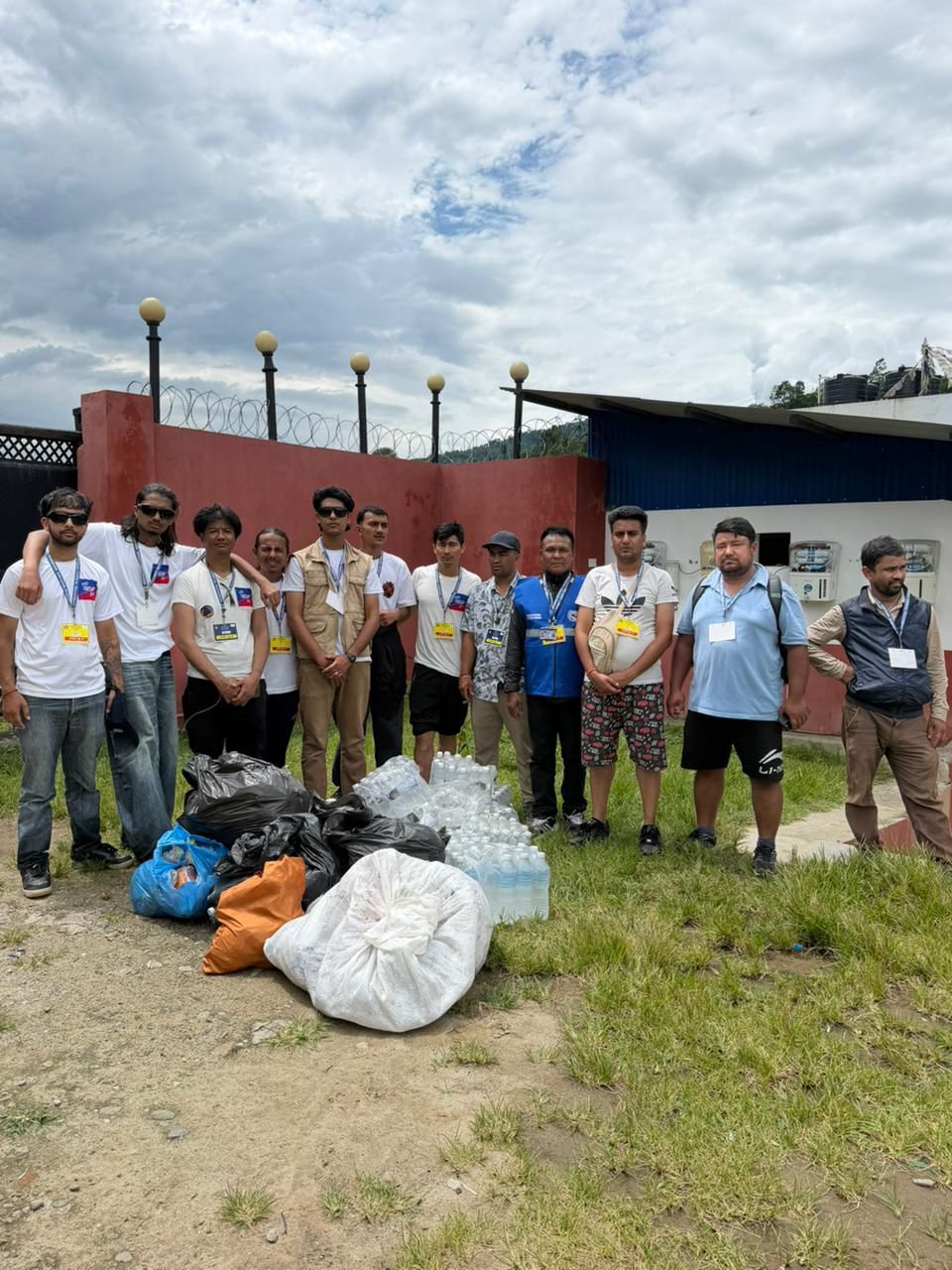
Dhungana, who has been actively involved in relief efforts on the ground, has been distributing food and essential supplies to displaced families affected by the floods. Through his field involvement, he said he has witnessed firsthand the devastating impact of the disaster on communities, infrastructure, livelihoods and public facilities.
In a statement shared on social media, Dhungana said the floods had devastated everything from major national projects to settlements that had existed for decades. He said thousands of people had gone missing, while hydropower projects worth billions-and potentially hundreds of billions-of rupees, along with private property and public infrastructure, had suffered extensive damage.
He also pointed to the destruction of public facilities, including prisons, saying the disaster had demonstrated the scale of the challenges facing the country.
Dhungana argued that none of the existing political parties is capable of taking responsibility for Nepal’s reconstruction and delivering it effectively. According to him, the parties currently in power lack the long-term vision, strategic outlook and institutional capacity required to lead a reconstruction effort of such magnitude.
He further argued that Nepal’s traditional political forces have increasingly become disconnected from the country’s emerging challenges. Describing the need for a “third pole” in Nepali politics, Dhungana said a new political force was necessary-one capable of identifying the country’s problems from a fresh perspective and developing new solutions.
Dhungana acknowledged that his call for a new political alternative might not appear realistic to many people at present. However, he argued that the need for such a force would become increasingly evident as Nepal confronts the combined pressures of political instability, natural disasters, infrastructure vulnerability and economic losses.
His comments come as the Bhotekoshi floods have raised renewed questions about Nepal’s disaster preparedness, the resilience of critical infrastructure and the country’s ability to manage large-scale reconstruction.