

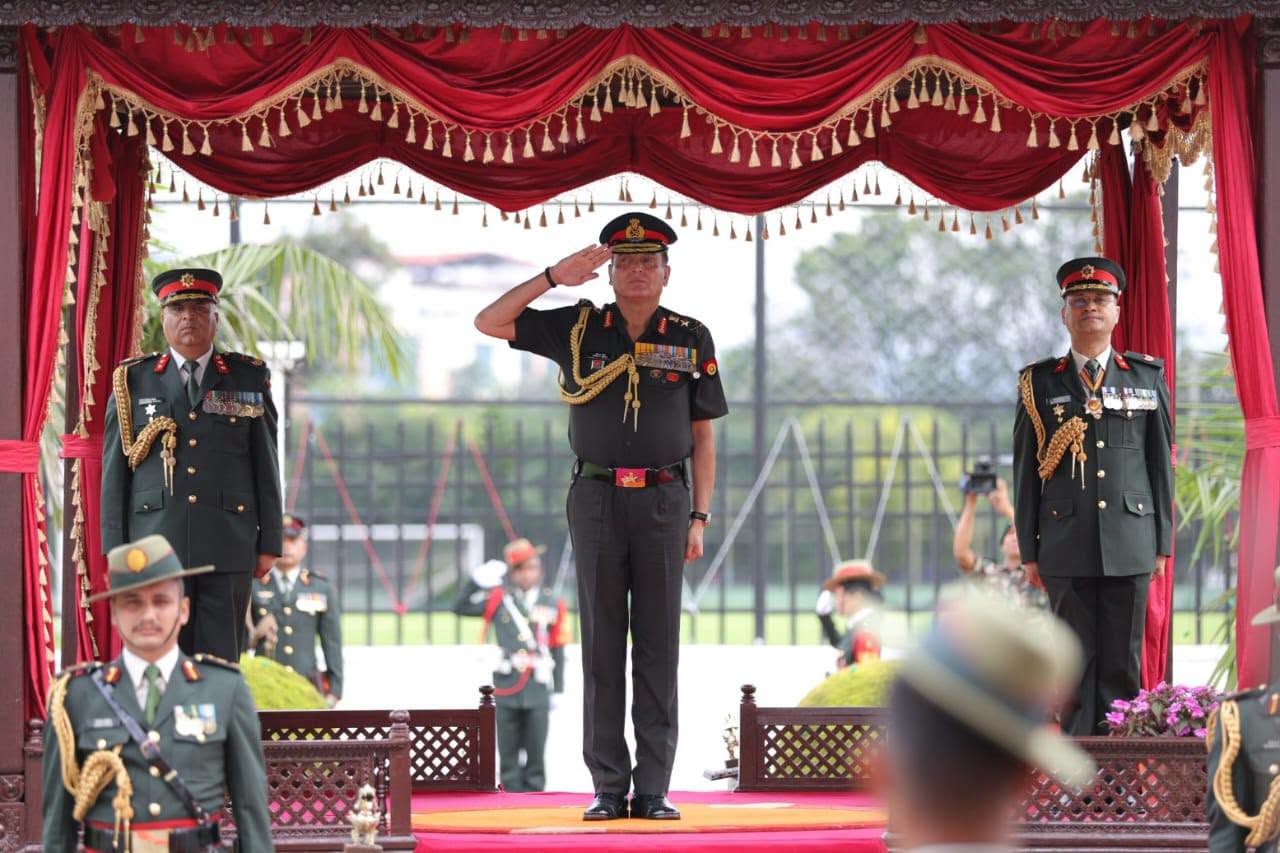
KATHMANDU: India’s newly appointed Chief of Army Staff, General Dhiraj Seth, arrived in Kathmandu on Sunday, August 16, at the invitation of Nepal Army Chief General Ashok Raj Sigdel. It is Seth’s first official foreign visit since assuming command of the Indian Army on June 30, 2026, becoming the 31st Chief of Army Staff of independent India.
On the surface, the visit follows a familiar script. There will be ceremonial honours, military discussions, meetings with senior officials and engagements with former Gurkha soldiers. President Ram Chandra Paudel is expected to confer on General Seth the honorary rank of General of the Nepal Army, continuing one of the oldest and most unusual military traditions between two sovereign states.
But reducing the visit to ceremony would miss its larger significance.
Seth is arriving in Nepal at a moment of political transition in Kathmandu and heightened strategic competition across the Himalayan region. Nepal has entered a new political phase under Prime Minister Balendra Shah, popularly known as Balen, while India is navigating an increasingly complex regional environment shaped by China’s growing influence, changing political alignments and renewed competition for strategic space in South Asia.
The fact that Nepal is General Seth’s first foreign destination therefore carries a message of its own.
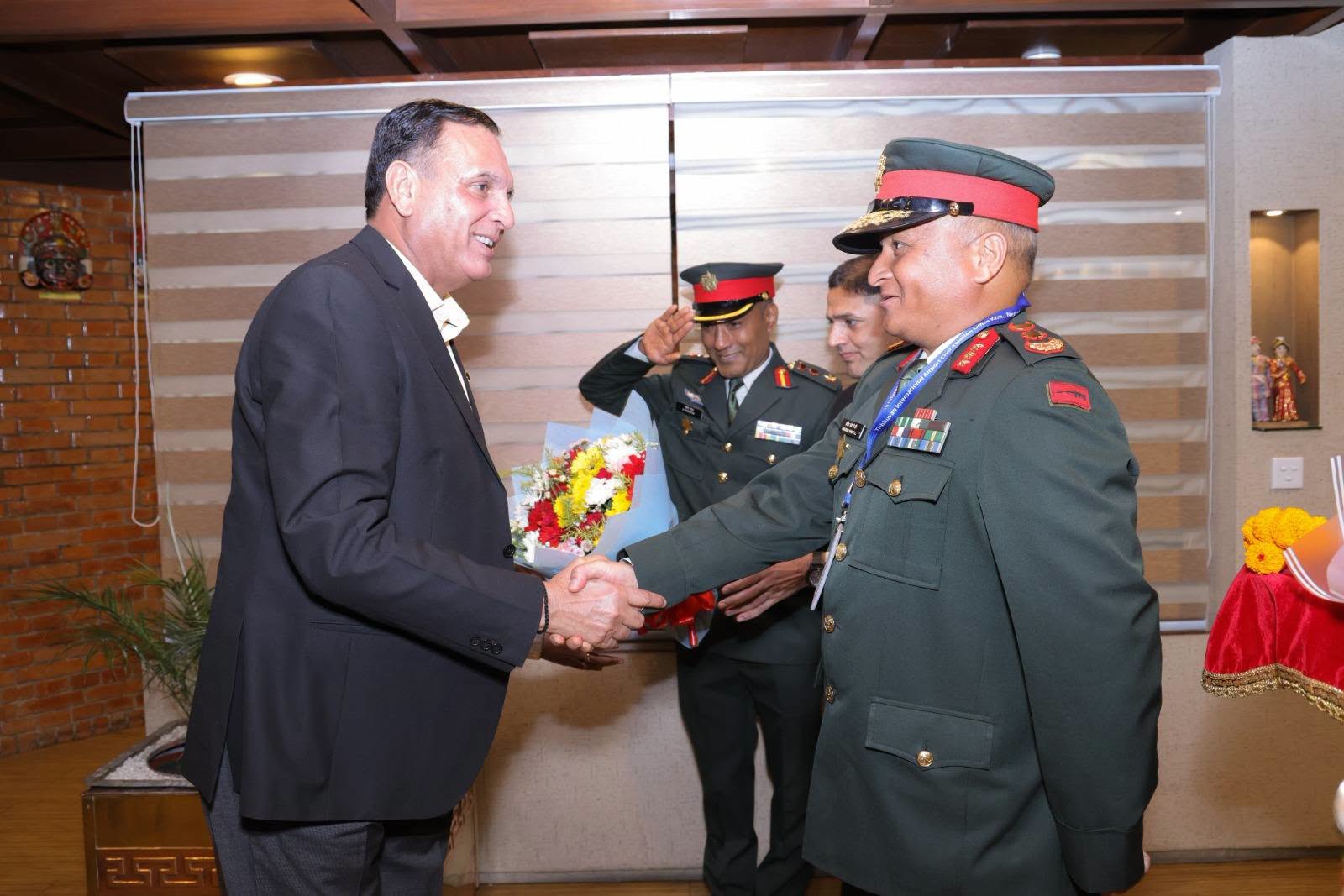
India’s “Neighbourhood First” policy is hardly new. Yet the destination chosen by a newly appointed army chief for his first overseas visit can also offer an institutional indication of where a military establishment sees the importance of maintaining early engagement.
The visit is also notable because Seth is the most senior-ranking official from India’s southern neighbourhood to visit Nepal since Prime Minister Balendra Shah took office. Shah has retained the defence portfolio himself, giving the meeting between Nepal’s political leadership and India’s military leadership an additional layer of significance.
The central question, therefore, is not simply why General Seth has come to Kathmandu.
It is what both sides want to preserve, repair or redefine through the visit.
An honour built on 76 years of continuity
The centrepiece of the visit will be a ceremony at Sheetal Niwas, where President Ram Chandra Paudel is expected to confer on General Seth the honorary rank of General of the Nepal Army.
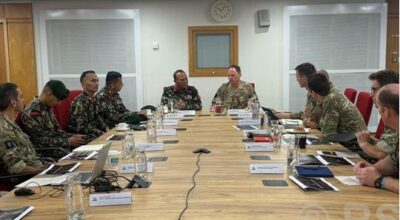
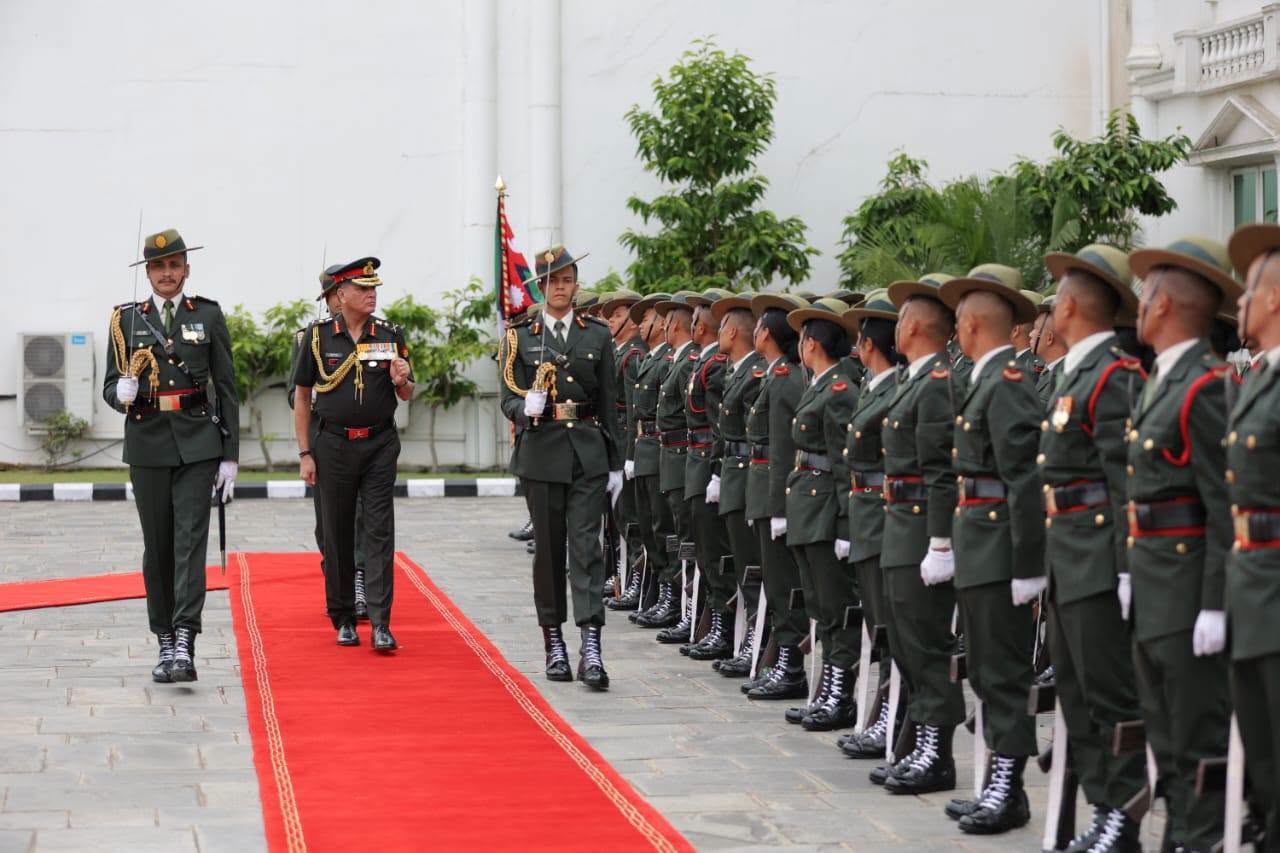
On Monday, he is scheduled to receive the insignia of rank, ceremonial sword and certificate. His programme will include paying tribute to Nepal’s martyrs at Tundikhel, receiving a guard of honour, holding bilateral talks with General Ashok Raj Sigdel at Nepal Army Headquarters and addressing officers at the Nepal Army Command and Staff College in Shivapuri.
He is also scheduled to travel to Pokhara, where he will interact with former Gurkha soldiers.
The programme has three distinct dimensions.
The first is ceremonial. The second is institutional and military. The third reaches beyond the armed forces into the wider social relationship between Nepal and India.
That combination is what makes Nepal-India military diplomacy unusually distinctive.
Since 1950, the two countries have maintained the practice of conferring honorary general ranks on each other’s army chiefs. The roots of the relationship, however, extend much further back into the Rana period and the military relationship between Nepal and British India.
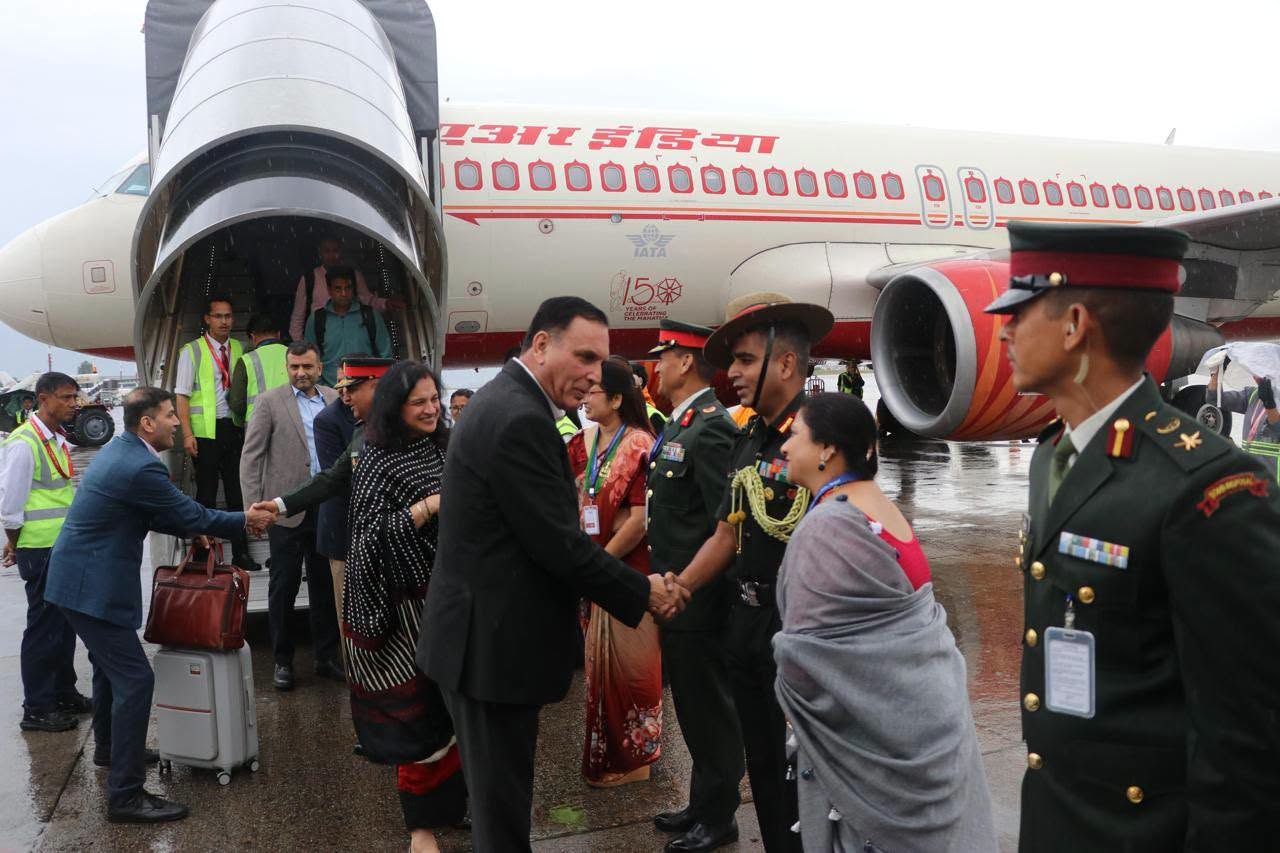
The modern tradition began with independent India. In 1950, Nepal conferred the honorary rank of General on General K. M. Cariappa, the first Indian Commander-in-Chief of the Army after independence.
More than seven decades later, the practice has survived changes of government, political systems, diplomatic crises and periods of deep disagreement.
In November 2024, Indian Army Chief General Upendra Dwivedi received the honorary rank in Nepal from President Paudel. A few weeks later, General Ashok Raj Sigdel received the corresponding honour in India.
The ritual is therefore not a new diplomatic invention for General Seth. Its importance lies precisely in its continuity.
Very few military relationships around the world possess an equivalent tradition in which the serving army chiefs of two countries are ceremonially recognised as honorary generals of each other’s armed forces.
In Nepal and India, the ceremony has evolved into something larger than a military decoration.
It has become an institutional symbol.
From Rana-era military diplomacy to the modern relationship
The history of Nepal’s military relationship with India cannot be understood simply by starting in 1950.
Its deeper roots lie in the relationship between the rulers of Rana-era Nepal and the British Indian Army.
In March 1892, Field Marshal Lord Frederick Roberts, then Commander-in-Chief of the British Indian Army, travelled to Kathmandu. The visit took place during the rule of Prime Minister Bir Shumsher, following a period in which relations had experienced some tension.
Nepal staged an elaborate military parade at Tundikhel, reportedly involving more than 18,000 soldiers. Roberts was accorded an extraordinary military welcome and, according to historical accounts cited by historian Purushottam Shamsher Jung Bahadur Rana, received an honorary military title and the ceremonial “Jarneli Shreepech”.
Roberts later described his Nepal visit in his memoir Forty-One Years in India, although the honorary title is not clearly recorded in his account. Historical research in Nepal has provided additional details about the honour.
He is therefore remembered as the first British Indian army chief to receive an honorary general’s distinction from Nepal.
The relationship developed further in the decades that followed.
Chandra Shumsher became honorary colonel of the 4th Gurkha Rifles in 1906. Following Nepal’s substantial contribution to the British war effort during the First World War, he was appointed an honorary general of the British Army on December 22, 1919.
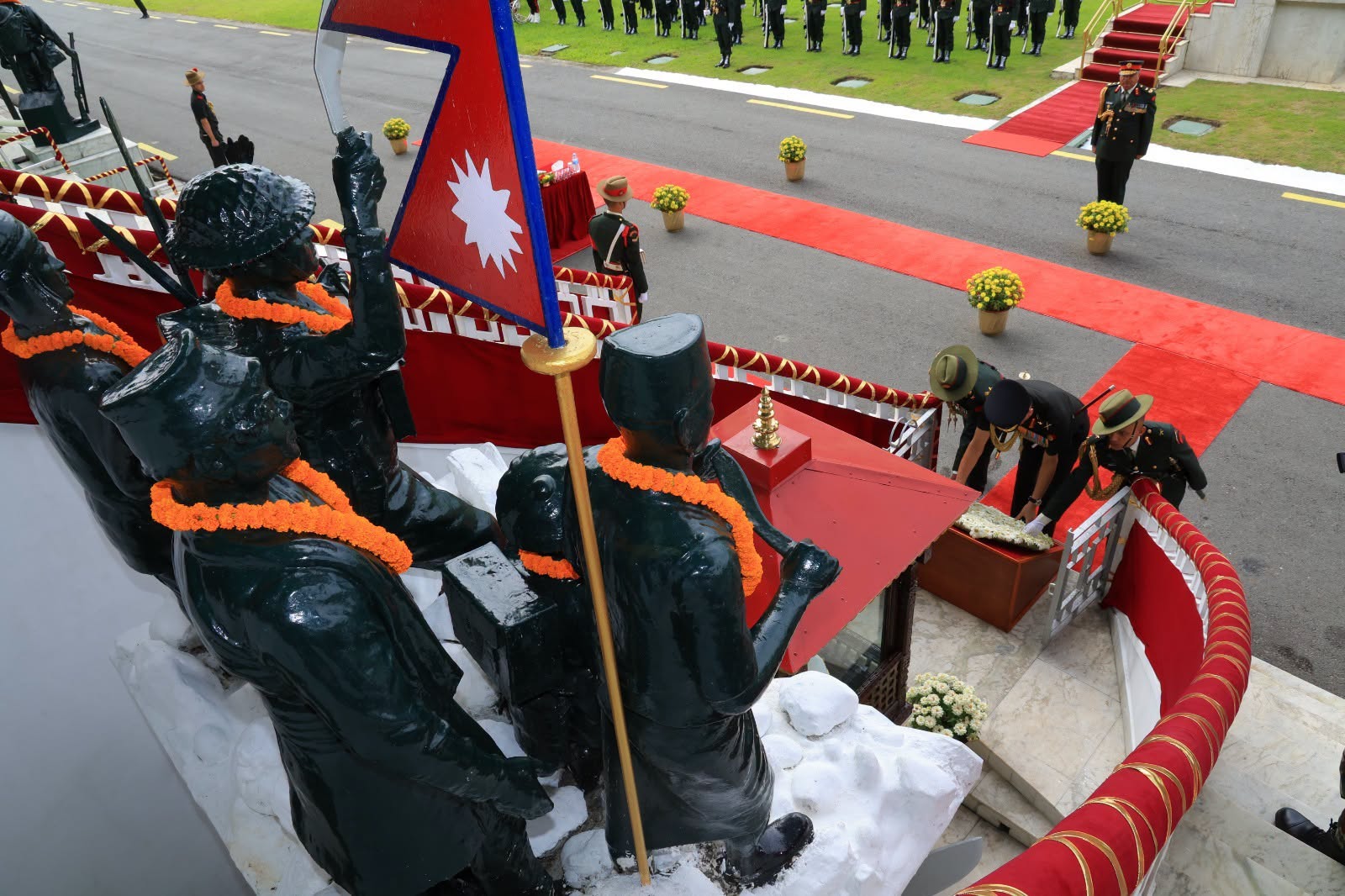
Bhim Shumsher also developed close links with the Gurkha regiments, becoming honorary colonel and receiving senior military distinctions. During his tenure, senior British military commanders including Field Marshal William Birdwood in 1930 and Field Marshal Philip Chetwode in 1931 visited Nepal and received honorary recognition.
Juddha Shumsher subsequently became honorary colonel of all ten Gurkha Rifles and received the rank of honorary lieutenant general.
In 1945, Nepal conferred an honorary general’s rank on Sir Claude Auchinleck. Rana rulers Padma Shumsher and Mohan Shumsher also received honorary military distinctions from both British and, later, independent Indian authorities.
After the end of Rana rule, the relationship moved into a new phase. Britain and India continued the tradition with Nepal’s kings, including King Tribhuvan and King Mahendra.
Then came 1950.
The appointment of General K. M. Cariappa as an honorary general of the Nepal Army marked the beginning of the modern, reciprocal and institutionalised tradition between independent Nepal and India.
That distinction is important.
The Rana-era military relationship was deeply shaped by British imperial structures, the Gurkha recruitment system and the geopolitical realities of the time. The post-1950 tradition belongs to a different political order: two independent states maintaining a reciprocal military relationship.
The historical connection is unmistakable, but the institutions are not identical.
A tradition that survived political turbulence
The endurance of the honorary-general tradition is perhaps its most important characteristic.
Governments have changed. Nepal has moved from Rana rule to monarchy and then to a federal democratic republic. India has experienced its own political transformations. Bilateral relations have repeatedly gone through periods of warmth, suspicion and confrontation.
Yet the military-to-military relationship has generally remained intact.
Of the 27 Indian Army chiefs who have served since 1950, 20 have received honorary general rank in Nepal, while 16 of Nepal’s 20 army chiefs have received the corresponding honour in India.
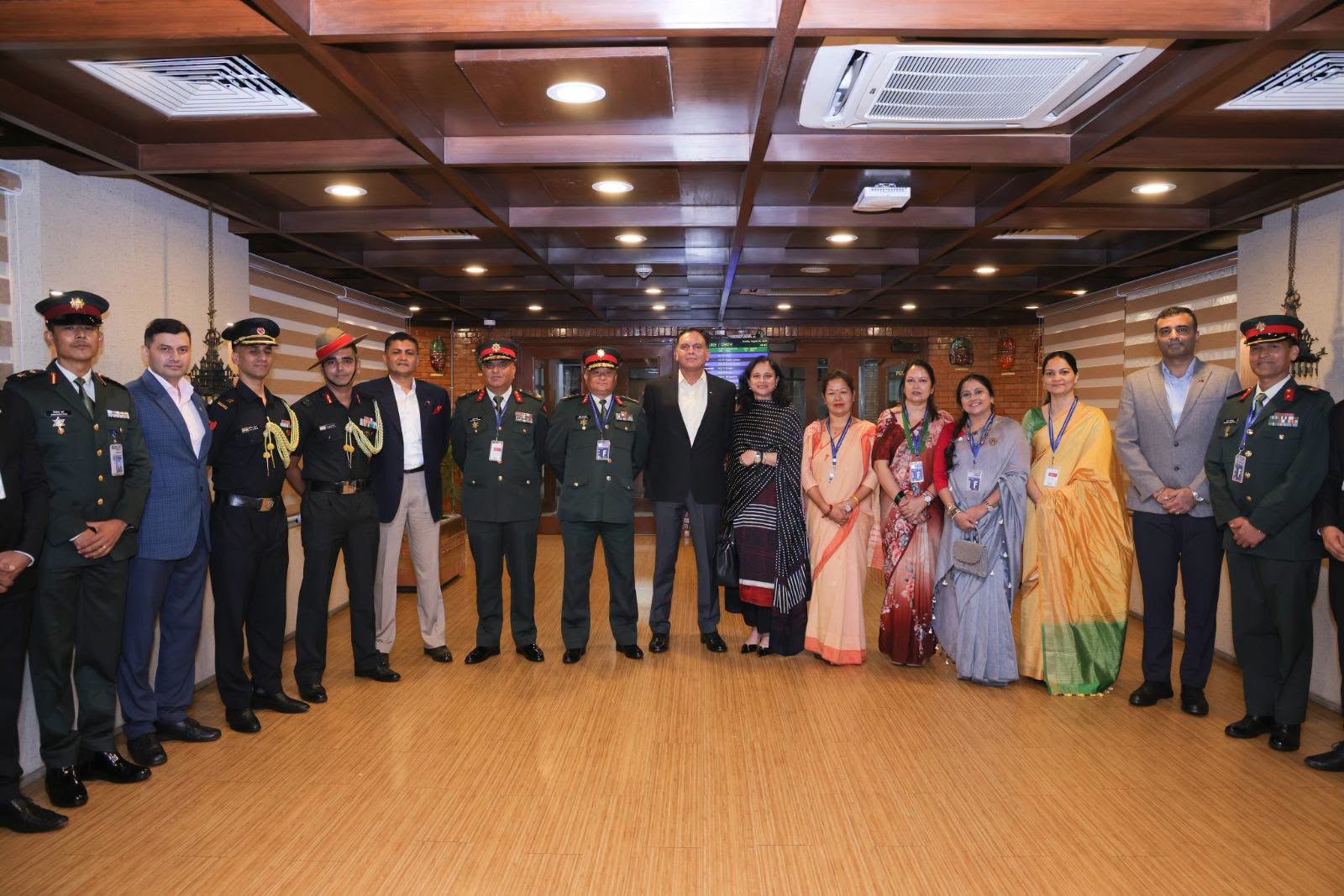
General Ashok Raj Sigdel received the honorary rank in India in December 2024. Before that, General Upendra Dwivedi had received the honour from President Paudel in Nepal.
The numbers reveal something beyond ceremony.
The tradition has become a form of institutional memory.
It tells both militaries that political disagreements do not necessarily have to destroy professional channels of communication.
That matters particularly in a relationship as complicated as Nepal and India.
Why the honorary rank matters
For any foreign army chief, being made an honorary general of another country’s army is a significant recognition.
Between Nepal and India, however, the symbolism runs deeper.
The two countries share an open border, extensive family and social ties, substantial economic interaction and a long military history. Thousands of Nepali citizens have served in the Indian Army, while large communities of former Indian Army Gurkhas and their families remain closely connected to Nepal.
The military relationship therefore extends beyond barracks and headquarters.
It reaches villages, families, pensions, employment, migration and social identity.
That is why the honorary-general tradition can be interpreted as an institutional expression of a relationship that is simultaneously strategic and deeply people-to-people.
Yet the relationship has never been free of friction.
The Kalapani and Lipulekh disputes remain sensitive. The 1989–90 trade and transit crisis left a lasting memory in Nepal. Relations again deteriorated after Nepal promulgated its new constitution in 2015 and India imposed restrictions that Nepal widely experienced as an unofficial blockade.
More recently, Nepal’s expanding engagement with China has added another layer to India’s strategic calculations.
And yet, even during periods of political tension, military communication has continued.
This is where military diplomacy acquires a broader role.
It can function as a channel through which communication remains possible when political dialogue becomes difficult.
The military as a bridge in difficult times
Military diplomacy should not be confused with military intervention in politics.
The distinction is crucial.
When relations between governments become strained, professional communication between security institutions can help preserve a minimum level of confidence. Discussions about training, disaster response, border security, intelligence exchange, defence cooperation and regional developments can continue even when political negotiations become politically sensitive.
The relationship was particularly visible after the 2020 Nepal-India border dispute.
The visit to Nepal by then-Indian Army Chief General M. M. Naravane was widely viewed as an effort to restore communication and search for a reset in bilateral relations.
The episode demonstrated the peculiar position of military diplomacy in the Nepal-India relationship.
The army does not replace diplomacy.
But it can sometimes keep the door open when diplomacy becomes difficult.
That institutional channel may become particularly relevant again as Nepal enters another period of political transition.
A new political Nepal
General Seth’s visit comes at a different political moment from previous army-chief visits.
Nepal has experienced a significant political transformation, with younger political forces gaining prominence and a new government emerging under Prime Minister Balendra Shah.
Shah’s political style has also differed from that of many previous Nepali leaders. His government has entered office amid heightened expectations about governance, accountability and a more direct relationship between the political leadership and citizens.
The prime minister has retained the defence portfolio himself.
That makes the defence establishment’s relationship with India particularly relevant.
India, meanwhile, has an obvious interest in understanding how Nepal’s new political configuration will affect its security environment.
For New Delhi, Nepal is not simply another neighbouring country.
The two countries share a long, open border. Millions of people cross and interact across that border. Nepal’s rivers and hydropower resources have strategic and economic implications. Indian citizens and Nepali citizens maintain extensive social and commercial relationships. The Gurkha military connection remains significant. And Nepal’s growing relationship with China inevitably forms part of India’s strategic assessment.
These factors mean that political stability in Nepal has implications for Indian security.
Consequently, an Indian army chief arriving in Nepal as his first foreign destination should not be viewed only through protocol.
At the same time, it would be equally misleading to interpret the visit as evidence that India is seeking to use its military to influence Nepal’s domestic politics.
There is a large middle ground between those two interpretations.
That middle ground is strategic engagement.
The China factor
The broader regional environment is impossible to ignore.
India and China are competing for strategic influence across Asia, while Nepal has sought to maintain relations with both of its giant neighbours.
Kathmandu has repeatedly emphasised that its territory should not be used against either neighbour. But geography makes Nepal strategically important to both.
For India, the Himalayan frontier is directly connected to national security.
For China, Nepal is part of a wider Himalayan and Tibetan strategic environment.
For Nepal, meanwhile, the challenge is to extract economic and developmental benefits from both relationships without becoming trapped inside their rivalry.
That makes Kathmandu’s diplomatic space increasingly delicate.
India will naturally watch Nepal’s political evolution closely. It will also watch how the new government approaches infrastructure, security cooperation, Chinese engagement, border issues and regional connectivity.
General Seth’s visit therefore provides an opportunity for the Indian military establishment to listen as much as to speak.
The most sensitive issue: Gurkha recruitment
Among all the issues surrounding the visit, perhaps none carries as much emotional weight as Gurkha recruitment.
The recruitment of Nepali citizens into the Indian Army has been suspended since 2020, when the COVID-19 pandemic disrupted the recruitment process.
Then came another complication.
In 2022, India introduced the Agnipath military recruitment system, under which most recruits serve for four years and only a limited proportion are subsequently retained on longer-term service.
Nepal has expressed reservations about applying the Agnipath system to Nepali recruits. Kathmandu has maintained that Gurkha recruitment should continue under the earlier arrangement rather than under a system based primarily on short-term military service.
The dispute is not simply about recruitment policy.
It is about the future of a relationship that has existed for generations.
According to Indian Ministry of External Affairs figures, roughly 32,000 Nepali Gurkha soldiers serve in the Indian Army. In Nepal, a large community of former Indian Army personnel and their families depend on military pensions and related benefits.
The Gurkha question therefore connects employment, pensions, family welfare, military tradition, bilateral diplomacy and national identity.
It cannot be reduced to a recruitment number.
Why Pokhara could matter more than the ceremony in Kathmandu
This is why General Seth’s scheduled visit to Pokhara could become one of the most closely watched parts of his trip.
His interaction with former Gurkha soldiers brings him beyond the formal military establishment and into one of the most enduring human connections between the two countries.
Indian media and former military officials have already highlighted Gurkha recruitment as an issue surrounding the visit.
If the recruitment question enters discussions in Pokhara, the response from Nepal’s government will be closely observed.
The new government faces a delicate balancing act.
Nepal has a legitimate interest in employment opportunities for its young population. It also has a responsibility to protect the long-term welfare and social security of its citizens serving abroad.
At the same time, India has its own military requirements and has already fundamentally changed its recruitment model.
The two sides therefore need more than emotional appeals to history.
They need a sustainable framework.
For Nepal, the question should be approached from the perspective of national interest, employment, pensions, welfare and the rights of Nepali citizens.
For India, the challenge is to recognise that Gurkha recruitment is not merely an administrative military programme. It is part of a relationship that has accumulated emotional and historical significance over more than two centuries.
What will the two army chiefs discuss?
The formal agenda will likely focus on familiar areas: military exercises, training, professional exchanges, disaster response, defence cooperation and institutional engagement.
But the wider strategic environment is likely to form an unavoidable backdrop.
Border security, regional developments, China, strategic infrastructure, information exchange and Nepal’s changing political landscape are all subjects that could naturally enter high-level military discussions.
None of this necessarily means that military leaders are making political decisions.
Rather, modern military diplomacy increasingly involves understanding the security implications of political and geopolitical change.
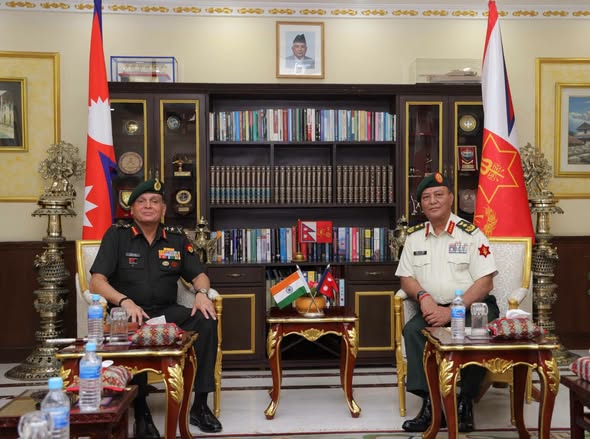
General Ashok Raj Sigdel and General Dhiraj Seth are meeting at a time when both armies have an interest in preserving predictability.
For Nepal, predictability means maintaining strategic autonomy while keeping its traditional security relationship with India functional.
For India, it means ensuring that a strategically important neighbour remains stable, communicative and resistant to security developments that could directly affect Indian interests.
Those objectives overlap, but they are not identical.
That distinction will define the quality of the relationship in the years ahead.
A relationship bigger than governments
The enduring strength of Nepal-India military relations has never rested entirely on the personalities of individual army chiefs.
It rests on institutions.
Generations of Gurkha soldiers have served in the Indian Army. Indian military institutions have trained and interacted with Nepali officers. Nepali and Indian commanders have maintained professional relationships through formal exchanges, exercises and ceremonial traditions.
The honorary-general system is the most visible symbol of this continuity.
But the real substance lies underneath it.
It is found in the networks of officers, veterans, families and institutions that continue to interact regardless of political cycles.
This explains why military diplomacy has repeatedly survived periods when political relations became difficult.
The armies have inherited a relationship that governments cannot simply switch on or off.
That does not make military diplomacy immune to politics.
It makes it more resilient to political volatility.
What General Seth’s first foreign trip really signals
The significance of General Seth choosing Nepal as his first foreign destination should therefore be understood carefully.
It does not automatically signal a new Indian policy toward Nepal.
It does not mean that military institutions are taking over diplomacy.
And it does not mean that every contentious bilateral issue will suddenly disappear.
What it does signal is that India considers maintaining early, high-level engagement with Nepal important.
The timing makes that signal more meaningful.
Nepal has a new political leadership. India is watching the evolving regional balance. China’s influence remains an important factor. The Gurkha recruitment issue remains unresolved. Border questions remain politically sensitive. And the wider international environment is becoming less predictable.
In such circumstances, institutional channels matter.
The visit gives both sides an opportunity to reaffirm what has worked, discuss what has become difficult and establish a framework for what comes next.
For Nepal, the challenge is to enter that conversation with confidence.
A smaller country does not have to choose between friendship with India and engagement with China. Nor does it have to allow either relationship to determine its domestic political choices.
Its strongest position is one based on clarity: national interest first, strategic autonomy, predictable diplomacy and mutually beneficial cooperation.
For India, the challenge is equally clear.
Nepal cannot be understood only through the prism of Indian security.
It is a sovereign country undergoing its own political transformation, and its younger generation is demanding a different political and economic relationship with the world.
Understanding that change will be essential to maintaining Indian influence.
The old ceremony, the new question
When General Dhiraj Seth receives the honorary rank of General of the Nepal Army, the ceremony will look familiar.
The insignia will be presented. The sword will be handed over. The guard will stand to attention. The national anthems will play. The two army chiefs will shake hands.
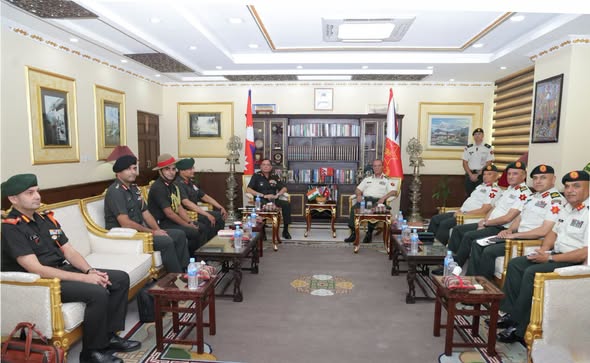
It will appear to be another chapter in a tradition that began in a very different South Asia.
But behind the ceremony lies a more contemporary question:
Can an old military relationship adapt to a new political and geopolitical Nepal?
That is the real test of General Seth’s visit.
The tradition has survived Rana rule, monarchy, democracy, civil conflict, constitutional transformation, border disputes, blockades and changes in government.
Its future survival, however, will depend on whether it can evolve from historical symbolism into a modern partnership based on mutual respect and clearly defined national interests.
For India, Nepal remains strategically important.
For Nepal, India remains too deeply connected to be treated as an ordinary neighbour.
And for both armies, the relationship remains one of the rare institutional bridges that has endured when politics has often struggled.
General Seth’s first foreign trip is therefore more than a visit.
It is a reminder that in South Asia, history does not disappear when politics changes.
It simply acquires a new meaning.
The ceremony in Kathmandu may last a few hours.
The relationship it represents has already lasted more than seven decades in its modern form-and more than a century in its deeper military history. The question now is what both countries will do with it next.