



KATHMANDU: The government has released two white papers aimed at strengthening the water and weather sectors.
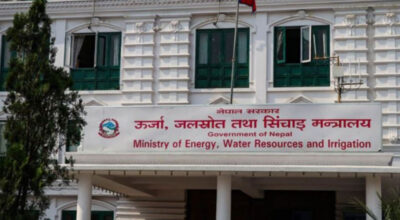
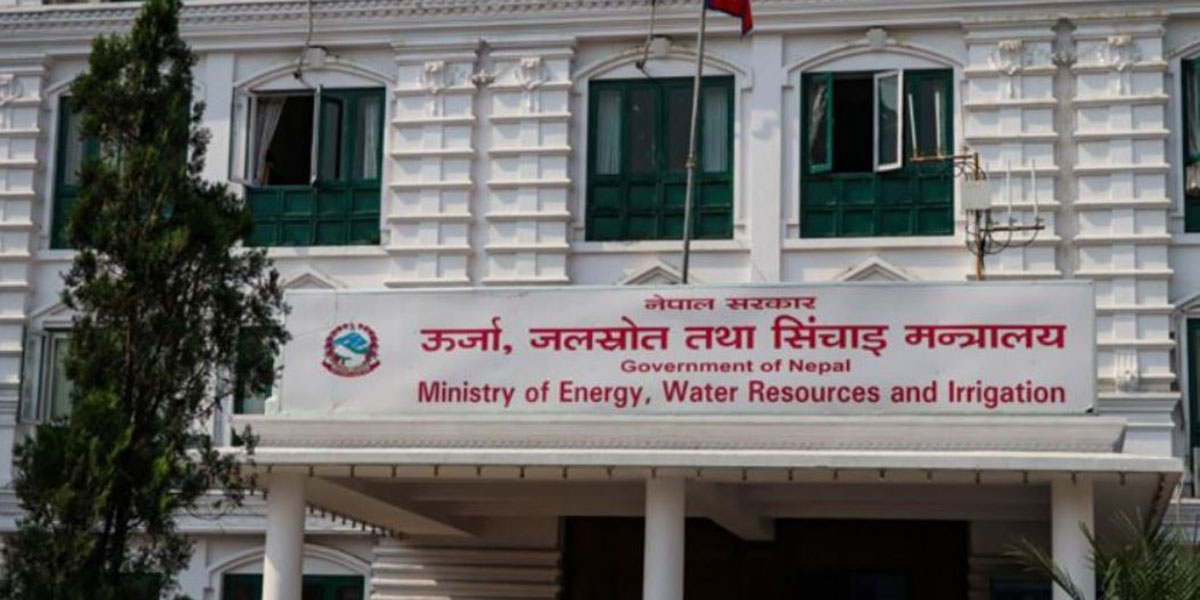
The Department of Hydrology and Meteorology and the Water and Water Resources Research Center under the Ministry of Energy, Water Resources and Irrigation unveiled the documents on Sunday.
The papers provide guidelines for the sustainable use of water resources, climate adaptation infrastructure, aviation safety, and disaster risk reduction.
The government plans to expand flood early warning systems across six major river basins and reduce the water levels of four high-risk glacial lakes.
This initiative, budgeted at approximately 49.9 million USD, is scheduled to run from 2026 to 2033. Authorities intend to apply risk mitigation measures based on previous successful experiences at the Tsho Rolpa and Imja glacial lakes.
Under the ‘Priority River Basin Flood Risk Management Project’ (2022-2028), the Water and Water Resources Research Center is installing flood early warning systems in six basins at a cost of 7.54 million USD.
The center will provide 24-hour flood forecasting services from May 15 to mid-October. Plans also include developing new flood forecasting models for the Karnali and Narayani river basins and establishing community-based systems under the Bagmati Improvement Project at a cost of Rs 26.1 million.
The Department of Hydrology and Meteorology intends to prioritize the use of artificial intelligence, machine learning, and high-performance computing systems to improve forecast accuracy. The department plans to upgrade 503 manual weather stations to automatic weather stations.
Proposals have been made to maintain weather radars in Surkhet, Palpa, and Udayapur, and to install an X-band radar for the Kathmandu Valley. Information will be disseminated through a 1155 toll-free service, mobile applications, and social media.
The white papers acknowledge that while these plans are expected to significantly aid disaster management, their success depends on sustained funding, skilled technical personnel, regular equipment maintenance, and inter-agency coordination.