

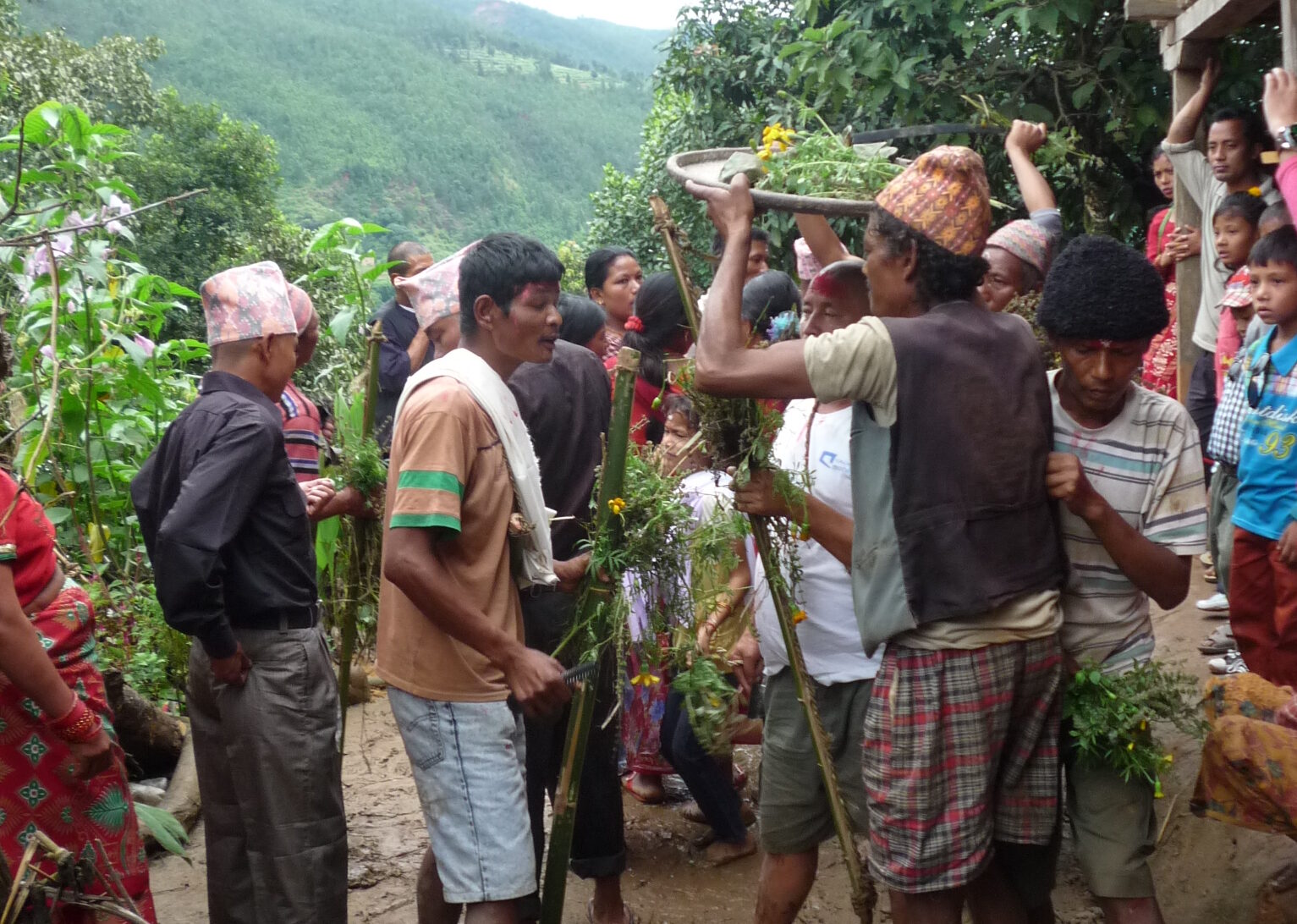
KAVREPALANCHOWK: As families across Nepal are celebrating one of the major festivals- Dashain-, with tika blessings and reunions, the Majhi community in Kavrepalanchok district observes a distinctive three-day tradition honouring deceased family members through its ancestral festival-‘Pitara’.
Rooted in generations of indigenous customs, the festival is observed on specific days following Dashain’s Bijaya Dashami and Tihar’s Bhai Tika, according to the community’s traditions.
Unlike the annual death-anniversary rituals practiced in many other communities, the Majhi tradition holds that once the Pitara rites have been performed for a deceased relative, there is no need to repeat the annual shraddha ceremony during which departed ancestors (Pitri) are honoured.
The festival rituals begin with drawings of elephants, horses, soldiers, deer, motor vehicles and airplanes on house walls, symbolizing the means by which departed souls are believed to arrive.
The figures may also depict clothing associated with the deceased. Songs, dances and prayers continue through the night, before the ritual concludes with the ceremonial immersion of the figures in a river the following morning.
Ram Krishna Majhi of Aapchaur, in Mandandeupur Municipality-10, shared that community members come together to honour those who have died during the year.
Local youths have also been taking the initiative to keep the tradition alive, he mentioned.
According to the local folklore, the festival began after Lord Shiva and Goddess Parvati, while roaming around on Earth, asked a Majhi, boatman, to ferry them across a river.
Pleased with his help, the divine couple are believed to have blessed the community, promising that its deceased members would attain heaven if the living honoured them with singing and dancing.
The Majhi, a marginalized indigenous community historically associated with boating, fishing and river-based livelihoods in Nepal, has its own cultural practices and oral traditions.
Pitara reflects the community’s distinctive understanding of death, remembrance and the relationship between the living and their ancestors.
For the Majhi people of Aapchaur in Kavrepalanchowk, preserving Pitara is more than observing a ritual; it is a way of keeping their ancestral identity alive and passing a cherished cultural legacy to younger generations.