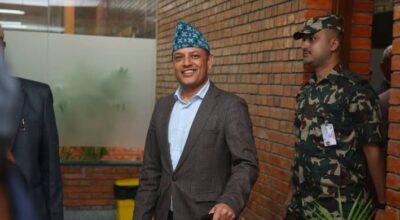


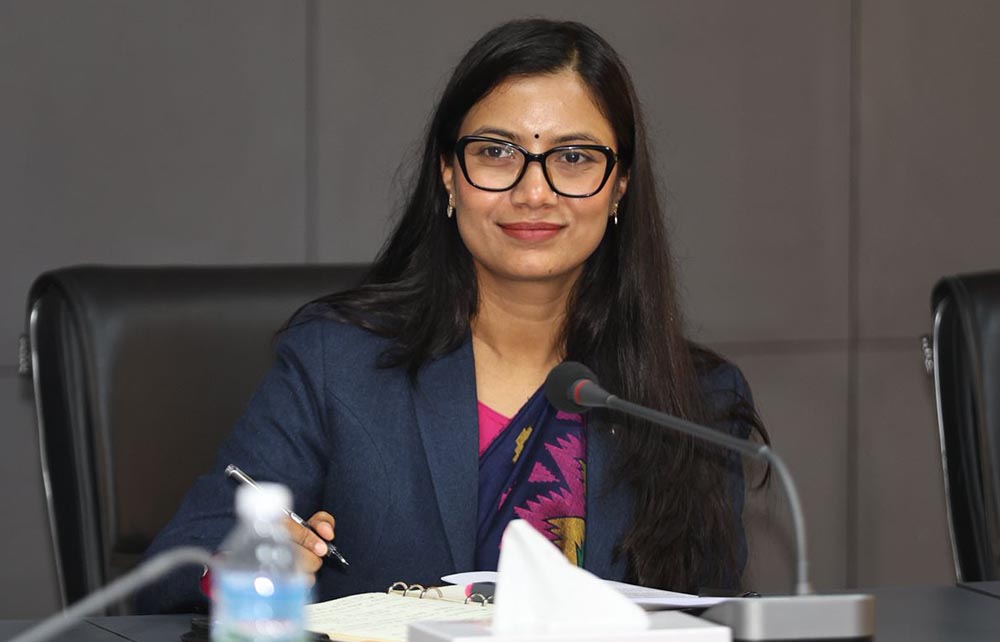
LALITPUR: The Law, Justice and Parliamentary Affairs Minister Sobita Gautam has pledged to reform existing laws and policies on disaster risk reduction and build safer infrastructure suited to the country’s geography.
Speaking at the opening session of the Fifth National Conference on Disaster Risk Reduction in Lalitpur on International Day for Disaster Risk Reduction, Gautam said major floods in recent years had underscored the need to take experts’ warnings about disaster risks seriously.
“Nature has been sending us messages repeatedly over the past 15 years. Disaster experts have been warning that Nepal is at risk and that laws and infrastructure must be improved. But this time, the flood in Rasuwa has made it imperative for us to listen to those warnings,” she said.
Gautam said disasters are natural processes, but the extent of damage depends partly on human decisions, laws, policies and the design of infrastructure. She said the damage caused by the Rasuwa flood could have been reduced if structures along the river corridor had been built in safer locations.
She stressed the need to change the country’s development approach in light of its geography and rising disaster risks, adding that infrastructure must be made more resilient to reduce future losses of life and property. She also pledged to formulate laws and policies based on scientific evidence, data and expert recommendations.
Gautam said young people who had long raised their voices on climate change and disaster risk reduction were now reaching policymaking positions, making it important to prioritize risk reduction in development plans.
Referring to the August 26 flood in Rasuwa, she said the government had faced several challenges during rescue, relief and the management of bodies. The lack of adequate cold-storage facilities for bodies swept away by the flood had made it difficult to make timely decisions, she added.
She said the Cabinet had introduced a legal provision allowing bodies to be safely buried in the ground during emergencies, based on guidance from the World Health Organization (WHO).
“Disasters teach us many lessons, and decisions sometimes have to be made immediately during emergencies. But such decisions must also take legal requirements and social sensitivities into account,” Gautam said.
She added that laws would be revised to address issues arising during disasters, including the legal declaration of people as dead or missing and matters related to property, family relationships and other rights.