

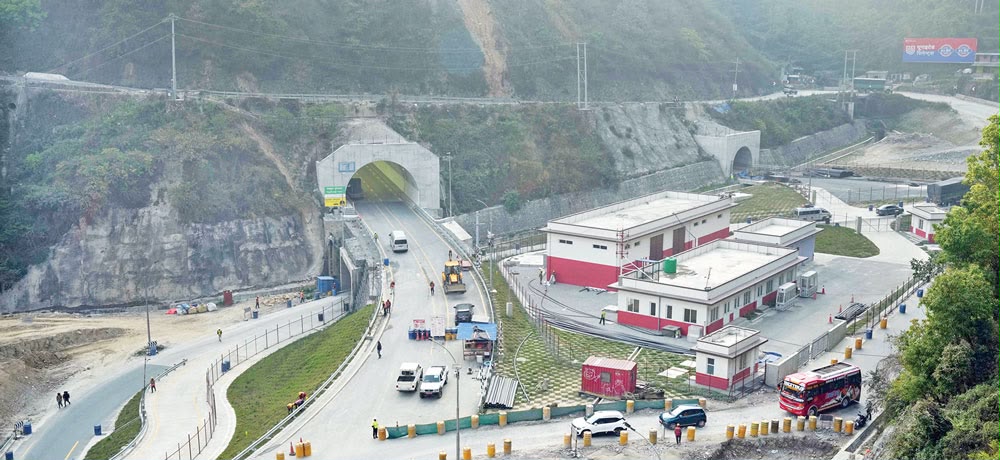
KATHMANDU: The Nagdhunga–Sisnekhola Tunnel is set to open to the general public soon, with authorities preparing to begin phased commercial operation following final safety checks and emergency response exercises.
The tunnel, inaugurated in the second week of Shrawan, is currently being used only by ambulances and other emergency and essential vehicles. Sanjay Panthi, deputy project director of the Nagdhunga–Sisnekhola Tunnel Project, said around 150 to 200 emergency vehicles are using the tunnel daily, free of charge.
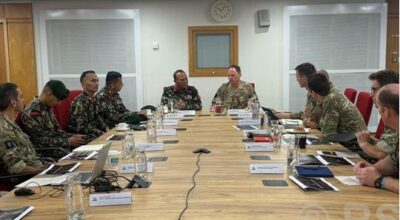
According to Panthi, an emergency mock drill has already been completed as part of preparations for opening the tunnel. The exercise was conducted by the project’s Emergency Response Group, involving Kathmandu Metropolitan City, Chandragiri Municipality, the fire brigade, the Armed Police Force Hospital and the APF’s disaster response team.
The drill focused on responding to a fire inside the tunnel, including scenarios involving a passenger bus catching fire and the evacuation and rescue of passengers. Further assessments are underway to strengthen emergency response procedures.
Panthi said the companies responsible for operating the tunnel will now submit a tunnel operation plan. The project will review and approve the plan before allowing commercial operation in phases.
Initially, only smaller vehicles will be permitted to use the tunnel at a restricted speed. Authorities have opted for a phased opening because emergency response teams have yet to conduct rescue exercises involving accidents involving large vehicles inside the tunnel.
Preparations are underway to allow small vehicles to travel through the tunnel from Monday, according to Panthi.
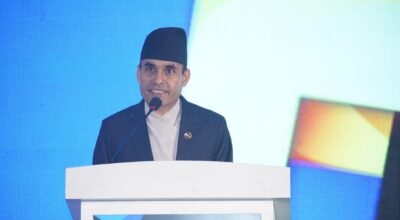
The tunnel was inaugurated in the presence of Infrastructure Development Minister Sunil Lamsal, Japanese Ambassador to Nepal Toru Maeda and Japan International Cooperation Agency (JICA) President Akihiko Tanaka.
Once fully operational, the tunnel is expected to significantly improve Kathmandu Valley’s transport system by reducing travel time and distance, cutting fuel consumption and transportation costs, and supporting the expansion of commercial activities.
The main tunnel is 2.688 kilometres long, while a separate 2.55-kilometre emergency escape tunnel has also been constructed.
The government has already approved toll rates ranging from Rs 60 to Rs 600 depending on the type of vehicle. The government has published the rates in the Nepal Gazette, with different charges applicable for vehicles entering Kathmandu and those travelling out of the capital through the tunnel.