




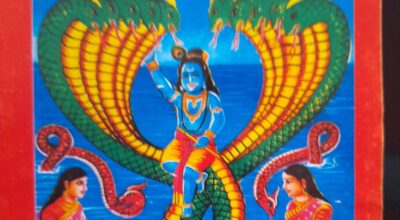
KATHMANDU: Nepal is observing Nagpanchami today, with devotees across the country paying homage to Nag, the serpent deity, in accordance with an age-old Hindu tradition. Many households mark the festival by placing or affixing images of serpents above their main doors as a traditional symbol of reverence and protection.
Observed annually on the fifth day of Shrawan Shukla under the lunar calendar, Nagpanchami is dedicated to the worship of serpents, which occupy a significant position in Hindu beliefs, mythology and religious practices.
According to traditional belief, displaying an image of a serpent at the entrance of a home helps ward off dangers associated with snakes and scorpions. It is also believed to protect households from disasters such as fire and lightning.
Serpent worship is believed to have its roots in the Vedic era. In Vedic tradition, Nag is regarded as the sovereign of serpents and is linked with protection, fertility and the natural world.
As part of the festival, devotees visit temples dedicated to Nag as well as sacred ponds and other water bodies, where they offer prayers, flowers, milk and other religious offerings. In the Kathmandu Valley, Nagpokhari, Taudaha and Nagdaha are among the key religious sites where devotees gather in large numbers to observe the festival.
Beyond its religious significance, Nagpanchami reflects the traditional Hindu practice of revering nature and seeking harmony with its various forms. The festival is observed by many devotees as an opportunity to pray for the safety, prosperity and well-being of their families.