

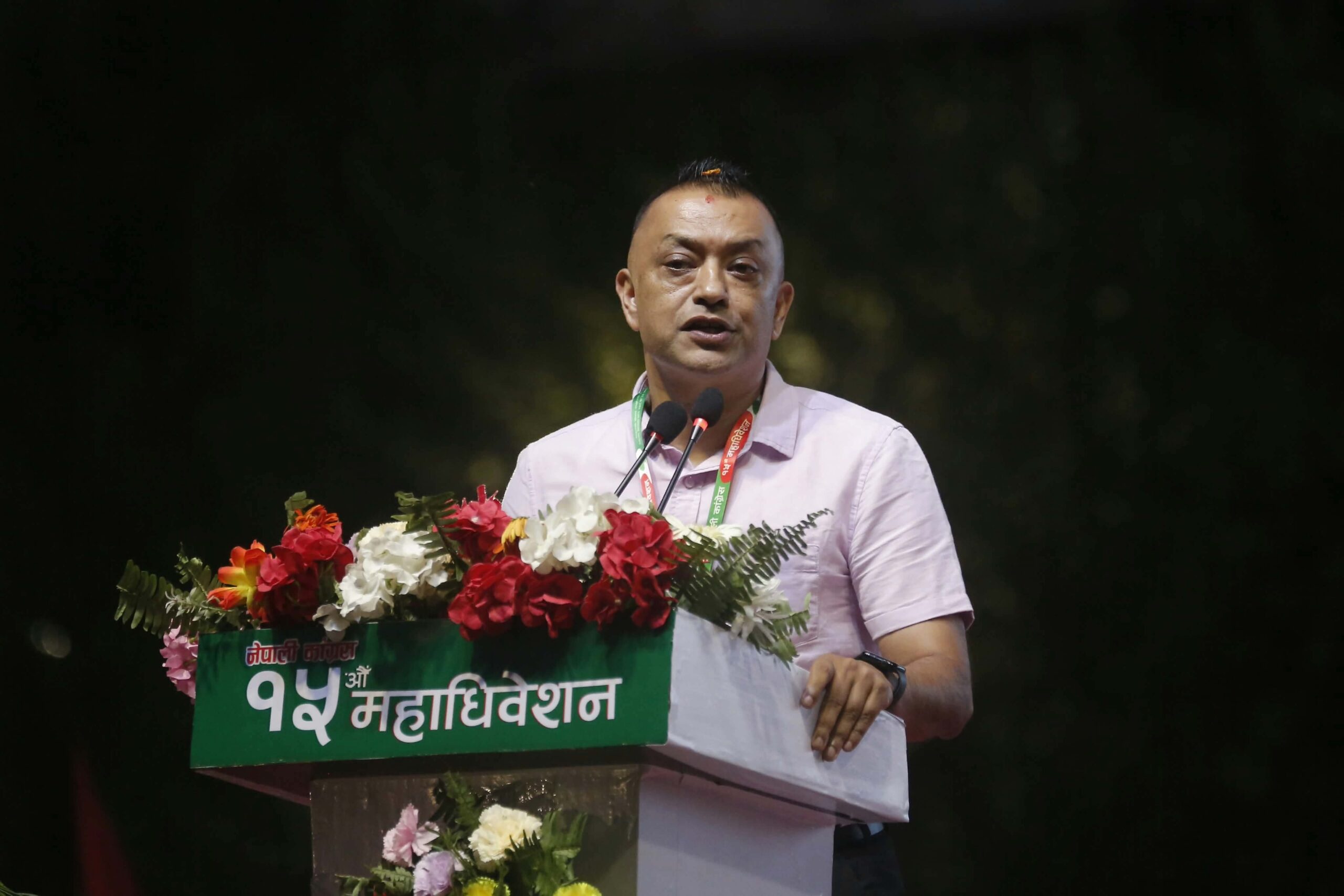
KATHMANDU: Gagan Kumar Thapa has been elected to the position of President of the Nepali Congress, obtaining 6,584 votes during the 15th general congress of the party.
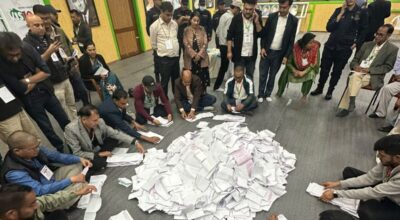
His opponent Shyam Krishna Khadgi garnered merely 375 votes. The electoral process, conducted as part of the 15th Congress, resulted in a total of 7,013 votes being cast, with 54 votes declared invalid.
Thapa’s political trajectory commenced during his secondary education, when he participated in the 2046 mass movement while enrolled in class 9.
Throughout the preceding four decades, he has advanced progressively through organizational ranks, commencing as a member of Bal Congress and subsequently occupying multiple positions within the Nepal Student Union, including secretary and president at Trichandra Multiple Campus, Free Students Union.
Thapa’s prominence in student politics expanded as he attained membership in the Senate of Tribhuvan University and assumed significant leadership responsibilities within the Union.
His activist endeavors reached their zenith in 2061 when he orchestrated demonstrations against the king’s direct rule, which resulted in treason allegations against him.
His steadfast commitment to democratic values garnered recognition from Amnesty International, which designated him a ‘prisoner of conscience.’ Thapa’s appointment as president constitutes a noteworthy achievement in his enduring commitment to political activism and organizational leadership within the Nepali Congress.
Thapa established himself as an influential participant in Nepali politics through his substantial engagement in the people’s movement of 2005/06, championing republican governance and democratic principles.
His political career progressed substantially upon his appointment to the Constituent Assembly in 2008, where he concentrated on pivotal matters including constitutional development, fundamental rights, child welfare, citizenship regulations, and energy security.
Following his election from Kathmandu Constituency-4 in 2013, he contributed significantly to the constitutional development process and subsequently presided over the Agriculture and Water Resources Committee in 2014, offering substantive contributions to policy deliberations concerning agriculture, energy, and water resources.
In 2016 , Thapa served in the capacity of health minister. Thapa, who was elected General Secretary at the 14th Congress convention held in 2022, had been actively engaged in advancing policy discourse and organizational reform initiatives within the party.
Following the ‘Jen-Z’ movement in September 2025, Thapa, in collaboration with fellow General Secretary Bishwa Prakash Sharma, convened a special convention to advocate for enhanced youth participation within the party. Subsequently, Thapa was unanimously elected as party President.
President Thapa, having assumed party leadership from the special convention, was re-elected to the chairmanship position following the 15th party convention held nine months thereafter.
In addition to his political endeavors, he maintained involvement in academic instruction, communication initiatives, and social advocacy campaigns.
Thapa has consistently prioritized youth opportunity advancement, public education investment, equitable health service accessibility, and institutional governance as the central pillars of his political agenda.
His progression from student-level political engagement to national leadership has been regarded as indicative of the future trajectory of Nepali Congress, encompassing organizational restructuring and generational political participation.