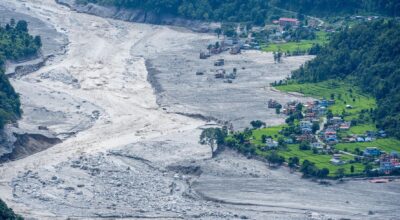


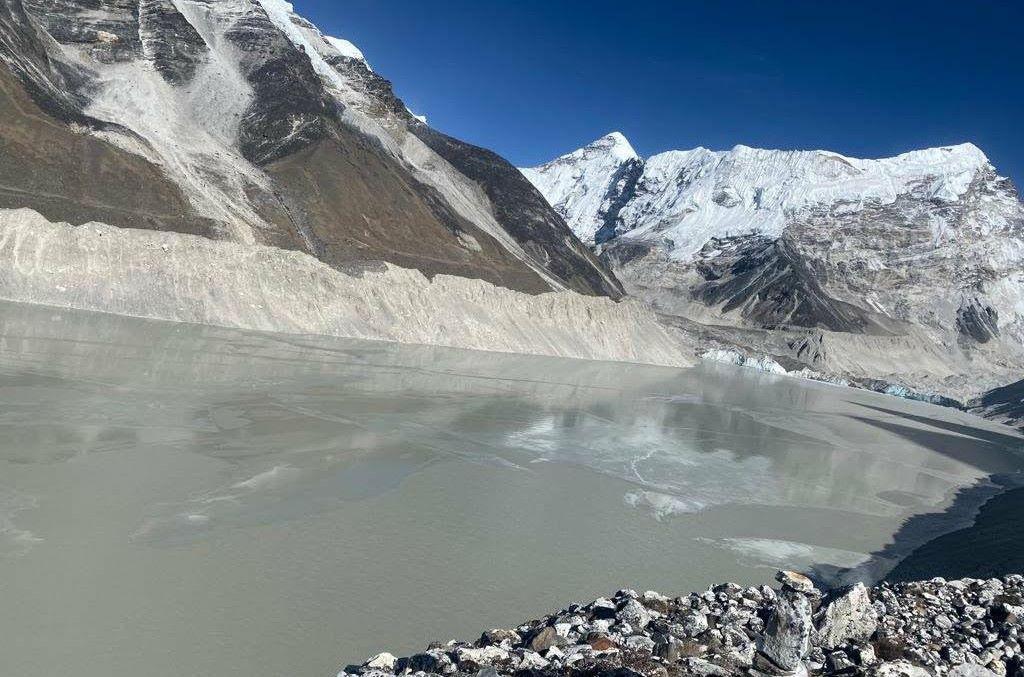
KATHMANDU: More than 100 glacial lakes in Nepal are at risk of bursting, experts have warned, as rising temperatures accelerate glacier melt and the formation and expansion of glacial lakes.
Experts say Nepal needs urgent policies, plans and programmes to reduce the risk, including lowering water levels in high-risk lakes, continuous monitoring and expanding early-warning systems.
Dr. Nitesh Khadka, a scientist who earned his PhD on glacial lakes from the Chinese Academy of Sciences, said Nepal and Tibet contain the highest concentration of high-risk glacial lakes in the Hindu Kush Himalaya region.
An earlier study identified 21 glacial lakes in Nepal as being at high risk. Khadka said the assessment is now outdated and the number of potentially dangerous lakes could have risen to more than 100.
“More than 2,300 glacial lakes have been identified in Nepal. Not all carry the same level of risk, but lakes formed by debris from avalanches and landslides may remain unstable and can burst at any time,” he said.
Glacial lake researcher Dr. Arun Bhakta Shrestha said Nepal should expand early-warning systems and implement risk-reduction measures for other vulnerable lakes, similar to interventions carried out at Imja and Tsho Rolpa.
A 2020 study identified 47 high-risk glacial lakes across Nepal, Tibet and India, including 25 in Tibet and one in India. According to Khadka, most of Nepal’s high-risk lakes are located in the Koshi basin, particularly in the Dudh Koshi basin.
The risk is further heightened because many major rivers originating in Nepal have their headwaters in Tibet. Khadka said an outburst from a high-risk lake in Tibet could have a direct impact on Nepal’s Arun, Dudh Koshi, Tamor, Bhote Koshi, Budhi Gandaki, Marsyangdi and Humla Karnali river basins.
Professor Dr. Rajendra Bhakta Kayastha said the threat posed by glacial lakes must be treated as a serious and sensitive issue. Rising global temperatures are accelerating glacier melt and the formation of glacial lakes, increasing the potential for sudden floods and widespread damage downstream.