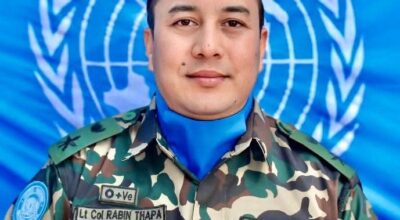




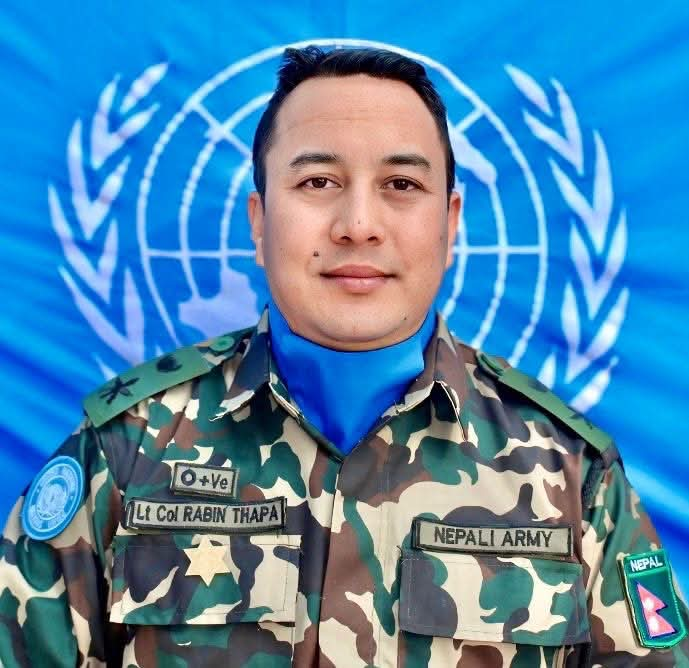
KATHMANDU: Nepali Army Lieutenant Colonel Rabin Thapa integrated women peacekeepers into patrols, armed escorts and emergency operations while serving as contingent commander with the United Nations peacekeeping mission in the Democratic Republic of the Congo, highlighting the role of women’s participation in civilian protection.
Thapa served with the United Nations Organization Stabilization Mission in the Democratic Republic of the Congo (MONUSCO), where women peacekeepers under his leadership took part in operational duties traditionally dominated by men, as well as community engagement and initiatives to support access to education.
Their participation helped peacekeepers communicate with local communities and better understand the concerns and protection needs of women and girls, according to an account of his service.
During periods of heightened insecurity, thousands of civilians sought protection near United Nations bases following outbreaks of violence. Thapa’s battalion reinforced patrols and protection measures as women and children accounted for a substantial proportion of those seeking safety.
The battalion also supported community dialogue and efforts to maintain access to education. In one operation, peacekeepers escorted students, including nine girls, through an area facing security threats so they could reach their examinations safely.
The operation highlighted the role peacekeepers can play in protecting civilians beyond immediate security threats, including helping communities maintain access to essential services during periods of instability.
Thapa’s approach reflected the objectives of the United Nations Women, Peace and Security (WPS) agenda, which calls for women’s meaningful participation in peace and security processes, the protection of their rights and the integration of gender perspectives into conflict prevention and response.
The agenda is rooted in United Nations Security Council Resolution 1325, adopted in 2000, and subsequent resolutions addressing women’s participation and protection in conflict and peacebuilding.
Women’s participation in peacekeeping can help missions engage with different sections of local communities and identify protection concerns that might otherwise receive insufficient attention. The United Nations agenda also stresses that women should participate in decisions affecting peace and security, rather than be viewed solely as beneficiaries of protection.
Thapa’s service illustrates how these principles can be incorporated into operational responsibilities, from patrols and escorts to community dialogue. His battalion’s activities linked women’s participation in security operations with efforts to protect civilians and support girls’ access to education.
Nepal has contributed military personnel to United Nations peacekeeping missions for decades. Nepali peacekeepers have served in challenging operational environments as part of international efforts to protect civilians and implement UN mandates.
The Women, Peace and Security agenda seeks to ensure that women participate meaningfully in these efforts and that their perspectives inform decisions on security, protection and peacebuilding.
Thapa’s experience with MONUSCO highlights how military leadership can put those commitments into practice through the participation of women peacekeepers, engagement with local communities and measures to protect civilians in conflict-affected areas.