

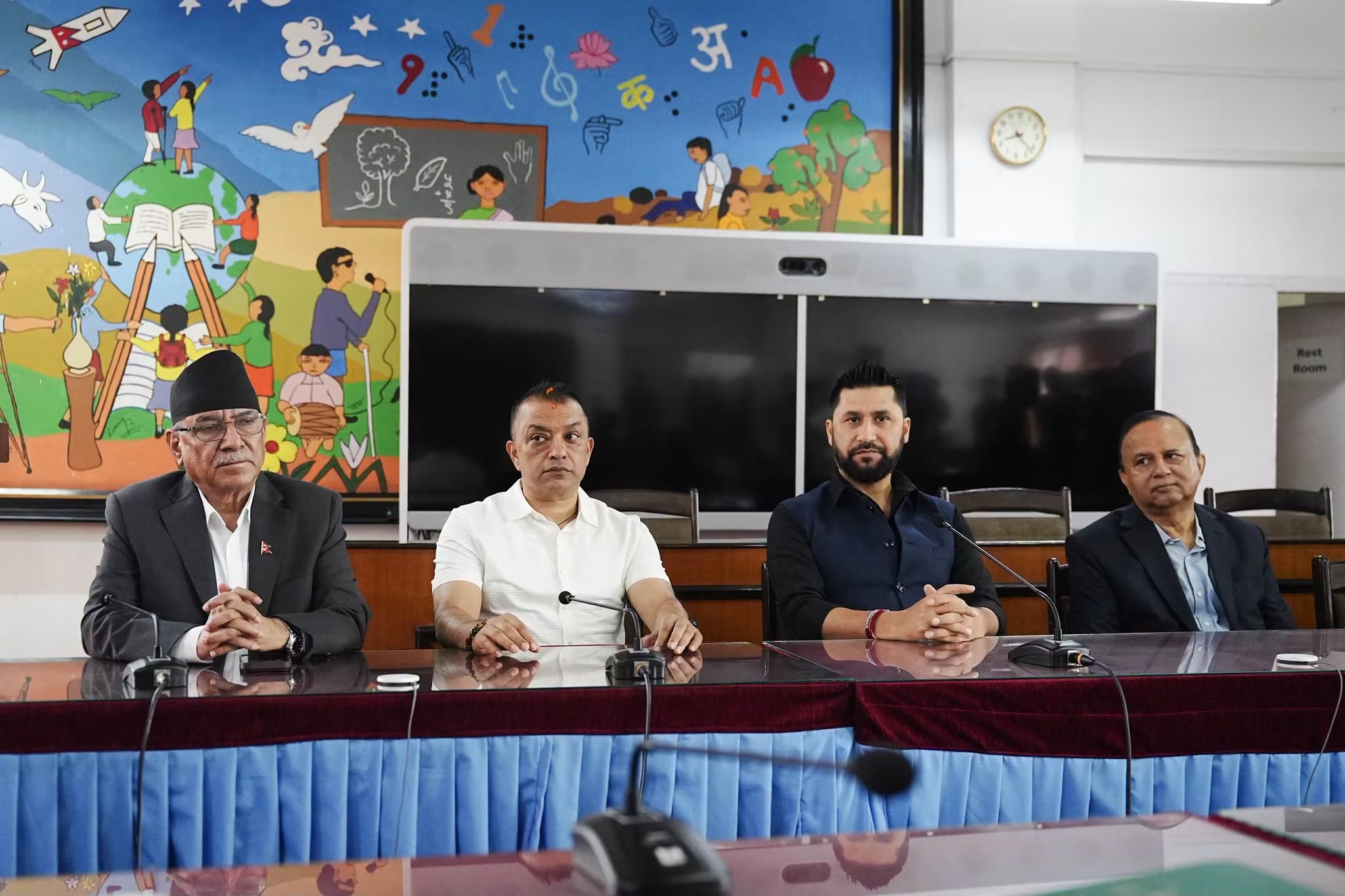
KATHMANDU: An all-party meeting convened by Rastriya Swatantra Party (RSP) Chair Rabi Lamichhane to forge a common political response to the recent violence in Sunsari and the tense security situation that followed concluded with broad agreement on issuing a joint appeal for peace, restraint, and communal harmony.
While leaders across the political spectrum expressed a shared commitment to preventing further escalation and restoring public confidence, the meeting also exposed sharp differences over the government’s handling of the crisis. Several opposition leaders questioned what they described as the absence of decisive leadership from Prime Minister Balendra Shah and Home Minister Sudhan Gurung, arguing that the government had failed to respond adequately to one of the country’s most sensitive communal security challenges in recent years.
Lamichhane, however, defended the government, stating that both the Prime Minister and the Home Minister were actively carrying out their responsibilities and emphasizing that political parties should prioritize national unity over partisan criticism during a period of heightened tension.
The discussion brought together leaders from major political parties, many of whom stressed that the violence should not be viewed as an isolated law-and-order incident but as a warning sign of growing communal sensitivities that require careful political management.
Nepali Congress General Secretary Gagan Thapa began by paying tribute to those killed in the Sunsari violence and expressing condolences to the bereaved families. He said the tragedy demanded a collective political response rather than partisan confrontation. According to Thapa, restoring communal harmony would require sustained dialogue at the grassroots level involving all political parties. While pledging the Congress’ full cooperation, he also voiced concern over what he described as the Prime Minister’s inadequate public response to such a sensitive national issue, arguing that the head of government should have immediately coordinated with relevant agencies and taken visible leadership.
CPN-UML General Secretary Shankar Pokharel argued that the initiative for such a meeting should have come from the government itself rather than from political parties. He maintained that although the gathering was a positive step, responsibility for resolving the crisis ultimately rests with the state. Pokharel questioned the handling of the security operation, saying the size of the crowd in Sunsari had not been so large as to justify what he described as excessive use of force. He called for justice for victims, stronger local administrative leadership, peace rallies, district-level all-party dialogues, and active involvement of local governments in reconciliation efforts.
Former Prime Minister Pushpa Kamal Dahal “Prachanda” thanked the RSP for organizing the discussion, saying such forums are essential for building national consensus during sensitive periods. Drawing on his own experience as prime minister, he said cross-party consultation had often been necessary to address national crises and constitutional issues. Prachanda criticized the government’s response, arguing that prevention is always preferable to crisis management and suggesting that adequate preventive measures had not been taken before the violence erupted. He also said reports of suspicious individuals, including possible foreign nationals, being present at the scene deserved thorough investigation. He urged the government to conduct an impartial inquiry and make its findings public.
Aren Rai of the Shram Sanskriti Party welcomed the initiative and reaffirmed his party’s commitment to religious harmony. Referring to a previous incident in Janakpur involving his party’s leadership, he said the Sunsari violence reflected a broader pattern of rising communal tensions. Rai warned that excessive force by security agencies could further inflame violence and criticized the government’s apparent inability to gather timely and credible intelligence. He also called on the media to avoid sensationalism and instead promote peace and social cohesion.
Rastriya Prajatantra Party Chair Rajendra Lingden said the government should have led the dialogue and that the Home Minister should have been present. While expressing appreciation for the RSP’s initiative, he argued that the Sunsari incident was not an isolated event but part of a broader trend that requires comprehensive study. Lingden suggested there could be geopolitical dimensions behind the unrest, although he did not provide evidence, and said the government should establish an independent commission to investigate the underlying causes. He also criticized a recent decision by the Morang District Administration Office requesting restraint in the use of loudspeakers during Hindu religious events, arguing that it did not address the root causes of communal tensions. According to him, the government must balance the sentiments of the majority community while ensuring the safety and rights of minority groups.
Senior leader Mahanta Thakur said the full facts surrounding the incident remained unclear. He expressed disappointment that, despite Nepal having its first Madheshi Prime Minister, the government’s response had not met public expectations. Thakur added that if police force had been applied disproportionately against any particular community, it would raise serious concerns requiring investigation.
Prakash Adhikari of the Janata Samajbadi Party said the violence should not be viewed merely as a political dispute but as a potentially dangerous communal conflict capable of escalating further. He questioned why government representatives were absent from such an important dialogue and said security agencies appeared to have fallen short in managing the sensitive situation. He pledged his party’s full support for efforts aimed at restoring peace.
Janamat Party Chair Dr. CK Raut delivered one of the meeting’s strongest interventions, describing communal polarization as potentially Nepal’s greatest future security challenge. Familiar with the social composition of the Sunsari area, Raut argued that the violence had deep historical roots and did not emerge suddenly. He questioned why security agencies repeatedly escaped accountability following such incidents and expressed concern over the deployment of the Nepal Army, warning that the consequences could have been catastrophic had the situation deteriorated further. Raut suggested the incident may have been planned and called for a comprehensive investigation into both the violence itself and the conduct of security forces. He also criticized the government’s communication strategy, saying even a brief public address from the Prime Minister could have helped calm public anxiety. Looking beyond the immediate crisis, Raut warned that the rise of religious extremism over the past decade should be taken seriously and urged political leaders to prepare for similar challenges in the future.
Ganesh Parajuli, who recently visited the affected area, said local communities from both sides remained fearful following the violence. He stressed the importance of understanding the historical and social background of the conflict and praised local representatives who were working to rebuild trust. At the same time, he suggested that unidentified forces might be attempting to deepen communal divisions.
Bhishmaraj Angdembe also criticized the government’s handling of the crisis, saying the Prime Minister should have immediately consulted the President and initiated dialogue among all political parties. He questioned whether the government had taken the issue seriously enough, particularly given the absence of both the Prime Minister and the Home Minister from the meeting. Angdembe further argued that the state had long recognized the region as conflict-sensitive and therefore should have been better prepared. He expressed concern over the repeated deployment of the Nepal Army during internal crises and urged greater caution in the use of social media during periods of communal tension.
Representing the government, Finance Minister Swarnim Wagle said the Prime Minister had already expressed deep concern over the incident publicly and assured participants that the government regarded the situation with the utmost seriousness. He pledged to present the meeting’s conclusions and recommendations to the Prime Minister and the Council of Ministers for further action.
Closing the meeting, RSP Chair Rabi Lamichhane thanked all political leaders for participating in what he described as a critical national dialogue. He said the gathering demonstrated that political parties could unite responsibly when national interests were at stake. Lamichhane proposed that the meeting issue a joint statement reflecting a common political commitment to peace and communal harmony, stressing that communal issues are among the most sensitive challenges facing any society and must be addressed before tensions spiral further out of control.
Despite sharp disagreements over the government’s response, leaders from across Nepal’s political spectrum ultimately agreed that restoring peace, preventing communal polarization, and preserving social harmony must remain the country’s highest priority. The meeting concluded with consensus on preparing a joint public appeal urging restraint, dialogue, and unity in the wake of the Sunsari violence.