

KATHMANDU: The growing appointment of retired Nepal Army officers to political and key government positions has raised questions over the military’s expanding influence in the government led by Prime Minister Balen Shah.
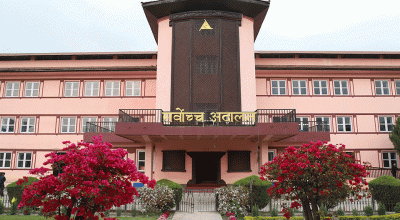
The appointments come amid criticism of the Nepal Army over its response during the destructive events of September 09, 2025, when fires were reported at Singha Durbar, the Supreme Court and several government facilities across the country. The Army had faced allegations of failing to adequately support the elected government during the unrest.
Since taking office, however, Prime Minister Shah has continued appointing retired military officers to political positions as well as advisory roles in ministries.
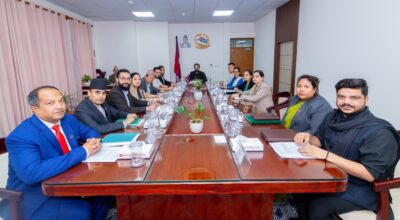
The latest appointment is that of Dharmendra Kumar Jha, a retired technical major general from the Nepal Army’s engineering corps, as a paid expert adviser to Infrastructure Development Minister Sunil Lamsal.
Ram Hari Pokharel, joint secretary and spokesperson at the Infrastructure Development Ministry, said Jha had been appointed as an unpaid adviser despite holding a position equivalent to the special class.
“Although the appointment is equivalent to the special class, he has been assigned the role of an unpaid adviser,” Pokharel said.
The expansion of ministerial advisory positions has also drawn attention because the Shah administration had initially sought to project a message of reducing administrative costs by cutting the number of ministries.
The Infrastructure Development Ministry, however, has prepared a proposal allowing the minister to appoint advisers in as many as 22 areas, ranging from artificial intelligence to sanitary infrastructure. Jha is among the advisers appointed under the expanded arrangement.
Minister Lamsal has also appointed Santosh Pandey, former Kathmandu Valley Water Supply Management Board executive director Sanjeev Bikram Rana and Pradhan as expert advisers. Pandey is a paid adviser and was sent to the United States to participate in a UN-Habitat programme that was originally supposed to be attended by a ministry secretary.
The government has also previously appointed retired military officers to senior positions in state bodies.
Dr. Anand Singh Bhat, who retired as a colonel from the Nepal Army in 2019, was appointed chairman of the executive committee of the High-Powered Committee for Integrated Development of the Bagmati Civilization.
The recommendation process for the appointment itself drew controversy after the government revised the recommendation notice, moving Bhat, who had originally been listed second, to the first position and shifting Dr. Bikash Adhikari, initially recommended first, to second.
The Nepal Airlines Corporation had also been preparing to appoint retired Nepal Army lieutenant general Dipak Prasad Bastola as its executive chairman. Bastola had been appointed as a member of the corporation’s board on, paving the way for his elevation.
However, the court later scrapped the appointments, ruling that the selection process involving Bastola and other board members was flawed.
Following the court’s decision, the government appointed Maheshwar Bhakta Shrestha as executive chairman despite him being over 80 years old, raising further questions over compliance with the corporation’s regulations.
The increasing presence of retired military officials in government appointments has therefore emerged as a significant issue of governance and institutional balance under the Shah administration.