



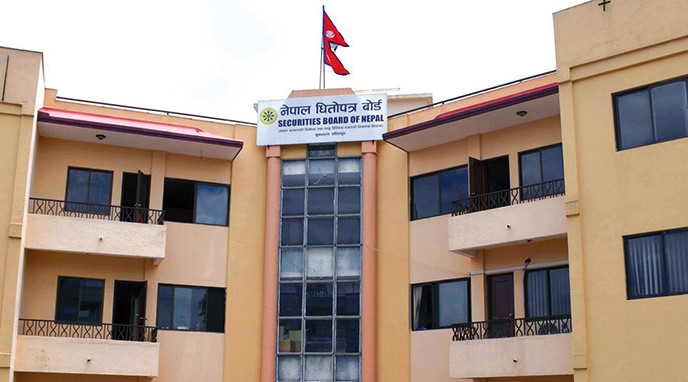
KATHMANDU: The Securities Board of Nepal (SEBON) has published a white paper outlining a comprehensive plan to modernize Nepal’s primary capital market and make it more technology-oriented, transparent and globally competitive.
The document reviews the evolution of the country’s primary market, assesses its current condition and presents a long-term reform roadmap aimed at improving efficiency and introducing qualitative changes to the public issuance system.
SEBON stated that Nepal’s capital market began taking shape after Biratnagar Jute Mills and Nepal Bank Limited issued shares to the public in 1994 BS. Since fiscal year 2050/51, approvals worth more than Rs 765 billion have been granted through the primary market.
According to the board, Nepal now has more than 8 million beneficiary accounts and over 7 million Mero Share accounts, with capital market participation reaching roughly 26 percent of the population.
The white paper identifies several structural weaknesses, including overwhelming demand for IPOs, reliance on lottery-based share allocation and the shortcomings of the fixed-price system, which SEBON says limits proper market-driven price discovery.
The regulator noted that the market is still dominated by retail investors and called for greater participation from institutional and anchor investors to improve confidence and stability.
Among the key proposals are strengthening the book-building mechanism, introducing anchor investors, creating a fully digital IPO process with e-KYC integration, and shifting regulation toward a risk-based and disclosure-based framework.
SEBON has also proposed separate eligibility standards for sectors such as hydropower, infrastructure and startups, recognizing that they have different investment characteristics.
The reform agenda has been divided into three stages: legal and regulatory revisions within one year, expansion of digital systems and institutional capacity within two years, and the introduction of fully market-based pricing and greater foreign institutional participation within five years.
The board said its broader goal is to develop Nepal’s primary capital market in line with international best practices by 2035, channel domestic savings into productive sectors and support sustainable economic growth.
SEBON emphasized that the white paper is intended not only to reform the IPO process but also to serve as a strategic blueprint for building a more balanced and modern financial system in Nepal.