

KATHMANDU: Nepal has laid emphasis on the collective and coordinated efforts among international communities to address climate risk associated with mountains of Nepal to sea in an integrated manner.
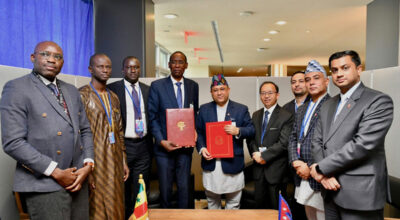
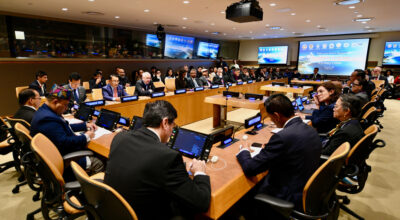
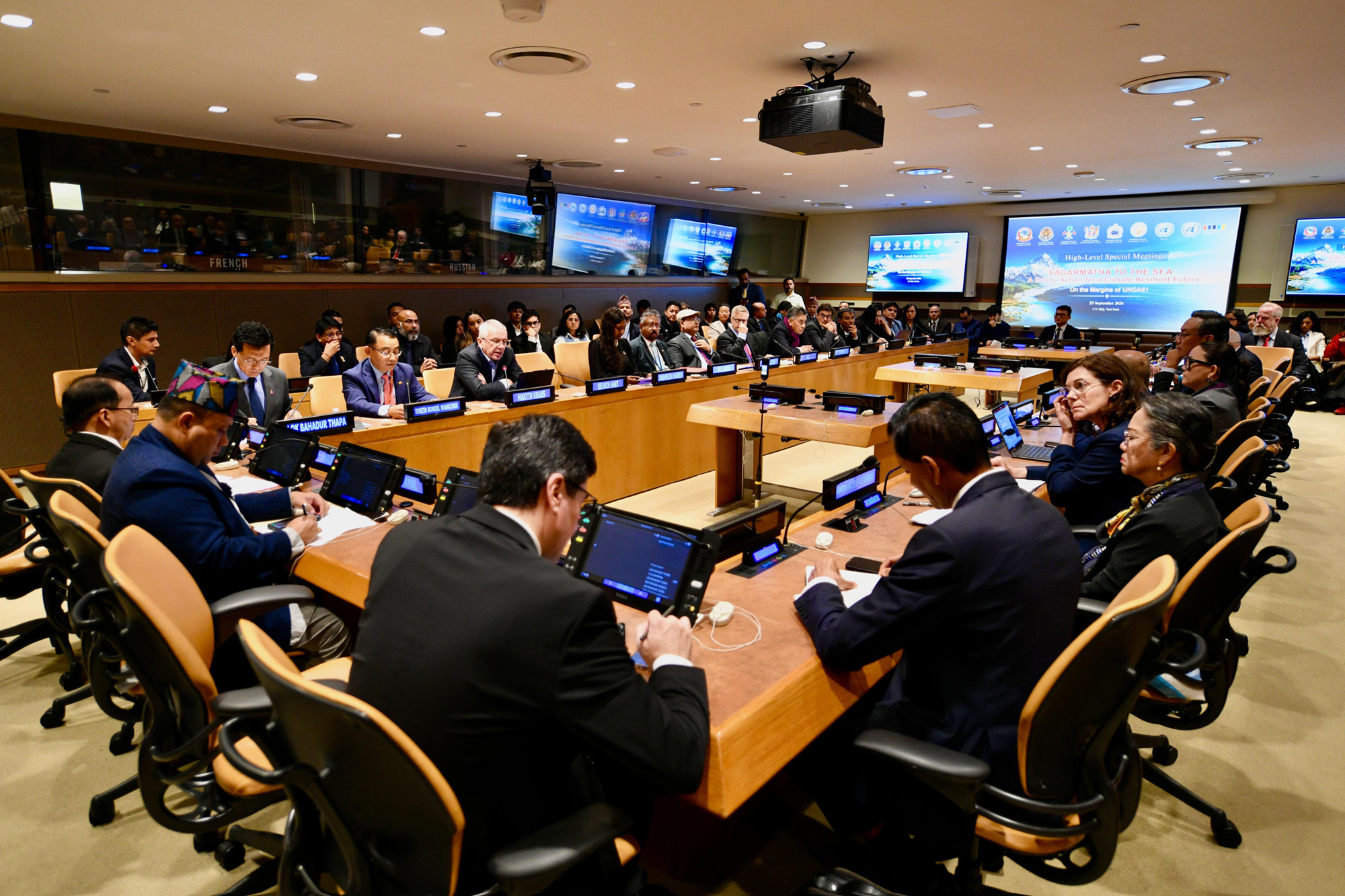
During a special event “Sagarmatha to the Sea: A Call to Action for a Climate-Resilient Future” at the United Nations Headquarters today, Foreign Minister Shisir Khanal said that since climate systems do not recognize political boundaries, mountains, rivers, seas, and coastal areas should be seen as part of a single ecological system.
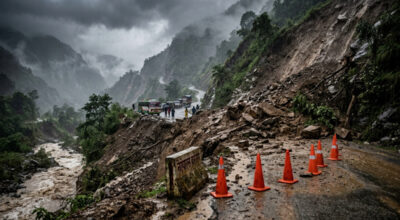
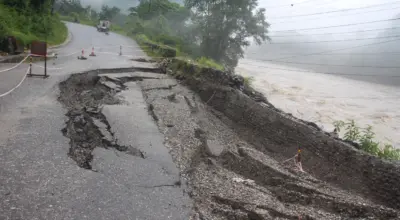
He highlighted the risks and impacts caused by climate change before the international community, especially after recent climate-related disasters in Nepal.
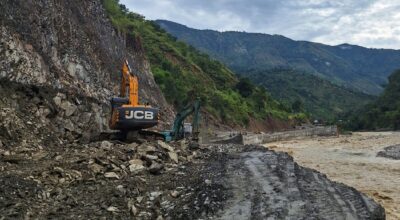
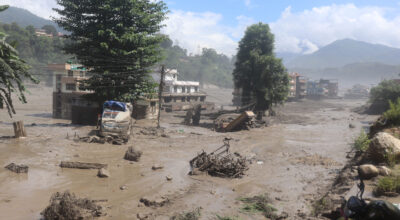
At the event, he noted that a large portion of rocks and glaciers collapsed in Langtang area on last August 26, causing extensive damage to people, property, and critical infrastructure.
Minister Khanal’s personal secretariat noted that he described the incident as a ‘Himalayan Tsunami,’ emphasizing that debates on climate-related disasters are inevitable.
Sagarmatha to the Sea begins with a simple proposition: the climate system does not recognize the boundaries, he said, adding Everest, and the Himalayan region – the third pole – contains the largest volume of snow and ice outside of the polar regions, featuring an inventory of over 63,700 glaciers.
Nepal has lost close to one-third of its ice in the last three decades, Minister Khanal poignantly stated, adding the decline alters river flows and threatens livelihoods downstream, while island and coastal nations confront rising seas, erosion and displacement.
Standing at the foot of Himalayas, in 2023, Secretary-General Antonio Guterres described these glaciers as “icy reservoirs.” From there, water descends through glaciers and rivers, nourishing ecosystems and communities before reaching the sea, he noted.
He also pointed out that island and coastal countries are facing sea-level rise, coastal erosion, and displacement, emphasizing that we should see the mountains and the ocean not as separate, but as interconnected parts of the climate system.
“In order to address the climate crisis, we need to include the relationship between the mountains, freshwater systems, and oceans in science, policy, and investment, give more priority to mountains in climate processes, and accelerate emissions cuts to keep global temperature rise within 1.5 degrees Celsius, ” Khanal asserted.
Highlighting developing countries need adequate, predictable, and easily accessible climate finance, technology, and capacity development, Minister Khanal stressed that the fund to address loss and damage should be made effective, accessible, and well-resourced.
“Climate justice becomes tangible when the level of responsibility, capacity and risk is reflected in the support that countries receive,” he said.
The Minister said that Nepal was making its own contribution to climate change mitigation and environmental protection, that around 46 percent of Nepal’s land area was covered by forests, hydropower and electric vehicles were expanding and community-led environment protection and management was a priority.