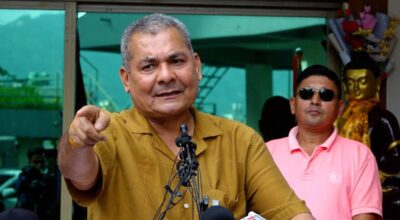


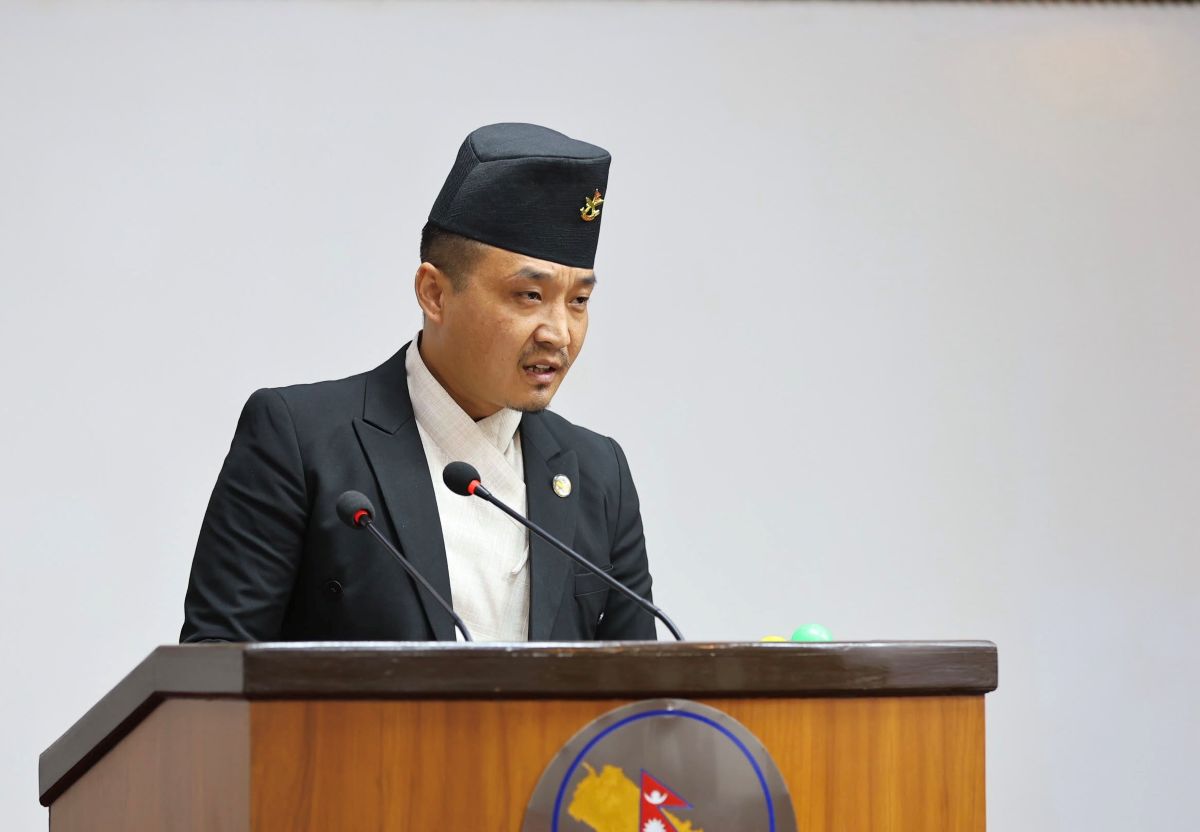
KATHMANDU: Gen-Z protester groups first noticed Home Minister Sudhan Gurung not through a policy speech, but through a symbolic act-distributing water during a tense public uprising. Since then, his political trajectory has been built on visibility, emotion, and disruption. The question now confronting Nepal’s newest power center is whether a politician who thrives on being seen can also govern when the state is under scrutiny.
Gurung’s rise was unusually rapid. Emerging from the post September, 2025 -Gen-Z revolt political wave, he entered Parliament through the Rastriya Swatantra Party and quickly outmaneuvered more established contenders to secure the Home Ministry. From the beginning, he projected himself less as a conventional minister and more as an activist operating from within the state.
That style brought immediate attention. On his very first day in office, he pushed for the arrest of former Prime Minister KP Sharma Oli and former Home Minister Ramesh Lekhak, reportedly resisting even calls from within his own party to follow a more cautious legal process. The courts later questioned the procedure, turning what was intended as a show of decisiveness into an early lesson in the limits of executive activism.
What followed was a pattern. Gurung appeared everywhere: police offices, airports, border points, inspection sites, emergency operations, and public controversies. He issued instructions across sectors, often in a tone that critics described as prime ministerial. Even within his party, discomfort grew over a leadership style seen as highly centralized, media-driven, and sometimes detached from organizational coordination.
His politics increasingly relied on imagery. Sleeping on a sofa inside the Home Ministry became a viral symbol of tireless service. Surprise border inspections without informing the security apparatus were presented as anti-smuggling vigilance. Emotional speeches in Parliament, including tears while discussing a suicide case, reinforced an image of a minister connected to public pain rather than bureaucratic distance.
Supporters see these acts as evidence of energy, accessibility, and a break from the lethargy of traditional politics. Critics see something else: a politics of performance in which symbolism repeatedly overtakes institution-building.
The contradiction became sharper when Gurung was forced to resign only 27 days after taking office amid controversies over his asset disclosure and alleged links to a controversial businessman. Although a government committee later cleared him and he returned to the same ministry after 47 days, the episode deepened a perception that political theater was being used to survive institutional crises rather than resolve them.
Since returning, he has continued the politics of visibility-border raids, surprise inspections, angry parliamentary interventions, and confrontational rhetoric against both opposition parties and critics. He has argued that he is being unfairly labeled a “stunt minister,” insisting that his actions are rooted in years of disaster-management work and a genuine commitment to public service.
Yet leadership is tested less by the crises one chooses than by the crises one cannot avoid.
The Sunsari shooting changed the frame. A young man died after police opened fire; several others were injured. The incident raised serious questions about the use of force, command responsibility, and the accountability of the security apparatus that operates directly under the Home Ministry.
Here, the striking feature was not what Gurung did, but what he did not do.
The minister who usually responds rapidly, travels immediately, speaks emotionally, and dominates headlines became unusually silent. There was no prompt visit to the victims, no immediate public statement, no visible assumption of moral responsibility, and no attempt to shape the national response in the crucial early hours. The government’s reaction came late and under pressure, with the Prime Minister expressing sorrow only after days of criticism and acknowledging that security forces had caused the casualties.
This silence has become politically more damaging than many of Gurung’s earlier controversies.
In democratic politics, visibility is a resource; in democratic governance, responsibility is the test. Gurung has so far excelled at the first and struggled with the second. His career illustrates a broader tension facing many anti-establishment leaders who enter government after rising through protest movements. The skills that generate public attention-surprise, confrontation, emotion, and symbolism-do not automatically produce institutional credibility.
The deeper issue is not whether Sudhan Gurung is sincere. He may well be. The issue is whether sincerity expressed through constant public performance can substitute for the quieter duties of constitutional office: restraint, procedure, accountability, and timely communication when the state itself is accused of causing harm.
A Home Minister is expected to be loud when confronting crime, but clear when confronting state failure. On that measure, the current criticism is not that Gurung talks too much; it is that when the gravest questions reached his own ministry, the politics of visibility gave way to the politics of disappearance. That may prove to be the most consequential transformation of his tenure.