



KATHMANDU: Nepal’s Hindu women are celebrating Teej, one of the country’s major festivals, across the nation today with religious devotion, traditional rituals, singing, and dancing.
Women are observing fasts and offering prayers for prosperity, family welfare, marital harmony, and the well-being of their loved ones.
Observed on the third day of the dark fortnight of the lunar month of Bhadra, Teej is also called Haritalika Teej. The Skanda Purana links the festival to a Satya Yuga legend involving Goddess Parvati. According to the legend, Parvati’s friends hid her in a forest to prevent her from being married to Lord Vishnu, as she was determined to marry Lord Shiva.
The festivities traditionally begin a day before Teej, when women return to their parental homes for a special feast called Dar. The feast features a range of traditional delicacies. On Teej day, women observe a rigorous fast, with some abstaining even from water, while spending the day singing, dancing, and worshipping in a festive and spiritual atmosphere.
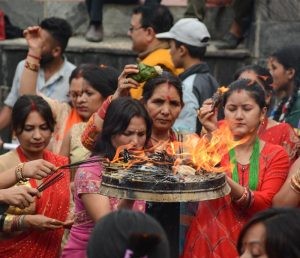
Wearing red saris and traditional jewellery—including bangles, pote (glass-bead necklaces), tilahari, and sindur (vermillion)—devotees visit Shiva temples to offer prayers. The Pashupatinath Temple in Kathmandu is among the major pilgrimage sites where large numbers of women gather for worship.
The day begins with ritual bathing in the early morning, followed by prayers and other religious ceremonies. In the evening, devotees light oil lamps and keep vigil throughout the night, expressing their devotion to Lord Shiva and Goddess Parvati.
The final day of Teej features a ritual bath using 108 stems of Datiwan, a sacred plant. Devotees then worship the Saptarishis, or seven sages, and offer alms before formally concluding the fasting rituals.
Teej is observed by both married and unmarried women. Married women pray for the health, longevity, and prosperity of their husbands, while unmarried women seek divine blessings for a suitable life partner.
Beyond its religious significance, Teej represents an important celebration of Nepal’s cultural heritage, traditions, sisterhood, and women’s social and cultural identity.