

KATHMANDU: August 26, 2026, began like any other morning. By 9am, thousands of lives had been turned upside down.
At around 8:45am, the Bhotekoshi and Trishuli corridors were still going about their usual business. Shops were open. People were eating breakfast. Vehicles were moving along the roads.
Then the warnings began.
Loudspeakers urged people living along the riverbanks and nearby streams to leave immediately and move to higher ground. What happened next unfolded with terrifying speed.
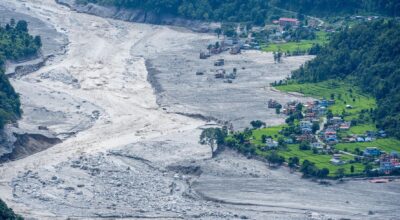
Within minutes, a wall of water, mud, rock and debris tore through communities in Rasuwa before racing downstream into Nuwakot and Dhading.
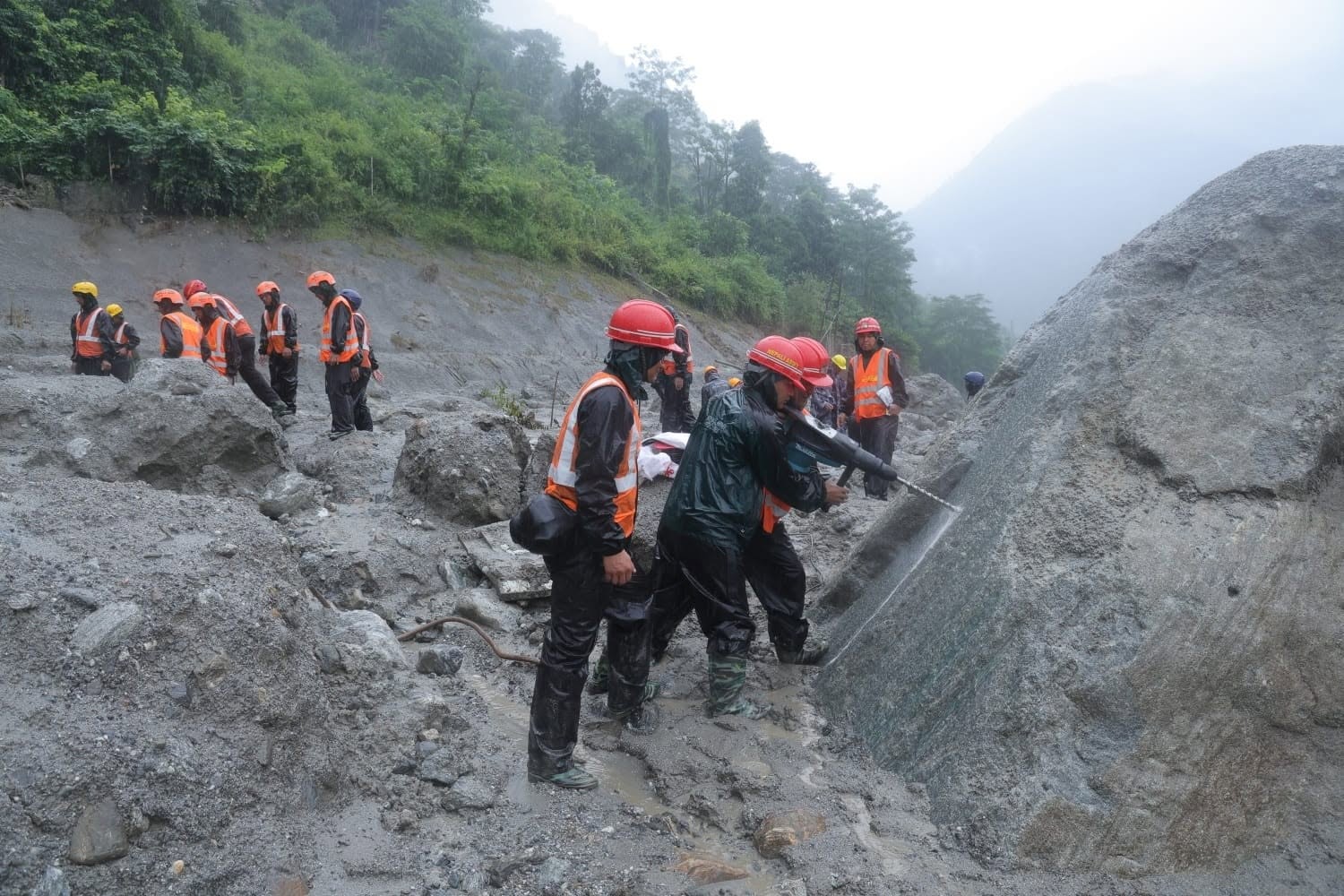
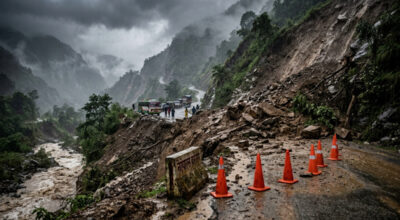
Homes disappeared. Businesses were buried. Bridges and roads were swept away. Communication networks collapsed. Hundreds of people were feared missing.
For those in the path of the flood, there was barely enough time to understand the danger.
There was only enough time to run.
A race into the disaster zone
As the first reports reached Kathmandu, reporters from Gorkhapatra’s Nepali and English newspapers were sent towards the affected areas.
We left by road.
By the time we reached Nuwakot, the scale of the emergency was becoming clear. Ambulances were streaming north from Kathmandu. Nepal Red Cross vehicles were heading towards the affected settlements. Along the road, anxious families gathered, desperately trying to find out whether relatives upstream were alive.
Many had only fragments of information—a phone call, a message, a rumour.
Few had answers.
The disaster was already proving far larger than the first reports had suggested.
Where a town disappeared
At Bidur Municipality-1, the Nepali Army’s No. 1 Military Training Centre, Maithili Barracks, had become a major rescue and relief hub.
Helicopters brought rescued victims to safety. Injured people received initial treatment before being transferred to hospitals.
But just 1.5 kilometres away, at Dhunge Bazaar, the reality of the disaster was stark.
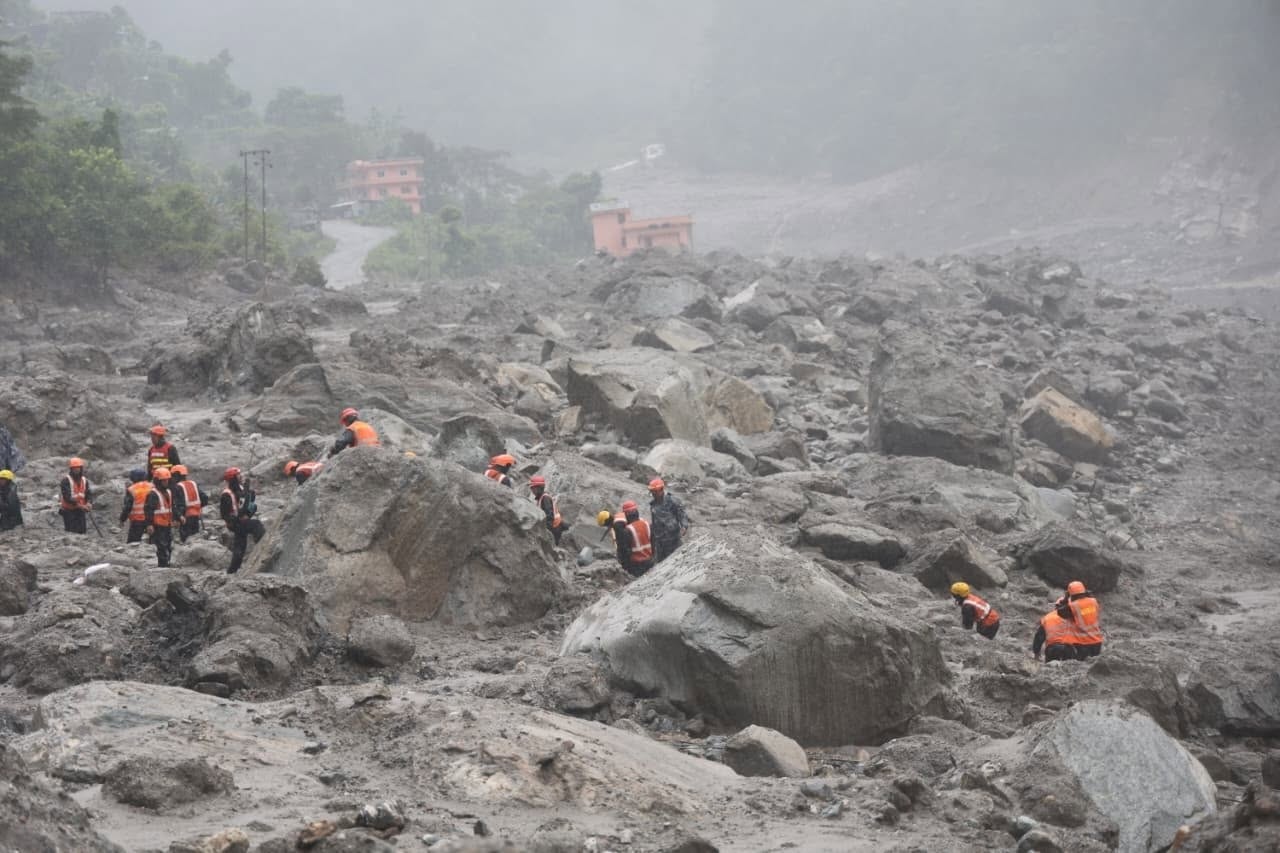
A settlement once lined with hotels, restaurants and small businesses had been transformed into a landscape of mud, rubble and twisted metal.
In some places, flood debris had piled nearly three storeys high. Buildings were buried beneath mud and sediment. The destruction stretched roughly 70 to 80 metres on either side of the river channel.
It was difficult to believe that only hours earlier, this had been a functioning settlement.
For the families who lived there, the flood had not simply destroyed buildings.
It had erased homes, businesses, savings, documents, livelihoods and decades of memories.
The minutes between warning and disaster
Assistant Sub-Inspector Rupesh Ray of Armed Police Force No. 1 Brigade described the moments before the flood reached the settlements.
The warnings mattered.
“A few minutes of advance warning enabled hundreds of residents of wards 1 and 4 to save their lives,” Ray said.
Security personnel were still broadcasting warnings when the two bridges connecting Trishuli and Dhunge Bazaar were swept away.
“We could also have been swept away if we had been just a few seconds late,” he recalled.
At around 8:55am, the District Administration Office in Rasuwa informed the National Disaster Risk Reduction and Management Authority about flooding in the Bhotekoshi.
Those minutes became the difference between escape and tragedy.
People ran without collecting their belongings.
Food remained on tables. Livestock was abandoned. Documents, savings and possessions accumulated over decades were left behind.
They carried only what could be carried in a few seconds.
And, most importantly, they carried themselves.
When the disaster swallowed the network
The flood did not only destroy physical infrastructure. It disrupted the invisible infrastructure on which modern life depends.
Electricity and telecommunications services failed across large parts of Rasuwa and Nuwakot.
For journalists in the field, communication quickly became a battle of its own.
Phones were drained by continuous photography and video recording. Power banks were shared until they too ran out. Mobile internet became unstable. Hours of footage could be recorded, but sending even a single report became difficult.
After darkness fell, the problem intensified.
Hotels being used as temporary shelters had little or no alternative electricity or internet access. With the deadline approaching, the reporting team woke the driver and headed back towards Bidur.
At a roadside location with a stronger signal, the vehicle became a makeshift newsroom.
The engine ran to provide power.
Phones were charged.
Reports were written.
For roughly an hour and a half, the journalists worked inside the vehicle.
The day’s report was finally transmitted around midnight.
It was a minor inconvenience compared with the ordeal facing survivors—but it revealed how thoroughly the flood had severed the systems of ordinary life.
Beyond Dhunge Bazaar
The reporting journey continued towards Trishuli Bazaar and Devighat.
The further we travelled, the more difficult it became to comprehend the scale of the destruction.
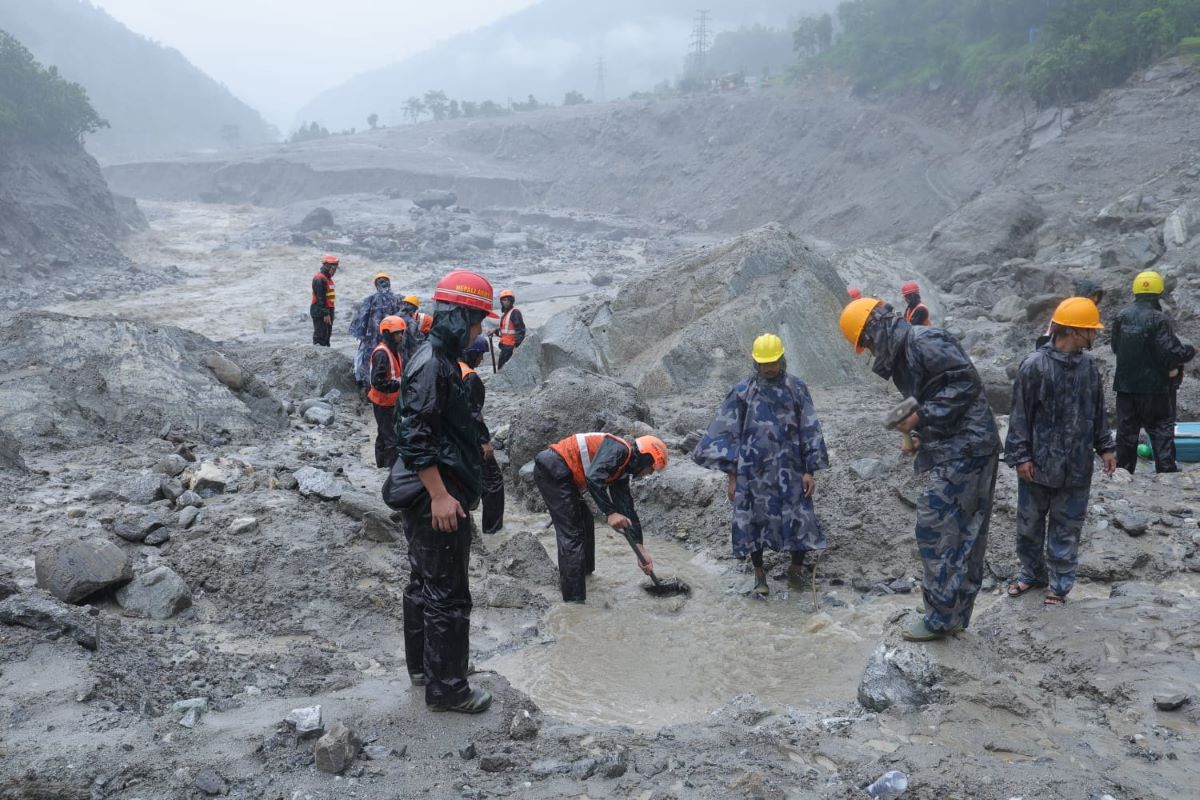
Nepali Army personnel continued rescue operations. Police, Armed Police Force personnel, local residents and volunteers worked through exhaustion and uncertainty.
Ground teams often had little more than shovels, spades and locally available equipment. The lack of standard safety tool kits for ground rescue operations exposed the risks being taken by those searching through unstable debris.
Journalists moved alongside the rescue teams, recording the operation and listening to survivors.
And amid the destruction, one message kept returning:
Being alive was enough.
“I left my cooked rice behind”
At the District Ayurveda Hospital in Bidur Municipality-5, 75-year-old Lumani Prasad Nepal described how he escaped.
He had been sitting down to eat.
Then came the warning.
“I left the cooked rice and came away,” he said.
That single sentence captured the speed of the disaster.
There was no time to finish the meal.
No time to gather belongings.
No time to decide what to save.
There was only time to run.
Nepal said the thought of being swept away still sent shivers through his body.
“I had never imagined that a flood could reach this level or cause this kind of destruction,” he said.
His story was repeated in different forms across the flood corridor: people leaving behind everything they owned because staying meant risking everything they were.
Rasuwa: where the tragedy began
Downstream communities suffered enormous losses, but Rasuwa bore the first and perhaps most devastating impact.
Syafrubesi, Dhunche and Timure were among the areas hit hardest.
Homes and infrastructure were destroyed. Roads disappeared. Communications were disrupted. Families searched desperately for missing relatives as security personnel continued rescue and recovery operations.
Every missing-person number represented a family waiting for an answer.
Every recovered body represented a family confronting an irreversible loss.
Every destroyed home represented a household suddenly stripped of shelter, security and livelihood.
A disaster measured in minutes
The Bhotekoshi flood was not simply a river overflowing its banks.
It was a humanitarian emergency that unfolded faster than most people could comprehend.
The early warnings mattered.
So did the rapid mobilisation of security personnel, helicopters, ambulances and local communities.
Those interventions undoubtedly helped save lives.
But the disaster also exposed the vulnerability of settlements, roads, bridges, communications and rescue systems along Nepal’s increasingly exposed river corridors.
For the survivors, however, the Bhotekoshi flood will never be reduced to a number in a government report.
It will remain the morning when an ordinary day ended in seconds.
The morning they ran.
The morning they left everything behind.
And the morning the river took away things that money, concrete and reconstruction may never fully restore.