

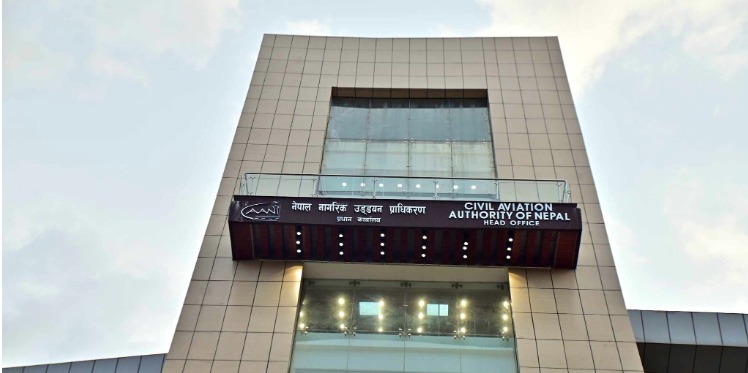
KATHMANDU: Two separate bills aimed at splitting the Civil Aviation Authority of Nepal (CAAN) into regulatory and service-providing entities have reached the Ministry of Law, Justice and Parliamentary Affairs for further processing.
The government has prepared two bills to separate CAAN’s regulatory and service-provider functions, which are currently handled by the same institution. The proposed legislation includes the Bill to Amend and Consolidate Laws Relating to the Civil Aviation Authority of Nepal and the Bill on the Establishment and Management of the Nepal Air Service Authority.
The bills have reached the Law Ministry for review and necessary legal procedures. Joint Secretary at the Ministry of Culture, Tourism and Civil Aviation Jaya Narayan Acharya said the drafting process is in its final stage. According to Acharya, the Ministry of Finance has already given its consent, while discussions on the bills are currently underway at the Law Ministry.
“Once the Law Ministry’s approval is received, the bills will be submitted to the Cabinet,” Acharya said. Following Cabinet approval, the necessary copies will be prepared and the bills will be registered at the Federal Parliament Secretariat. The concerned minister will then table the bills in Parliament, after which they will be referred to the relevant parliamentary committee for further discussion and processing.
The bills will go through the Law Ministry, Cabinet, Parliament and the relevant parliamentary committee before reaching the final approval stage. Acharya said the latest drafts include several revisions and new provisions compared to previous attempts. “Some provisions that were supposed to be covered under delegated legislation were not clearly included in the previous rules. The revised bills have incorporated those provisions explicitly,” he said.
The government is also working to develop regulations, directives and standards alongside the bills in accordance with the Delegated Legislation Act. The aim is to prevent a repeat of the past situation in which supporting legislation was not prepared for a long period after the parent law was enacted, creating difficulties in implementation. Necessary regulations, including employee-related regulations, are also being prepared to move forward alongside the bills.
Officials said CAAN can prepare its own regulations and implement them after obtaining approval from the ministry, meaning such regulations do not necessarily have to be submitted to the Cabinet each time. However, detailed procedures under the proposed laws have not yet been drafted and will be prepared later if necessary after the laws come into force.
Under the first bill, the Nepal Civil Aviation Authority (Act 2083 BS) will function as the regulatory body. It will be responsible for regulating air services, aircraft airworthiness, air navigation services, the issuance and renewal of certificates, and flight safety oversight.
The authority will be governed by a board chaired by the minister and headed by a director general with a four-year term.
The second bill proposes the establishment of the Nepal Air Service Authority (Act 2083 BS) as the service provider. It will be responsible for airport infrastructure development and upgrading, airport operations, air traffic services, ground handling and coordination of search and rescue operations.
The authority will be governed by a board chaired by the ministry secretary and headed by a managing director appointed through open competition.
Both bills propose repealing the existing Civil Aviation Authority of Nepal Act, 2053 BS, and providing for the integration of existing CAAN employees into the new institutional structure.
The proposed split is intended to address the conflict of interest arising from a single institution performing both regulatory and service-provider functions. The government also expects the restructuring to help remove Nepal from the European Union’s aviation safety list.
The Ministry of Culture, Tourism and Civil Aviation believes separating CAAN into an independent regulator and service provider will fulfill a key EU requirement and pave the way for the removal of restrictions affecting Nepali airlines.
The EU has been recommending since 2009 that Nepal separate aviation regulation and service provision to address potential conflicts of interest. However, the reform had not materialized until now.
In December 2013, the EU placed Nepali aircraft on its list of airlines subject to operating restrictions across the 27-member bloc. Nepal has yet to be removed from the EU’s list of countries with serious aviation safety concerns, citing shortcomings in meeting international aviation safety standards.
The government expects Nepal’s structural reform of the civil aviation sector to be fully implemented once the proposed legislation becomes law.
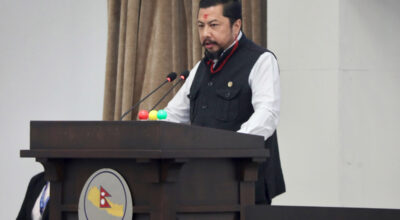
Last week, Minister for Culture, Tourism and Civil Aviation Khadga Raj Paudel said the government was serious about aviation safety and passenger rights while responding to lawmakers’ questions during a theoretical discussion on the Bill on the Responsibilities of Domestic Airlines, 2083 BS.
Paudel said separate legislation was being prepared to divide CAAN into two autonomous institutions-one serving as the regulator and the other as the service provider.
He also objected to the term “blacklist” commonly used to describe the EU restrictions on Nepali airlines, arguing that the term has racial connotations. He said “air safety list” would be a more appropriate term.
Paudel said the ministry was undertaking various reforms to have Nepal removed from the EU’s aviation safety list and expressed hope that positive results would be achieved within the next six months.