

KATHMANDU: Nepal’s long-delayed 828-megawatt Uttarganga Reservoir Hydropower Project is set to move into the construction phase after receiving its generation licence, removing a key procedural hurdle that had kept the project stalled for nearly two decades.
The Department of Electricity Development issued the generation licence to Uttarganga Power Company Ltd., a subsidiary of the Nepal Electricity Authority, on August 5.
The project has been under discussion since 2004 but remained stuck over disputes concerning the use and diversion of water from the Uttarganga River. A major point of contention was whether the river’s water should be diverted toward the Bheri River or the Nisikhola River.
The project has now formally adopted the Nisikhola diversion option, under which water from the Uttarganga River will be stored in a reservoir and diverted toward Nisikhola for power generation.
According to Badri Kuinkel, information officer at the Department of Electricity Development, the 828MW project has been granted its generation licence. The government is preparing to begin the bidding process for construction within the current fiscal year.
6.51-km tunnel to divert reservoir water
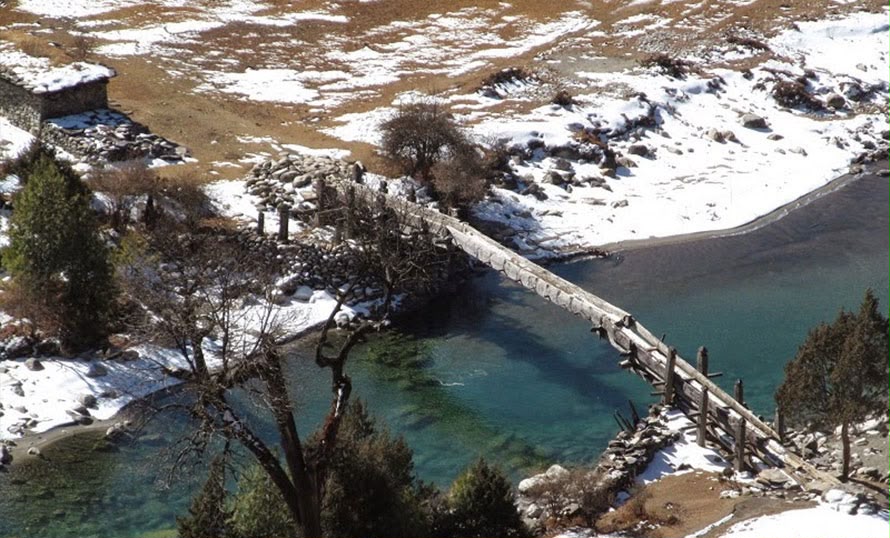
The project will be developed in the Dhorpatan Valley of Baglung’s Dhorpatan Municipality. A high dam will be constructed across the Uttarganga River to create a reservoir.
Water stored in the reservoir will be diverted through a 6.51-kilometre main tunnel toward Nisikhola, where it will be used to generate electricity.
The project’s Environmental Impact Assessment (EIA) report was approved on January 16, 2024. The approved EIA also adopted the plan to divert Uttarganga water toward Nisikhola for power generation.
The department has informed Dhorpatan Municipality and Nisikhola Rural Municipality about the issuance of the generation licence.
Strategic project for Nepal’s power system
Uttarganga is considered strategically important for Nepal because it is both a reservoir-based hydropower project and an inter-basin water transfer project.
Nepal’s power generation fluctuates sharply between seasons. Generation rises during the monsoon when river flows are high but falls during the dry winter months when water levels decline.
A reservoir project such as Uttarganga can store water during periods of high flow and release it when demand is higher, helping reduce seasonal fluctuations in electricity generation.
The project is therefore expected to strengthen domestic power supply during the dry season while also improving Nepal’s capacity to export electricity in the future.
Financing and contracting now critical
The generation licence removes one of the major procedural obstacles that has delayed the project for years. However, the licence alone does not mean construction will begin immediately.
The next critical steps are financial management, contractor selection and the construction timetable.
The government plans to advance the financing and construction of Uttarganga and several other major hydropower projects during the current fiscal year.
Alongside Uttarganga, the government is preparing to move forward with the 1,061MW Upper Arun, 210MW Chainpur Seti, 99MW Tamakoshi-V and 77MW Ghunsa Khola projects.
After nearly two decades of studies and disputes, Uttarganga has now reached a decisive stage. Its transition from planning to actual construction will depend largely on how quickly the government and the project developer complete financing and contracting arrangements.