

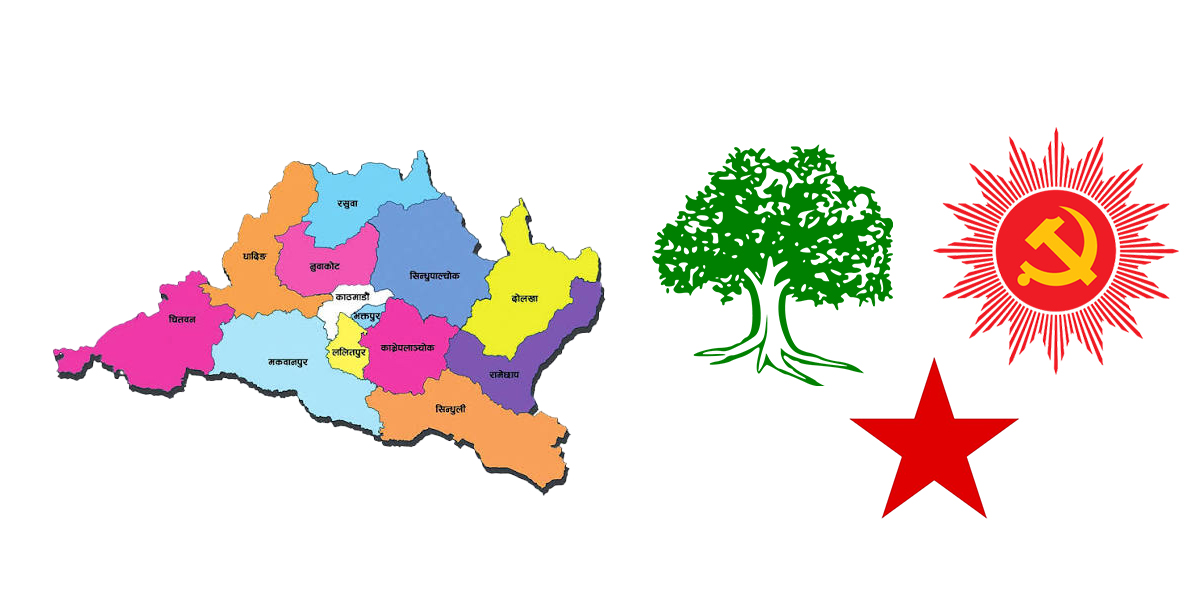
KATHMANDU: Political uncertainty has deepened in Bagmati Province after ministers from the CPN-UML resigned from the provincial government and withdrew the party’s support, even as coalition negotiations at the federal level remain inconclusive.
UML ministers resigned on Wednesday, saying they acted on instructions from the party leadership and expecting the party to return to government under a new coalition. However, uncertainty persists as top leaders have yet to decide which parties will form the next ruling alliance.
Following the UML’s withdrawal, Chief Minister Indra Bahadur Baniya, who now leads a minority government, reassigned portfolios to the remaining ministers and reduced the number of ministries from 14 to eight.
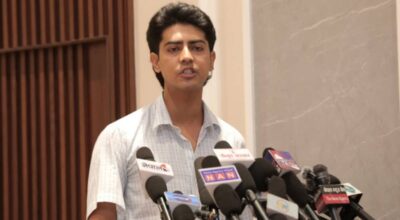
Baniya said he had received no formal directive from the party leadership regarding the province’s future and would continue carrying out his constitutional responsibilities until a new political arrangement emerges.
“If two or more parties secure a majority and stake a claim to form the government, I will facilitate the transition,” he said. “If that does not happen and the central leadership instructs us to seek a vote of confidence, I will prepare to do so.”
He added that no official decision on the future of the provincial government had been communicated from the center, describing much of the current speculation as political rumor.
UML leaders, meanwhile, said their resignation was part of preparations for a new coalition being negotiated by the party’s central leadership.
Former Minister for Agriculture, Livestock, Forests and Environment Madhusudan Poudel said the party leadership had instructed provincial ministers to resign after reaching an understanding in principle on a new alliance involving the Nepal Communist Party (NCP).
“The party chairman instructed us to resign and withdraw support from the government,” Poudel said. “The composition of the new government will also depend on directions from the central leadership. Discussions are still ongoing.”
Leaders of the NCP in Bagmati, however, said they had yet to receive any official information on the proposed coalition, although discussions among top leaders were continuing.
Coalition arithmetic
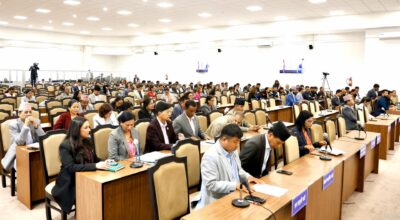
Even if the UML and the NCP agree to govern together, the two parties alone do not have enough seats to command a majority in the 104-member provincial assembly, where 53 votes are required to form a government.
The NCP holds 26 seats, while the UML has 25. However, UML lawmaker Apsara Chapagain, who serves as deputy speaker, cannot vote in a confidence motion while presiding over the assembly, effectively reducing the coalition’s voting strength to 50.
That arithmetic has prompted discussions about bringing the Hamro Nepali Party, which has two seats, into the alliance. Even then, the coalition would remain one vote short of a majority, making the Rastriya Prajatantra Party (RPP), with 12 seats, a potential kingmaker.
Alternatively, the Nepali Congress, the largest party in the assembly with 36 seats, could provide a much more stable majority. A Congress-NCP alliance would control 62 seats, while a Congress-UML partnership would have 61 seats.
As coalition negotiations continue in Kathmandu, provincial leaders say different alliances could emerge in different provinces depending on political agreements reached by the national leadership. Final decisions, however, are expected only after the top leaders conclude negotiations on a new power-sharing arrangement.