

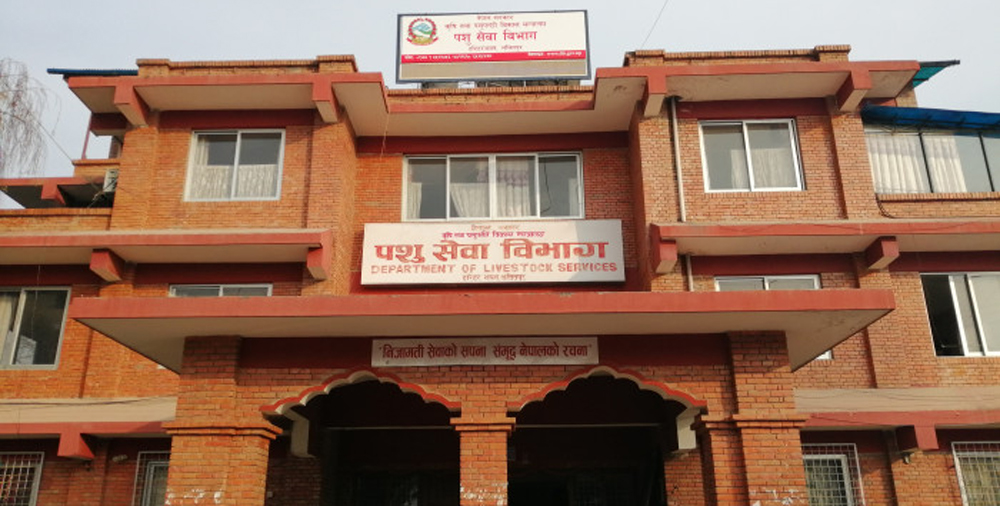
KATHMANDU: Nepal has brought its recent outbreak of avian influenza (bird flu) largely under control, with no new infections detected since July 17 (Shrawan 1, 2083), according to the Department of Livestock Services.
The outbreak, which affected poultry farms in Kathmandu and several other districts, had caused significant losses for farmers across the country. However, officials say the situation has now stabilized, with surveillance and testing continuing in previously affected areas.
“The situation is now under control. We are continuing to collect and test samples from areas surrounding previous outbreaks as a precaution,” Director General Dr. Umesh Dahal said.
The outbreak was first confirmed on March 17 (Chaitra 4, 2082) through PCR testing at the Central Veterinary Laboratory. Two days later, the Ministry of Agriculture and Livestock Development officially declared bird flu-affected zones. The first cases were reported in Urlabari-8 and Sundar Haraicha-4 in Morang District.
According to the department, commercial layer farms were the hardest hit, although infections were also detected in parent flocks, commercial broilers, backyard chickens, ducks, turkeys and pheasants.
So far, bird flu has been confirmed in 11 districts. The disease has now been completely contained in seven districts outside the Kathmandu Valley, while infections were recorded at 119 locations in Kathmandu Valley and Kavrepalanchok.
Within the valley, 92 sites tested positive, including 32 locations in Kathmandu, 15 in Lalitpur (including the Central Zoo), and 45 in Bhaktapur. An additional 27 outbreak sites were identified in Kavrepalanchok.
According to senior veterinarian Dr. Mukul Upadhyay, authorities have culled 835,563 birds, destroyed 1,165,663 eggs, and disposed of 245,035 kilograms of poultry feed to contain the outbreak. Of the total birds culled, 367,835 were from Kathmandu Valley and Kavrepalanchok alone.
The government has also provided financial relief to affected farmers. After reallocating the budget, authorities set aside Rs 5.2 billion (Rs 520 million) for compensation. So far, Rs 507.1 million has been disbursed to 104 farmers and poultry farms, Dr. Dahal said.
Veterinary laboratories across the country continue to conduct intensive surveillance and testing. Officials attribute the successful containment of the outbreak to the government’s rapid response and the cooperation of poultry farmers.
Senior veterinarian Dr. Upadhyay said the likelihood of further outbreaks is now low. As the disease has subsided, consumer demand for chicken meat and eggs has begun to recover, allowing farmers to receive better market prices after months of depressed demand. During the outbreak, many farmers suffered heavy financial losses, with some forced to destroy unsold chicks due to collapsing market demand.