




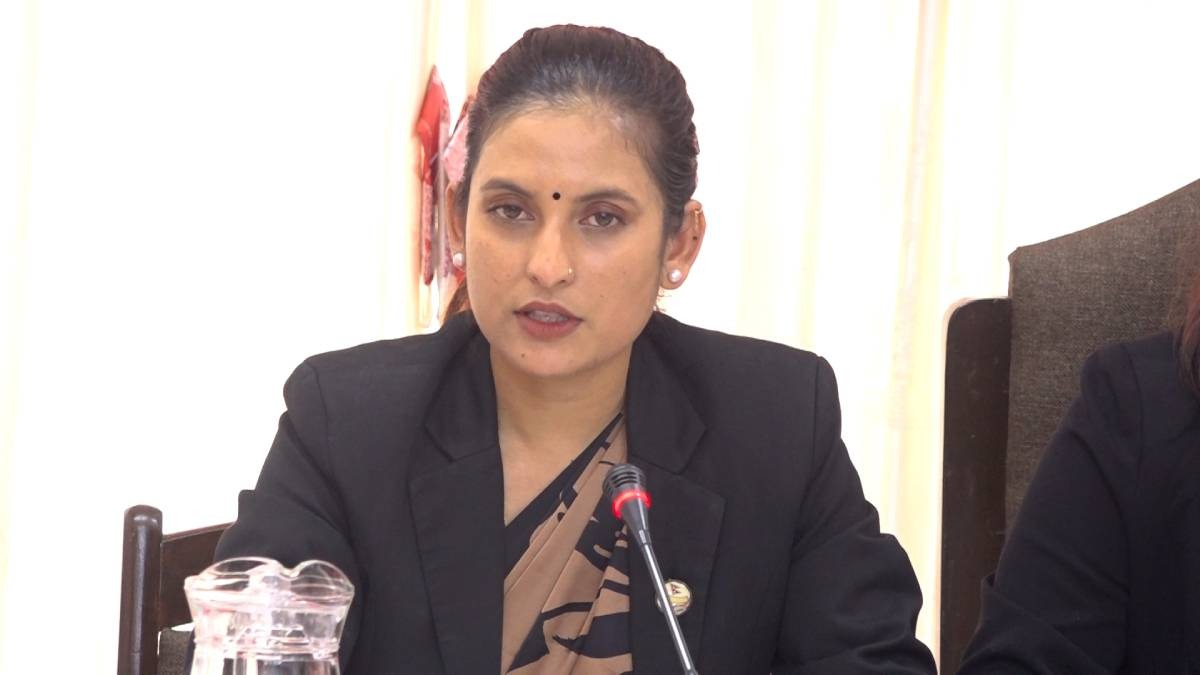
KATHMANDU: Minister for Women, Children, Gender and Sexual Minorities and Social Security Sita Badi has said that child correction homes across Nepal are housing more children than their designated capacity.
Speaking at a meeting of the Women and Social Affairs Committee on Wednesday, Minister Badi said the government has prioritized the rights, protection, dignity and rehabilitation of children, women, senior citizens and other vulnerable groups requiring special protection.
The meeting discussed the institutional status of child homes, child correction homes, women’s safe shelters and old-age homes, along with findings from recent monitoring activities.
Badi said the Child Act 2018 and the Child Regulations 2021 provide clear legal provisions regarding the management of child correction homes.
“The primary purpose of child correction homes is not to punish children in conflict with the law, but to ensure their reform, protection, education, health care, psychosocial support and social reintegration,” she said.
According to the minister, the 10 child correction homes operating nationwide have a combined capacity of 1,085 children, but around 1,200 children are currently being accommodated. She said facilities in Morang, Kaski, Rupandehi and Makwanpur are facing severe overcrowding.
Badi also noted that some residents are above 18 years of age, and said management should be based on age, gender, level of risk and rehabilitation needs.
She said the government has launched several initiatives to improve the infrastructure and management of child correction homes. Nepal’s first child court has been established and is operating in Bhaktapur. A correction home building is under construction in Dhakaltar, Tanahun, according to national standards, and budget has been allocated for a facility in Karnali Province. A separate
correction home for those above 18 years has also been brought into operation in Nuwakot.
During the meeting, lawmaker Gyanu Paudel raised concerns about the condition of the child correction home in Rupandehi, saying it has exceeded capacity and is also housing individuals older than 18.
“The situation in the Rupandehi child correction home is the most alarming,” Paudel said. “Although it is meant for children under 18, many older individuals are also there. The facility is overcrowded, there is no possibility of adequate playground space, and even the minimum standards set by child rights conventions, including the child’s right to life, are not being fully implemented.”
Paudel said the condition of government-run child correction homes is weak and called for monitoring of facilities operated with support from non-governmental organizations and local communities as well.
The committee also discussed measures to make the management and monitoring of child correction homes, women’s safe shelters, child homes and old-age homes more effective.