


KATHMANDU: The Central Tibetan Administration (CTA), the Tibetan government-in-exile based in Dharamshala, India, has decided not to officially send delegates to an international Tibet studies conference in Kathmandu after China raised concerns with the Nepal government.
According to a senior security official, the CTA decided to refrain from formal participation in the 17th Seminar of the International Association for Tibetan Studies (IATS), scheduled to take place in Kathmandu from August 23 to 29 (Bhadra 7–13).
The CTA had initially planned to send five representatives from its Tibet Policy Institute (TPI), led by Director Dawa Tsering, along with researchers Dr. Chewang Dorjee, Dr. Tsering Dolma, Dr. Karma Tenzin Dhalia, and Dr. Rigmon Tsering Samdup.
However, organizers said some of those names no longer appear on the preliminary registration list, although other Tibetan participants, including one linked to the CTA, remain registered.
According to security officials, Chinese Ambassador to Nepal Chen Song (Note: the original Nepali text refers to Ambassador Chang Maoming; current ambassador details should be independently verified) raised the issue during a meeting with Foreign Secretary Amrit Bahadur Rai, expressing concern that exiled Tibetan participants could make statements critical of China during the conference.
“The ambassador did not ask Nepal to cancel the conference, but expressed concern that it could become a platform for anti-China remarks,” a senior security official said. “The CTA likely decided against sending official delegates to avoid placing additional diplomatic pressure on the Nepal government and to ensure the conference proceeds smoothly.”
Despite the decision, CTA-affiliated scholars who have already registered will still be able to participate in their personal capacities.
Another security official said the CTA’s decision, reportedly made during a meeting in Dharamshala on July 21 (Shrawan 6), was intended to respect Nepal’s foreign policy and avoid creating diplomatic complications. The CTA has also indicated that Tibetan researchers and experts may attend independently rather than as official representatives.
First IATS conference in Nepal
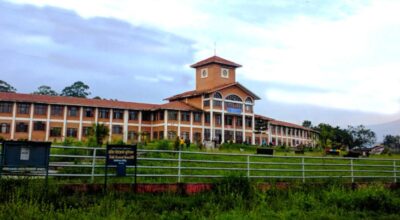
This will be the first time Nepal hosts the International Association for Tibetan Studies conference. The biennial event is being organized by Kathmandu University’s Himalayan Center for Asian Studies (HICAS) and the Centre for Buddhist Studies at Rangjung Yeshe Institute.
Conference coordinators Dr. Sagar Sharma and Thomas Doctor said preparations are being carried out in close coordination with the Nepal government and security agencies.
“This is an important global academic gathering. Kathmandu University is the local organizer, and all preparations are being made in coordination with government authorities,” Sharma said, adding that the event is purely academic.
Strong international participation
Despite Beijing’s concerns, the conference is expected to attract significant participation from mainland China. Organizers said more than 700 delegates from 37 countries have registered, including approximately 150 participants from the United States and around 100 from China, making China the second-largest participating country.
Researchers from leading institutions-including Harvard, Columbia, Oxford, Cambridge, Peking University, Tsinghua University, Sichuan University, and institutions in Lhasa—as well as representatives from the China Tibetology Research Center and Buddhist organizations from India, Taiwan, and Japan, are expected to attend.
The opening ceremony will be held at Kathmandu University’s Dhulikhel campus on August 23, while around 70 panel discussions are scheduled to take place at The Soaltee Kathmandu.
The IATS is an international academic association of scholars specializing in Tibetan history, language, religion, culture, and society. It aims to promote global research on Tibet.
China has consistently opposed international events involving the Tibetan government-in-exile or activities linked to the Dalai Lama, viewing such participation as contrary to its sovereignty claims over Tibet.