

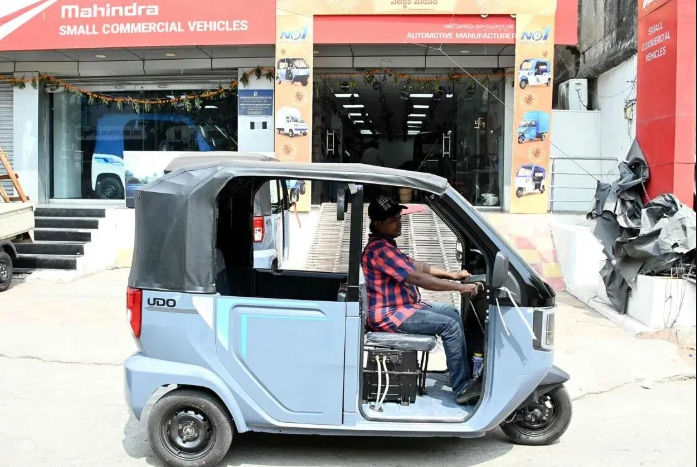
KATHMANDU: The use of electric three-wheeler auto rickshaws is growing rapidly across India. Data indicates that an electric auto rickshaw is produced every 90 seconds in the country, establishing India as a leading global market in this sector. Manufacturers like Mahindra Last Mile Mobility are scaling up production to meet the rising demand.
In September, more than half of all new three-wheelers sold in India were electric. In comparison, electric vehicles accounted for only 8.5 percent of car sales and 11.6 percent of two-wheeler sales during the same period. Suman Mishra, chief executive of Mahindra Last Mile Mobility, stated that the company’s electric vehicle market has grown sixfold over the last five years. He attributed this rapid growth to government subsidies, improved vehicle quality, and reduced operating costs.
While early versions of e-rickshaws a decade ago were assembled in local workshops using Chinese batteries, the sector has since evolved into a structured industry. For many drivers, the primary appeal is the significant reduction in operating costs compared to petrol-powered vehicles. Afroz Alam, a 31-year-old driver from Hyderabad, noted that switching to an electric auto has allowed him to save hundreds of rupees daily on fuel, making it easier to pay off his vehicle loan.
According to estimates from the Indian think tank CEEW for 2025, the per-kilometer operating cost of a petrol-powered three-wheeler is more than double that of an electric model. As India relies heavily on fuel imports, the shift to electric mobility is expected to reduce dependency on foreign energy. However, challenges remain, including limited charging infrastructure and parking availability. Mishra noted that parking constraints in cities like Mumbai complicate charging efforts. Furthermore, while India is working to boost domestic production, manufacturers remain dependent on imports from China and South Korea for essential components like battery cells and rare mineral magnets.