

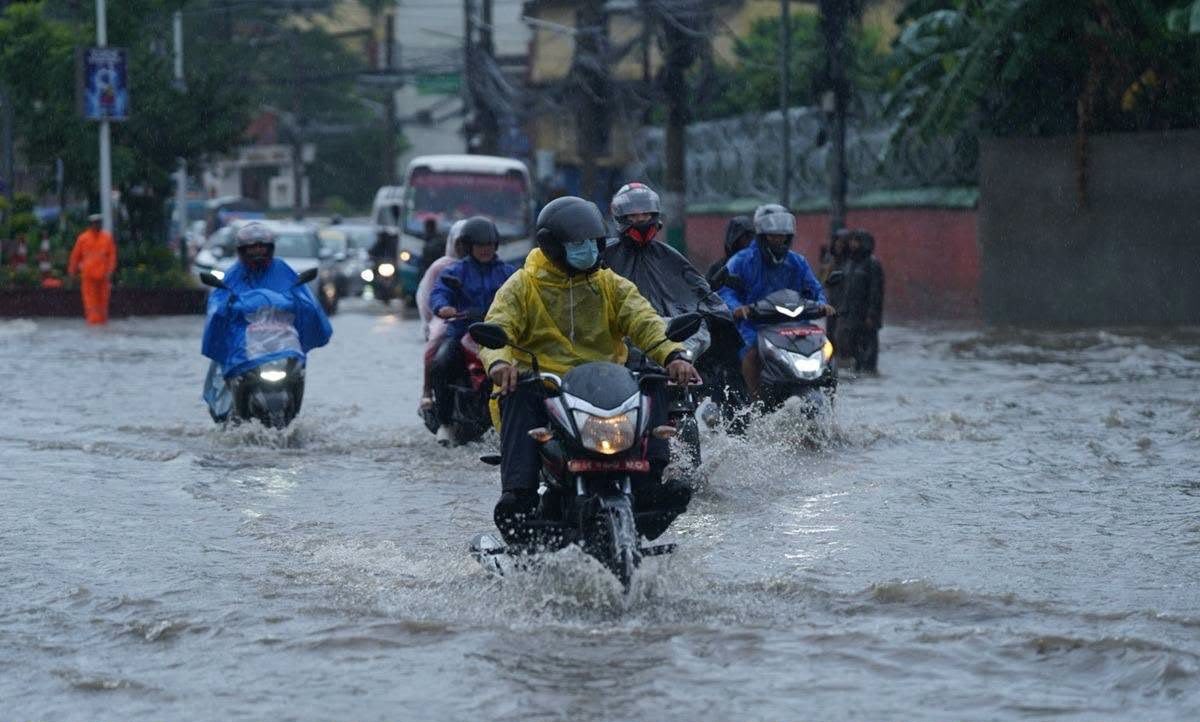
KATHMANDU: Engineering flaws in the drainage system, encroachment on water flow channels and the shrinking of natural groundwater recharge areas are the primary causes of recurring monsoon flooding in Kathmandu’s Maiti Ghar Mandala area, according to a technical report.
The report was prepared by a technical team formed after an on-site inspection led by Kathmandu Metropolitan City’s Acting Mayor Sunita Dangol on July 20 (Shrawan 5).
The team, coordinated by Ram Bahadur KC, Under-Secretary at the National Disaster Risk Reduction and Management Authority (NDRRMA), included technical experts from Kathmandu Metropolitan City, the Department of Roads and Kathmandu Upatyaka Khanepani Limited.
According to the report, the area’s drainage system suffers from serious engineering deficiencies. A drain measuring 90 centimeters in width in the upstream section narrows to 60 centimeters downstream, creating a bottleneck that cannot handle heavy rainwater, causing water to accumulate on roads.
The report also identified backflow from the Tukucha River as a major factor. During periods of high water levels, stormwater is unable to discharge into the river and instead flows back through the drainage network, inundating roads and nearby settlements.
It further noted that rapid urban development has significantly reduced open land around Maiti Ghar, limiting the natural infiltration of rainwater into the ground. As a result, a larger volume of runoff flows across paved surfaces, worsening flooding in the area.
The inspection also found that both private and government structures had been built over sections of the drainage network, obstructing maintenance work. In addition, plastic waste, bottles, stones and construction debris accumulated inside drains have reduced water flow capacity.
For immediate mitigation, the report recommends clearing drainage obstructions, raising manhole levels and carrying out regular drain maintenance.
As a long-term solution, it proposes constructing a large underground stormwater storage tank either at Maiti Ghar or within the premises of the former Ministry of Health to temporarily store excess rainwater during heavy downpours.
The report also recommends installing non-return valves at the Tukucha River outlet to prevent backflow, preparing a GIS-based mapping of the Kathmandu Valley’s drainage network, redesigning the Maiti Ghar drainage system based on current capacity requirements, and strengthening coordination among agencies responsible for roads, water supply, drainage and electricity through an integrated infrastructure development framework.