



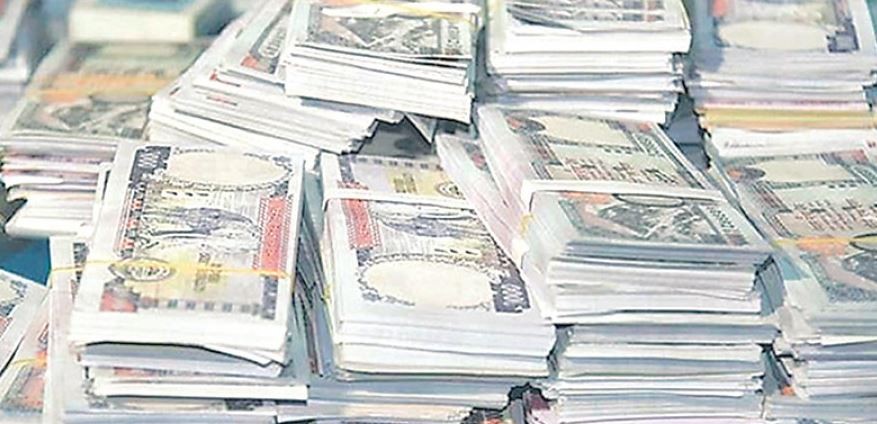
KATHMANDU: Despite an excess liquidity of Rs 1.266 trillion in Nepal’s banking sector, capital remains underutilized in productive sectors. With annual remittances exceeding Rs 2.3 trillion and average lending rates dropping to 6.55 percent, the lack of investment expansion continues to weigh on industrial operations, market demand, and job creation.
According to the Federation of Nepalese Chambers of Commerce and Industry (FNCCI), deposits in banks and financial institutions grew by 13.9 percent in the fiscal year 2082/83. However, credit flow to the private sector increased by only 6.6 percent, significantly missing the Nepal Rastra Bank’s 12 percent growth target. The FNCCI attributes this slowdown to weak market demand, low private sector confidence, and persistent policy and administrative hurdles.
Industrial capacity utilization currently averages only 44.5 percent. Nepal’s economic growth for the fiscal year 2082/83 was limited to 3.85 percent, falling far short of the government’s seven percent target. Data from the World Bank indicates that Nepal’s growth lags behind the South Asian average of 6.9 percent.
Sectoral analysis of credit flow shows a preference for consumption over production. In the first nine months of the previous fiscal year, consumer credit rose by 11.7 percent, while industrial production credit grew by only 6.5 percent, and agricultural credit declined by 2.3 percent. Furthermore, 63 percent of total credit is collateralized by real estate, making it difficult for small and medium enterprises with limited assets to access financing.
The FNCCI concludes that the accumulation of funds in banks does not guarantee economic activity. It emphasizes the need to create an environment that directs capital toward agriculture and industry, removes investment barriers, and stimulates market demand to revitalize economic growth.