

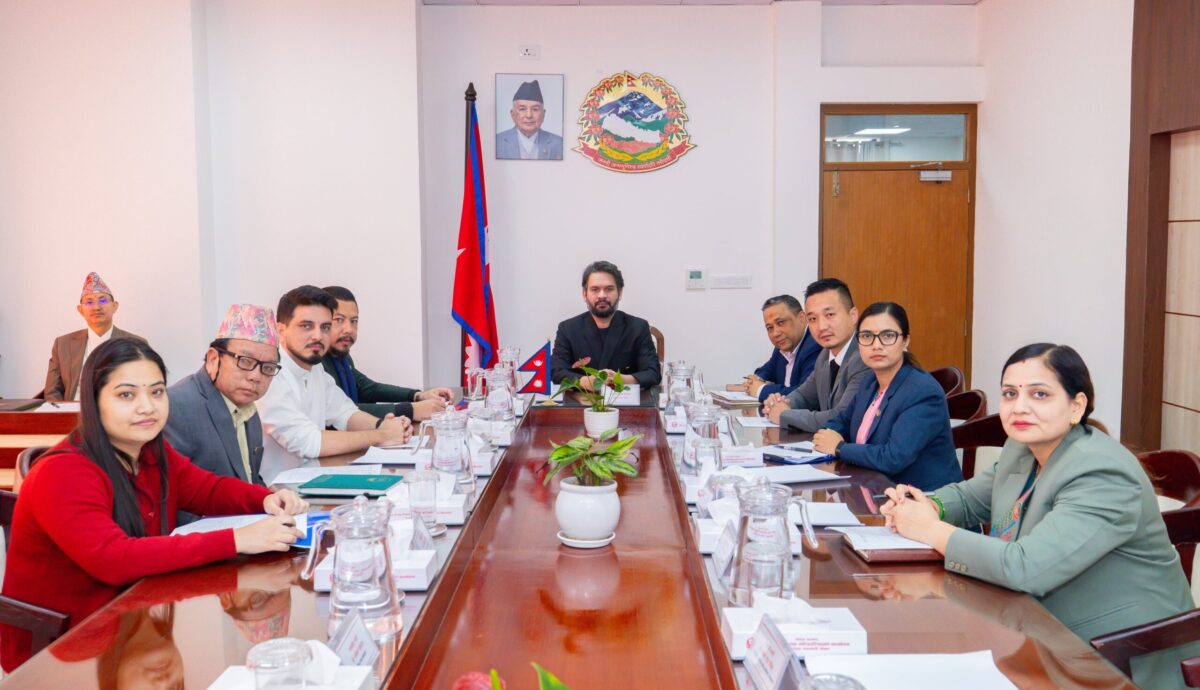
KATHMANDU: Prime Minister Balendra Shah, popularly known as Balen, is travelling to India on Sunday for a two-day state visit at the invitation of Indian Prime Minister Narendra Modi. Shah will depart for India at 1:45 pm on a scheduled Nepal Airlines flight and return home on Monday evening at 6:35 pm on the same airline.
The visit presents an important opportunity to strengthen bilateral relations and advance issues central to Nepal’s national interests. For the new prime minister, it will also be an early test of his government’s diplomatic approach and its ability to translate political goodwill into tangible outcomes. Nepali experts have emphasized that the visit should focus on mutual interests, building trust, expanding trade and improving connectivity, with particular attention to long-standing priorities such as additional air-entry routes and energy cooperation.
Nepal-India relations are rooted in history, geography, economic interdependence and deep people-to-people connections. Their significance extends well beyond the political relationship between the governments of the day. Experts argue that the longstanding social and cultural ties between the two countries must be matched by greater political confidence, institutional trust and practical cooperation. The visit should therefore be used to build consensus and secure agreements that deliver reciprocal benefits rather than merely produce diplomatic symbolism.
Experts have also cautioned against allowing the visit to become a vehicle for short-term political gains, domestic popularity or displays of populist nationalism. Nepal’s diplomatic experience offers important lessons. Imbalanced diplomatic conduct, premature decisions and the pursuit of narrow domestic political interests have, at various points, undermined opportunities to advance the country’s long-term interests. Despite its considerable natural resources and economic potential, Nepal has struggled to translate these advantages into sustained development, partly because of policy inconsistencies and weaknesses in strategic decision-making.
Diplomats stress that Prime Minister Shah and his delegation must draw lessons from these experiences and priorities pragmatic, national-interest-driven diplomacy over emotional rhetoric. Nepal needs a relationship with India built on mutual respect, predictability and clearly defined interests. This requires both the confidence to articulate Nepal’s concerns and the diplomatic maturity to recognize areas where cooperation can produce shared gains.
The success of the visit should not be measured by ceremonial gestures, public statements or the political narratives that emerge on social media. Nor should it be framed as a contest in which either country must be seen as having won or lost. Its real value will depend on whether it creates momentum for resolving longstanding bilateral concerns, expanding economic opportunities, improving connectivity, strengthening energy partnerships and safeguarding Nepal’s strategic autonomy.
For Balen, the challenge is to move beyond the politics of symbolism and demonstrate the substance of statecraft. The visit should mark an opportunity to establish a more confident, consistent and forward-looking approach to Nepal-India relations – one that protects Nepal’s national interests while recognizing the mutual benefits of a stable and productive partnership.