

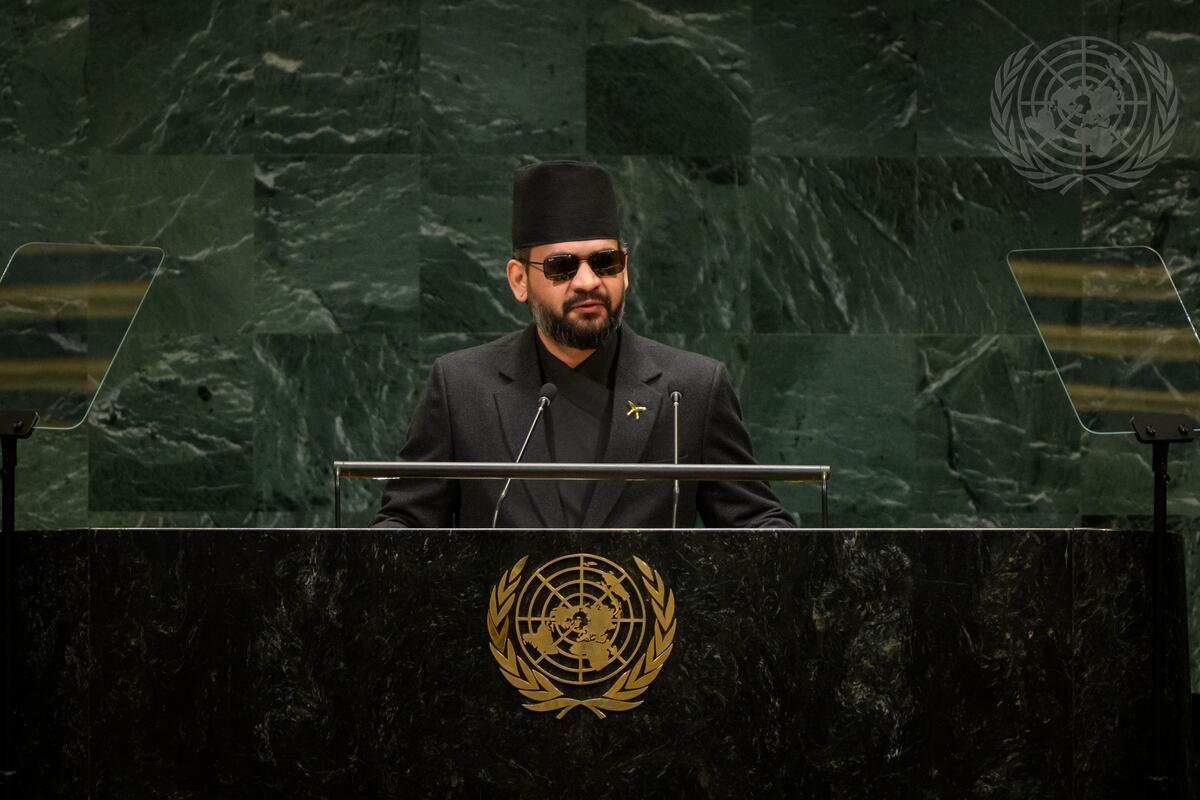
KATHMANDU: Climate experts and activists have praised Prime Minister Balendra (Balen) Shah for highlighting the issue of ‘climate justice’ at the 81st United Nations General Assembly, although some have raised questions regarding his delivery style.
Environmentalist Bhushan Tuladhar described the Prime Minister’s address as a timely and meaningful step toward achieving climate justice. He noted that the Prime Minister’s decision to remind world leaders of the ‘common but differentiated responsibilities’ principle established at the 1992 Earth Summit was a powerful aspect of the speech. Climate finance expert Raju Pandit Chhetri also termed the speech a positive step, emphasizing that Nepal must now focus on internal preparations and a long-term framework to turn international sympathy into tangible results. He highlighted the Prime Minister’s proposal for regional cooperation between Nepal, China, and India on disaster information sharing and early warning systems as a forward-looking initiative.
Conversely, climate activist Sagarika Bhatta argued that while the content was excellent, the delivery lacked the necessary ‘punch’ or aggression. ‘When presenting the unimaginable suffering of citizens at the grassroots level due to climate change, a powerful, emotional, and forceful voice was expected. The Prime Minister missed that mark, and despite the excellent content, the presentation felt weak,’ she said. She added that Nepal needs to build stronger diplomatic and strategic solidarity to challenge the double standards of developed nations.
Activist Kushal Gurung echoed these concerns, stating that the Prime Minister’s presence did not carry the weight required for such a global forum. ‘From a young and energetic leader like Balen, a more rebellious and assertive stance regarding the climate crisis was expected,’ Gurung said, adding that the address failed to firmly establish the ‘polluter pays’ principle as a mandatory obligation for developed nations.
Meanwhile, climate expert Manjeet Dhakal defended the speech, labeling it science-based and diplomatically mature. He interpreted the Prime Minister’s six ‘R’ concept and the proposal for a regional cooperation mechanism as strategic tools for long-term disaster management. Experts unanimously agreed that the true test will be in the coming months, urging the government to intensify internal coordination to ensure the commitments made at the UN are translated into concrete results.