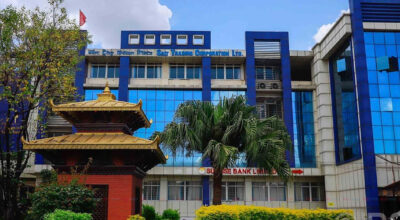


KATHMANDU: Ministry of Communications and Information Technology has recommended a corruption investigation into alleged irregularities in Nepal Television’s satellite bandwidth procurement, claiming that the state broadcaster suffered losses of more than Rs 206.1 million over two decades.
The ministry has formally referred the case to the Commission for the Investigation of Abuse of Authority (CIAA) after a ministerial-level study committee concluded that repeated violations of Nepal’s public procurement laws and regulations occurred while leasing satellite bandwidth for Nepal Television’s broadcasting services.
The committee, chaired by space technology expert Dr. Abhas Maskey, included advocate and civil engineer Umesh Rupakheti, chartered accountant Tikaram Karki, and satellite communication engineer Nabin Kumar Mishra. It examined satellite bandwidth contracts and related procurements spanning 2005 to 2025.
According to the report submitted to the CIAA, the committee identified procurement irregularities amounting to Rs 206.1 million, alleging that contracts were awarded in breach of the Public Procurement Act and Regulations, causing significant financial losses to the state-owned broadcaster.
The panel concluded that procurement processes had been repeatedly manipulated over nearly two decades and recommended corruption investigations against 61 current and former board members and employees of Nepal Television.
Among the findings, the committee alleged that a 2012 procurement contract alone caused losses of approximately Rs 871,000. It also claimed that irregularities and tax-related issues between 2005 and 2012 resulted in losses of nearly Rs 30 million.
The report further alleged that the addition of a third television channel in 2014 caused an unnecessary loss of Rs 2.17 million, while the expansion of the Kohalpur channel led to excess payments of about Rs 851,000. It also claimed that inflated cost estimates during procurements between 2005 and 2012 caused losses of around Rs 163.3 million.
The committee further stated that after a supplementary agreement signed in April 2012, Nepal Television continued to incur repeated financial losses. It concluded that senior management failed to provide successive boards of directors with accurate and complete information regarding the procurement decisions.
Among those recommended for investigation are Nepal Television Board Chairman Balram Timilsina, board member and Acting General Manager Deepakmani Dhital, and board member Nirmal Gyawali. The report alleges that a five-year procurement period was improperly extended to ten years, the satellite service was shifted from a regional beam to a global beam without adequate justification, and misleading reports were submitted during the procurement process.
The committee also recommended investigations into Procurement Unit Chief Kriti Prasad Joshi, Head of Financial Administration Rajan Shrestha, Acting Head of Engineering Chintamani Baral, Legal Officer Gyanendra Nepal, Accounts Officer Sharad Chandra Shrestha, Administrative Officer Purushottam Maharjan, and invited board member Hari Prasad Bhandari, among others.
The recommendations extend to several former boards and senior management teams, including former chairpersons Laxman Kumar Pokharel, Mahesh Raj Dahal, and Mahendra Bista, as well as former general managers, board members, finance officials, engineering executives, procurement officers and ministry representatives who served during various procurement periods.
The committee alleged that some officials deliberately prepared procurement documents against the institution’s interests, approved contracts in bad faith, and failed to ensure transparency and value for money in satellite bandwidth leasing.
The ministry has now asked the CIAA to conduct a detailed investigation into the alleged corruption and determine criminal liability for those involved. If pursued, the case could become one of the largest procurement investigations involving Nepal Television’s satellite broadcasting contracts in its history.