

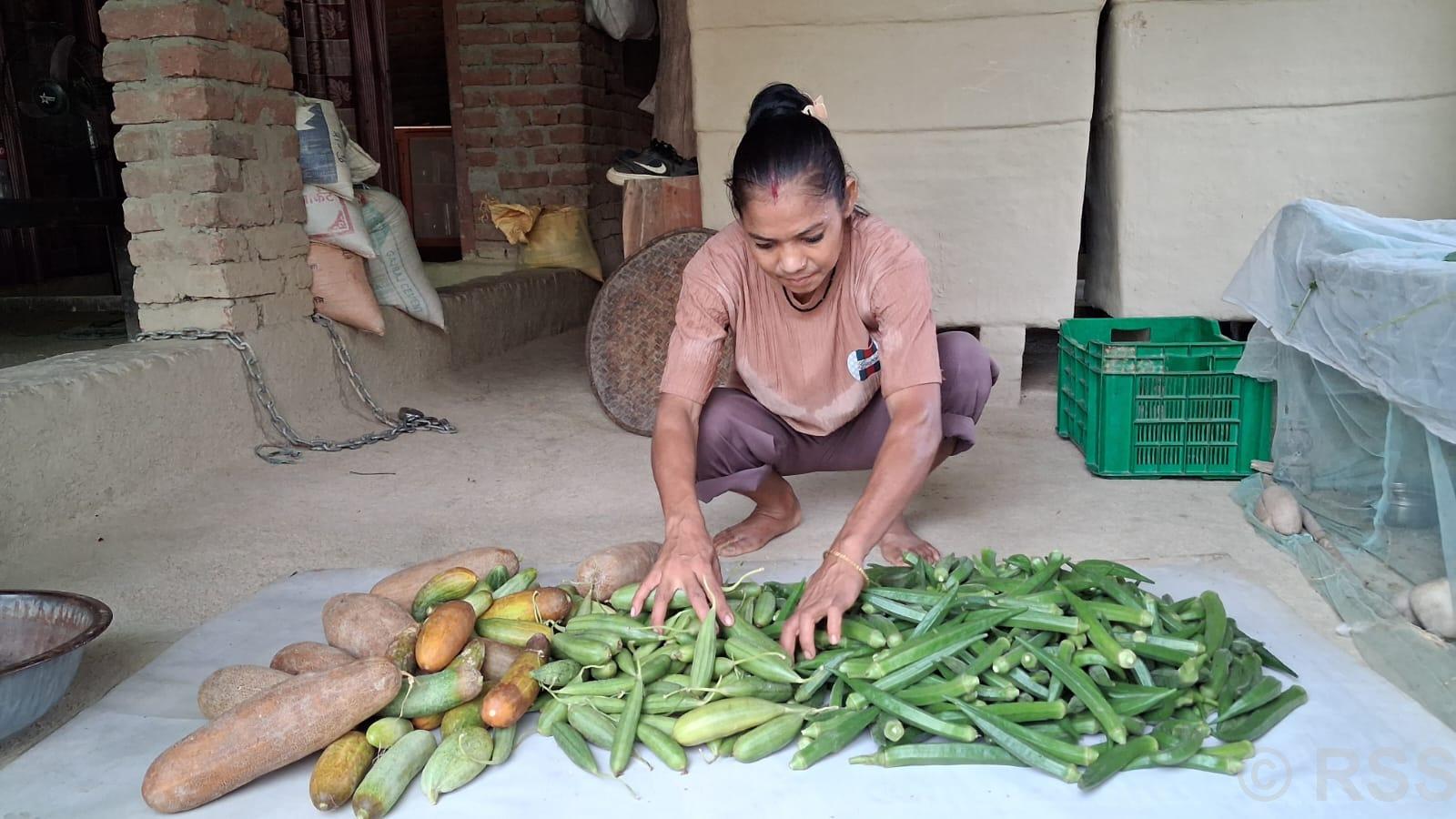
DANG: Traditional vegetable varieties are disappearing from farms in Badhaiyatal Rural Municipality as farmers shift toward modern alternatives. Local farmer Jodhani Tharu noted that heirloom crops like cowpeas, cucumbers, gourds, pumpkins, and okra, which were once abundant, are no longer thriving.
She explained that while plants still germinate, they often fail to produce fruit, or the produce rots and suffers from pest infestations. She recalled that local cucumbers used to be so large and plentiful that they were a staple of their diet, a far cry from the scarcity seen today.
Historically, farmers grew these vegetables alongside maize, as the stalks provided natural support for the vines, eliminating the need for extra structures. However, the widespread availability of commercial seeds has led to the decline of traditional varieties. Another local farmer, Dusani Tharu, attributed this shift to the desire for higher yields and easier marketability. Farmers now prefer seeds that mature quickly and are easier to sell commercially.
Dipendra Shrivastav, head of the agriculture development branch at Badhaiyatal Rural Municipality, confirmed that the commercialization of vegetable farming has driven this trend. He stated that farmers prioritize improved seeds because they offer more consistent and higher production, which is essential for business.
While the rural municipality continues to encourage the preservation of indigenous seeds through various incentives, the preference for improved varieties remains high. Despite this, some farmers within the municipality continue to preserve traditional seeds at home.