



KATHMANDU: The government has prepared an ambitious 35-point master plan requiring more than Rs500 billion to modernise infrastructure and public transport in the Kathmandu Valley. If implemented, the plan will introduce metro rail, underground and elevated roads, new bridges and river corridors across the valley.
Prepared by the Ministry of Physical Infrastructure and Transport with support from the Japan International Cooperation Agency (JICA), the master plan is currently undergoing a preliminary feasibility study. The government will move ahead with implementation after approval and plans to seek public feedback through a formal notice.
The plan is divided into three phases: short-term projects by 2032, medium-term projects by 2040 and long-term projects by 2050. According to joint secretary and former Director General of the Department of Roads Sushil Babu Dhakal, 22 projects focus on infrastructure development and 13 on improving transport services.
Metro and underground corridors
The plan proposes a metro system along the high-demand east-west corridor from Ratnapark to Bhaktapur, covering around 14.6 kilometres. The section through the city centre and around Koteshwor would be developed underground, while other sections would use elevated structures within the existing road right-of-way. The metro is targeted for operation around 2040.
An underpass at Maharajgunj and a two-level underground tunnel between Chabahil and Gaushala have also been proposed.
Other major projects include expansion of the Ring Road between Gaushala and Tinkune, a new Thapathali–Tripureshwor river corridor, improvements along the Bagmati riverbank and a Balaju–Bishnumati river corridor.
New bridges over the Bishnumati, Dhobikhola, Karmanasa, Gwarko and Bagmati rivers, along with bridge expansion near UN Park, are also included.
Public transport gets priority
The master plan aims to shift commuters from private vehicles to public transport through better bus services, upgraded bus parks, improved road capacity and better connectivity outside the Ring Road.
It also proposes utility corridors, vehicle-free zones in Thamel and the Durbar Square areas of Kathmandu and Lalitpur, cycling infrastructure, road-safety improvements, emergency road networks and off-street parking.
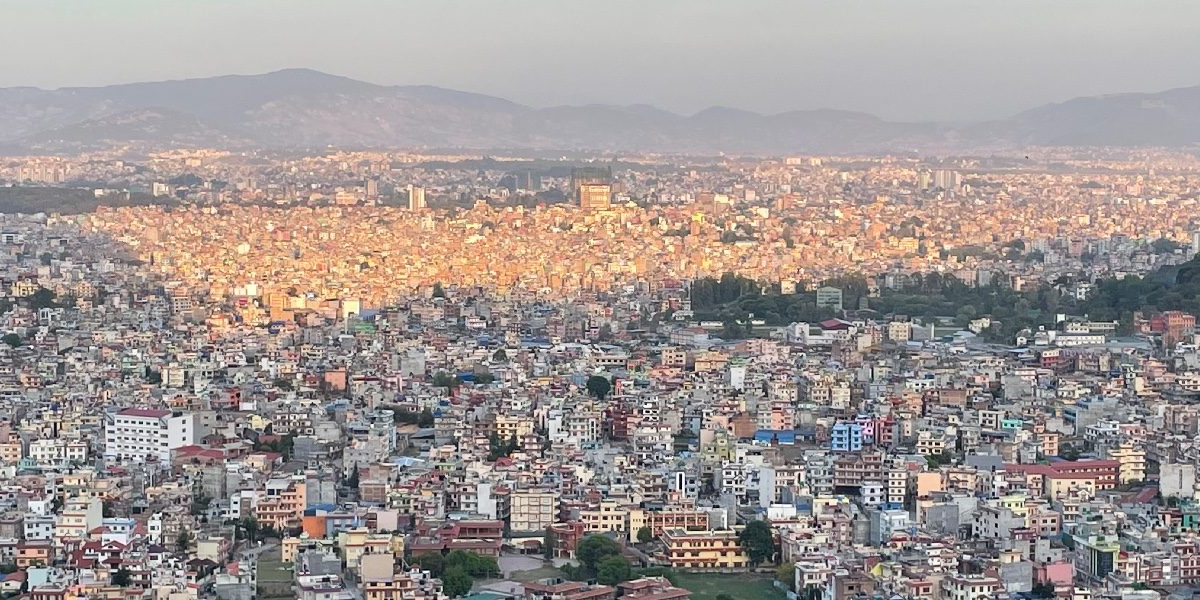
The ministry estimates that Kathmandu Valley’s population could reach around 4.2 million by 2050. The master plan is intended to build the infrastructure and transport capacity needed to accommodate that population and future mobility demand.