

SUNSARI: A deadly communal clash in Sunsari’s Dewanganj has exposed serious leadership and command gaps within Nepal’s Armed Police Force (APF), with security experts questioning whether prolonged delays in appointing key commanders weakened the state’s ability to respond to one of the country’s most sensitive border security situations.
The violence erupted at a time when eight APF battalion commanders had completed their one-year tenures, but transfers and new appointments remained stalled, leaving several strategically important units without permanent leadership. The incident resulted in the death of one civilian from APF gunfire and left 22 people injured, including 13 security personnel.
Command vacancies in sensitive border districts
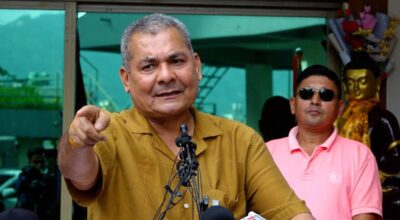
Home Minister Sudhan Gurung visited eastern Nepal in late June and, citing failures to curb cross-border smuggling, ordered APF headquarters to recall the commanding officers of the APF battalions in Jhapa and Sunsari.
On June 30, SP Shyam Karki, commander of APF Battalion No. 4 based in Inaruwa, Sunsari, was recalled to headquarters. Nearly a month later, however, no replacement had been appointed. The battalion, responsible for security from Inaruwa to the southern border with India, remained without a permanent commander despite Sunsari being one of Nepal’s most sensitive border districts.
A similar situation unfolded in Jhapa after SP Ambika Prasad Joshi was also recalled. According to APF officials, no successor has yet been deployed there either.
“Once an officer is recalled, either a replacement should immediately be posted or the investigation should be completed and the same officer reinstated,” an APF officer told this publication on condition of anonymity. “The Home Ministry failed to ensure command continuity in both districts. The consequences of that leadership vacuum became evident in Sunday’s incident.”
Border district with longstanding security challenges
Sunsari, which shares an open border with India, has long been regarded as a high-risk district due to cross-border smuggling, including narcotics trafficking. The district has also witnessed recurring tensions between religious communities over the years.
Despite these known security vulnerabilities, the APF battalion responsible for the southern border remained without a commanding officer for nearly a month.
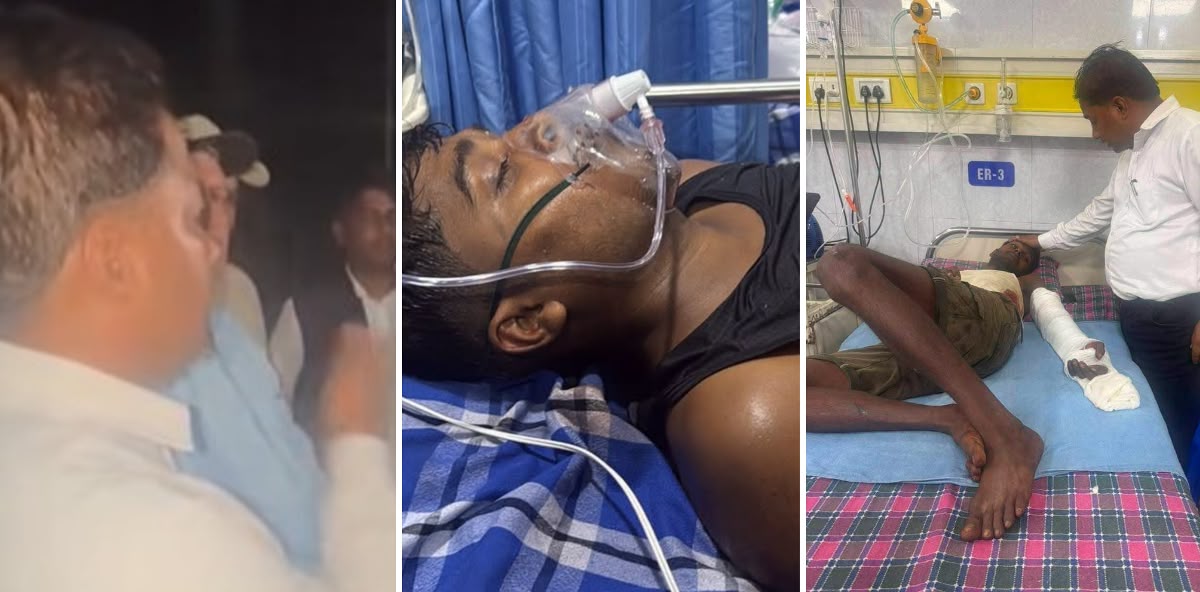
Sunday night’s violence left 30-year-old Om Prakash Mehta of Dewanganj-4 dead after he was shot by APF personnel. Several other civilians reportedly sustained gunshot wounds to the chest, abdomen and upper body.
Administrative deadlock over APF transfers
Under APF regulations, the Inspector General has the authority to transfer battalion commanders. However, according to police sources, disagreements between Home Minister Sudhan Gurung and APF Inspector General Narayan Dutta Poudel over postings and performance evaluations have delayed the transfer of eight battalion commanders whose tenures expired at the end of the last fiscal year.
Officials say the resulting administrative paralysis has left several border and strategically sensitive APF units operating without permanent leadership or under uncertain command arrangements.
DJ dispute escalates into communal violence
According to Sunsari District Police Office, the violence began on Sunday night after a dispute erupted between members of two communities when Hindu devotees participating in the Shrawan Bolbam pilgrimage passed through the area playing loud DJ music.
Initially, a small police team from the local police post attempted to control the situation. However, in the absence of experienced local command and effective coordination, the dispute quickly escalated. Groups from both sides reportedly gathered carrying sticks, stones, wooden planks and spears, pushing the situation beyond the control of local police.
Security response questioned
The clash injured 13 security personnel, including eight Nepal Police officers and five APF personnel. Among them was Dewanganj Police Inspector Rakesh Rai, who suffered head injuries requiring five stitches.
Police sources said three warning shots were fired from Inspector Rai’s service pistol, but the crowd failed to disperse. Shortly afterward, APF personnel opened fire, fatally shooting Om Prakash Mehta.
Local residents and political representatives have alleged that security forces resorted to lethal force without exhausting minimum crowd-control measures and in the absence of clear operational command from senior leadership.
Curfew imposed as criticism mounts
Following the incident, authorities deployed an additional 376 security personnel from Koshi Province Police and neighboring police units. A curfew has since been imposed in parts of Dewanganj and Harinagar to prevent further violence.
The incident has intensified criticism of the government’s handling of security leadership, with observers arguing that an initially localized dispute was allowed to escalate into deadly communal violence because of weak command structures and delayed administrative decisions.
Lawmaker alleges excessive use of force
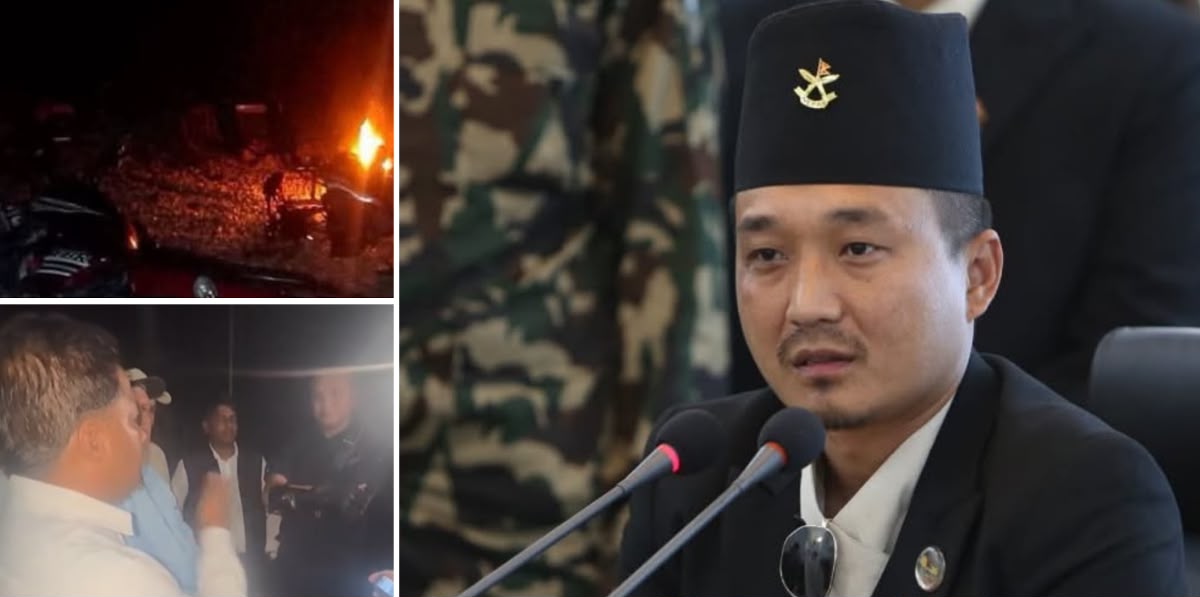
Rastriya Swatantra Party (RSP) lawmaker Lal Bikram Thapa, who visited the incident site, accused security forces of using excessive and disproportionate force against civilians.
“Our innocent youths were deliberately targeted,” Thapa said. “Most of the injured sustained bullet wounds above the waist, including the abdomen, chest and back. During crowd control, security personnel are expected to aim below the knees, but the pattern of injuries raises serious concerns that lethal force was intentionally used.”
He also expressed concern that the government could attempt to portray the incident primarily as a religious conflict to divert attention from administrative and security failures, urging authorities to exercise maximum restraint to prevent further violence.