




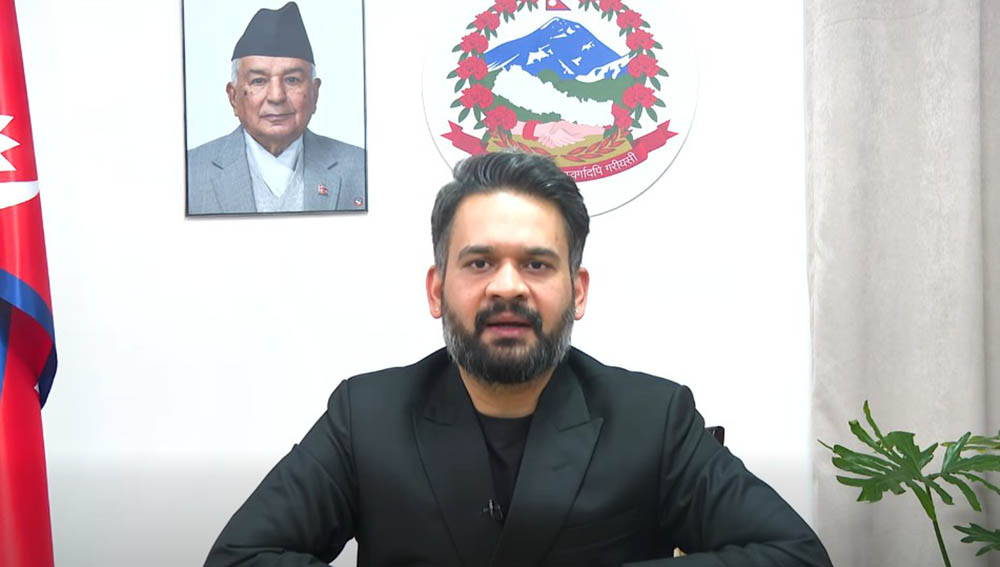
KATHMANDU: political leaders on Friday criticized Prime Minister Balen Shah for what they described as a delayed response to the violence that began in Sunsari, arguing that earlier government intervention could have prevented the unrest from spreading across the Madhesh region.
The criticism came after two people, Om Prakash Mehta and Jay Prakash Mehta, died following police firing in Kaptanganj, Dewanganj Rural Municipality-3 of Sunsari on July 25, when security forces attempted to disperse clashes between two groups. The unrest later spread to several Madhesh districts, where Ganesh Yadav was killed in police firing during a protest in Golbazar, Siraha. Curfews and prohibitory orders remain in force in several districts amid heightened tensions.
Leaders who met the prime minister on Friday said the government had failed to act swiftly after the Sunsari incident, allowing public anger to escalate.
Rajendra Mahato, chairperson of the National Liberation Party, said the prime minister should have intervened much earlier to prevent communal tensions from worsening.
Mahato argued that the agreement Home Minister Sudhan Gurung reached with the victims’ family in Siraha should have been pursued immediately after the initial Sunsari incident.
He added that his party had submitted an eight-point proposal to the government days earlier, warning that the unrest was rapidly spreading across Madhesh.
The meeting, which lasted nearly two and a half hours, concluded with Prime Minister Shah assuring leaders that the government would take concrete measures to restore peace and security in Madhesh and Koshi Province while urging all sides to maintain communal harmony.
The prime minister also held discussions with lawmakers from the Rastriya Swatantra Party representing Madhesh, assuring them that the situation would not be allowed to deteriorate further.
Shah said all state security agencies had been placed on high alert and urged the public to remain calm. He said the government’s priorities were ensuring citizens’ safety, reaching affected communities, and conducting an impartial investigation into the incidents. He also encouraged lawmakers to return to their constituencies and help strengthen trust between citizens and the state.
The prime minister had earlier addressed the nation on Thursday, appealing for peace and social harmony, before meeting President Ram Chandra Paudel to discuss the evolving situation.
Meanwhile, Nepal Police appealed to the public not to spread rumors or misinformation regarding the unrest that began in Sunsari. Police spokesperson DIG Abin Narayan Kafle urged citizens to act responsibly and help restore peace and public order.
He added that Home Minister Gurung had visited Siraha to meet the victims’ families, the injured, and other stakeholders to address their concerns through dialogue.
Opposition criticism in the National Assembly
The government’s handling of the crisis also came under sharp criticism in the National Assembly.
National Assembly Chair Narayan Prasad Dahal paid tribute to those who lost their lives and urged the government to ensure free treatment for the injured. He called for a prompt, impartial, and credible investigation, strict legal action against those responsible, fair compensation for victims’ families, stronger preventive security measures, and the publication of the investigation’s findings to restore public confidence.
NCP lawmaker Jayanti Rai said an earlier address to the nation by the prime minister could have prevented the crisis from escalating. She also demanded an independent investigation into who ordered police to open fire in Sunsari.
Rai further criticized the government’s absence from an all-party meeting, saying it demonstrated a lack of seriousness toward the crisis.
UML Chief Whip Roshani Meche accused the government of resorting to excessive force instead of dialogue.
Nepali Congress lawmaker Yuvaraj Sharma also blamed the government’s emphasis on force, arguing that the Kaptanganj incident spread across Madhesh because authorities ignored preventive measures to contain communal tensions and failed to address the growing sense of insecurity among minority communities and alienation among the majority population.