

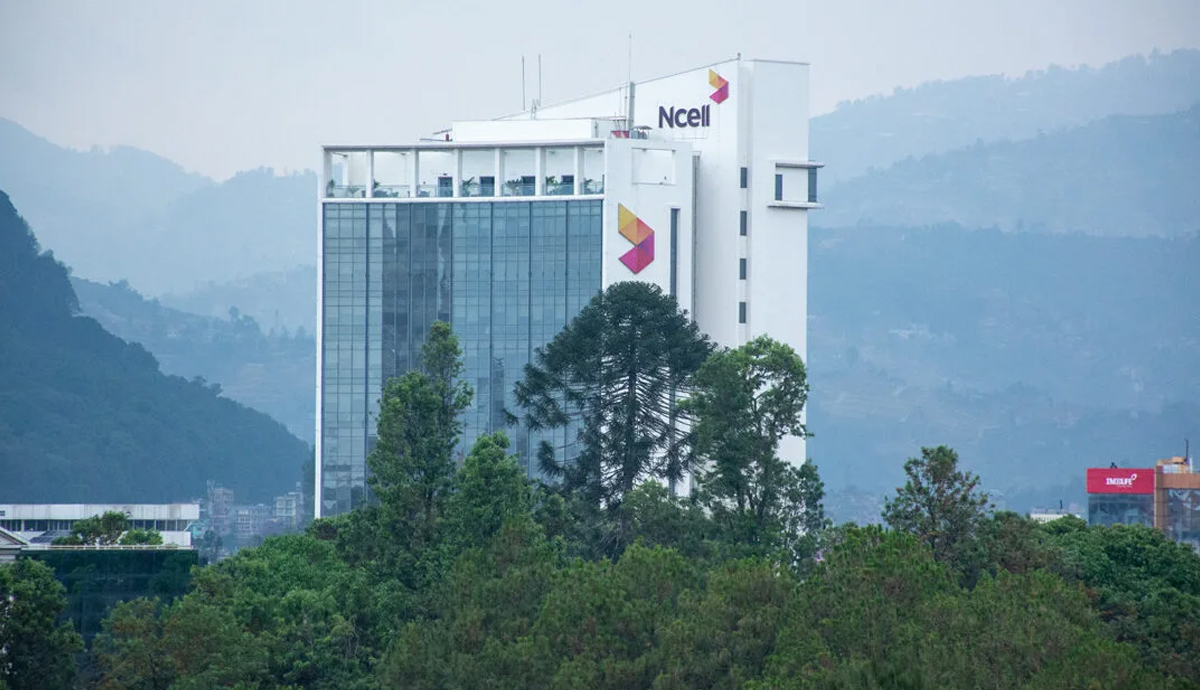
KATHMANDU: After nearly three years of legal uncertainty surrounding the transfer of Ncell’s ownership, Nepal’s second-largest telecommunications and only private operator appears to be entering a new phase. A landmark ruling by the Supreme Court has effectively removed the biggest legal hurdle over the company’s ownership transfer, paving the way for regulators to conclude the remaining approval process under existing laws.
The verdict does more than settle a corporate dispute. It also marks an important moment for Nepal’s investment climate, telecommunications regulation, and the country’s broader digital economy. As Ncell prepares to move beyond one of the most closely watched corporate legal battles in recent years, questions are shifting from ownership to the company’s future role in Nepal’s rapidly evolving digital landscape.
Supreme Court ends years of legal uncertainty
The Supreme Court dismissed a writ petition seeking to invalidate the sale of an 80 percent stake in Ncell between Axiata Investments (UK) Limited and Spectrlite UK, signed on December 1, 2023.
A joint bench of Justices Sapana Pradhan Malla and Tek Prasad Dhungana concluded that there were no legal grounds to annul or suspend the share purchase agreement.
The ruling effectively closes the judicial chapter of the ownership dispute while leaving the remaining regulatory approvals to the Nepal Telecommunications Authority (NTA), which will now proceed under existing telecommunications laws and licensing provisions.
Beyond the individual case, the Court also issued a directive order under Article 133(3) of Nepal’s Constitution, calling for clearer, more transparent and more effective regulation of ownership changes in foreign-invested telecommunications companies. The Court emphasized strict compliance with the Telecommunications Act, Telecommunications Regulations, NTA’s Share Transfer Regulations and licensing conditions.
The decision is expected to provide greater legal clarity for both domestic and foreign investors operating in Nepal’s strategic sectors.
More than an ownership story
Although recent headlines have focused on ownership, Ncell’s history extends far beyond legal disputes.
For more than two decades, the company has played a central role in transforming Nepal’s telecommunications sector-from expanding mobile connectivity to supporting digital payments, online education, e-commerce, remote work and digital government services.
Its journey reflects Nepal’s own digital transformation.
Ncell’s story is not merely about one telecom operator; it mirrors the country’s transition from limited mobile access to a modern digital economy.
Changing Nepal’s telecommunications landscape
When Ncell entered Nepal’s telecommunications market in 2005 under the Mero Mobile brand, mobile services were expensive, internet access was limited, and telecommunications remained largely dominated by the state.
Private sector competition changed that landscape. The arrival of Ncell accelerated network expansion, increased service quality, lowered prices and widened customer choice. Over the next two decades, the company expanded coverage to all 77 districts, built thousands of base stations and evolved from 2G voice services to nationwide 3G and 4G data connectivity.
Industry experts widely acknowledge that competition introduced by private operators helped make mobile services more affordable while accelerating technology adoption across Nepal.
Today, millions of Nepalis rely on mobile connectivity for everyday activities-from banking and digital payments to education, healthcare, business and communication.
A Major contributor to Nepal’s economy
Ncell’s significance extends well beyond telecommunications.
According to the company, it has contributed about 400 billion to the Government of Nepal through taxes, fees and various regulatory payments since its establishment.
These include corporate taxes, value-added tax, telecommunications service charges, frequency fees and licensing payments.
Over the years, Ncell has repeatedly ranked among Nepal’s largest taxpayers, making it a significant contributor to government revenues and public finances.
Its economic footprint also extends through investment, procurement and employment across numerous sectors linked to telecommunications infrastructure.
Powering Nepal’s digital economy
The importance of telecommunications infrastructure has become even more evident as Nepal embraces digital services.
Today, mobile banking, QR payments, online learning, e-commerce, video conferencing, telemedicine and digital government services all depend on reliable mobile networks.
The COVID-19 pandemic further accelerated digital adoption, highlighting the critical role played by telecom operators in maintaining connectivity across the country.
Ncell’s mobile broadband expansion has enabled millions of Nepalis to participate in the digital economy, connecting individuals, businesses and institutions across urban and rural communities alike.
Employment beyond the company
Ncell’s economic impact extends far beyond its direct workforce.
According to the company, while it directly employs hundreds of professionals, its broader ecosystem-including dealers, distributors, recharge vendors, tower maintenance firms, IT service providers, logistics companies, security contractors and technical partners-supports more than 100,000 direct and indirect jobs.
Telecommunications infrastructure stimulates a wide range of economic activities, making the sector an important driver of private investment and local business development.
Investing in Nepal’s digital infrastructure
As the global telecommunications industry shifts toward cloud computing, artificial intelligence, cybersecurity and data infrastructure, Ncell has increasingly expanded beyond traditional mobile services.
The company now operates a Tier III data center in Nakkhu and has established disaster recovery facilities in Pokhara and Hetauda to ensure service continuity.
These facilities are designed to support banks, government agencies, private enterprises and digital service providers requiring secure data hosting.
In another milestone, Ncell became the first Nepali company to be officially listed by the Department of Information Technology as both a data center and cloud service provider.
Technology experts argue that such investments are becoming increasingly important as data emerges as one of the most valuable strategic assets of the digital economy.
Beyond profit: corporate social responsibility
Like many global corporations, Ncell has also expanded its focus beyond commercial operations.
Through the Ncell Foundation, the company supports initiatives in education, healthcare, environmental protection, disaster relief and community development.
Its scholarship program assists academically outstanding students from financially disadvantaged backgrounds, while other initiatives include digital literacy campaigns, emergency relief during natural disasters and support for schools and healthcare institutions.
These programs aim to strengthen the company’s engagement with society beyond its commercial activities.
A regulated market
Nepal’s telecommunications market today looks vastly different from what it was two decades ago. Competition has shifted from subscriber growth to network quality, customer experience, digital services and technological innovation.
At the same time, regulatory expectations have become more demanding.
Issues such as cybersecurity, consumer protection, data privacy, service quality and infrastructure investment now shape the operating environment for telecom companies.
Ncell has also faced public scrutiny, regulatory investigations and legal challenges over various issues in recent years. Some matters, including those related to Smart Cell and other allegations, remain under investigation by relevant authorities, with final legal conclusions yet to be reached. As with any ongoing investigation, those issues remain subject to due legal process.
The next decade: AI, Cloud and 5G
The future of telecommunications is no longer defined simply by selling SIM cards or voice services.
Around the world, telecom operators are transforming into digital infrastructure companies, cloud providers and technology platforms.
Nepal is entering the same transition. For Ncell, the next decade will likely be shaped by investments in artificial intelligence, 5G, cloud computing, cybersecurity, Internet of Things (IoT), advanced data centers and digital ecosystem development.
Recent investments in network modernization and digital infrastructure suggest the company is positioning itself for that transformation.
A new chapter begins
The Supreme Court’s ruling closes one of the most significant legal chapters in Ncell’s corporate history, but it also opens a broader conversation about Nepal’s digital future.
Since entering the market in 2005, Ncell has helped expand telecommunications access, strengthened market competition, contributed substantially to government revenue, supported employment, invested in digital infrastructure and participated in community development.
At the same time, the company has navigated ownership changes, regulatory scrutiny, legal disputes and an increasingly competitive marketplace.
Those legal and regulatory processes continue where necessary, but they do not diminish the importance of objectively assessing the company’s contribution to Nepal’s telecommunications sector.
As Nepal accelerates toward a digital economy, Ncell’s next chapter will matter not only to the company itself but also to the country’s wider ambitions for connectivity, innovation and economic transformation. Ultimately, the story of Ncell is no longer just the story of a mobile operator. It is increasingly becoming part of the story of Nepal’s technical and digital future.