




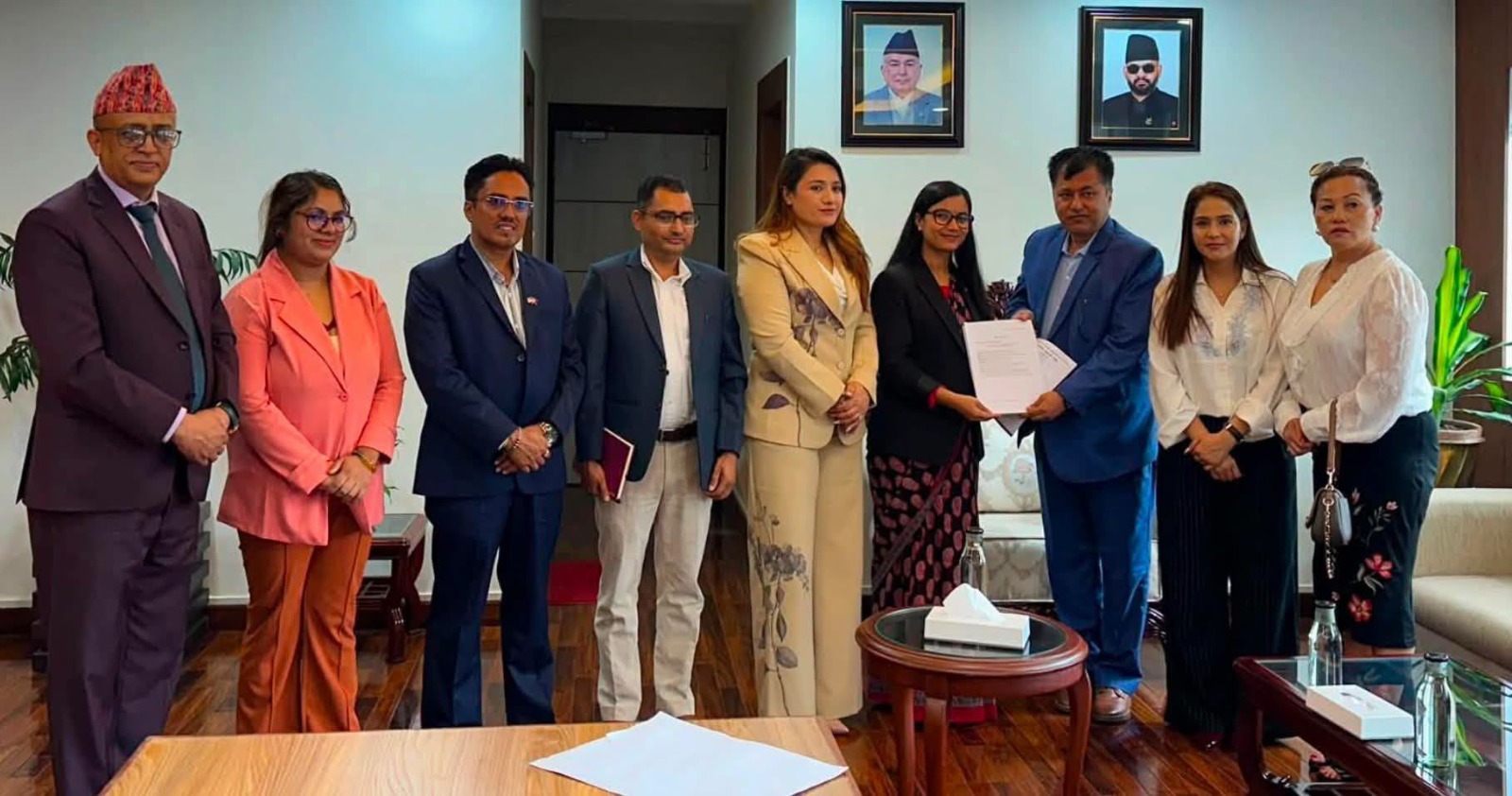
KATHMANDU: Minister for Law, Justice and Parliamentary Affairs Shobhita Gautam has said that the proposed Non-Resident Nepali (NRN) Act will be among the bills the government plans to present in Parliament this year.
During a meeting with a delegation from the Non-Resident Nepali Association (NRNA), Minister Gautam clarified that the government has placed priority on enacting the necessary legal framework to effectively implement the rights guaranteed to non-resident Nepalis by the Constitution. She informed the delegation that the government has set a schedule to table the NRN-related bill during the upcoming winter session of Parliament.
The minister made the remarks after NRNA Vice President and Coordinator of the Citizenship Continuity Committee, Rozina Pradhan Rai, presented a three-phase action plan. Rai said that the economic, social and cultural rights granted to non-resident Nepalis through the Constitution and the Citizenship Act have yet to be implemented effectively in practice.
Minister Gautam said that lawmaking is not merely a paper exercise but a means of addressing citizens’ problems, and that the bill would be drafted by incorporating suggestions from stakeholders. She added that the government is treating legal issues related to non-resident Nepalis with seriousness.
“This year is a year for legal reform and building an institutional foundation. We are preparing a strong foundation. The NRNA should also come forward with a clear plan and work in cooperation with the government,” Gautam said. “The government is committed to utilizing the global network, knowledge, skills, technology and investment of Nepalis living abroad for Nepal’s prosperity.”
The proposal presented by Rai includes three phases: effective implementation of existing legal rights through a Cabinet decision; amendment of the NRN Act in line with changing times to institutionalize the principle of “Once a Nepali, Always a Nepali”; and, in the third phase, necessary constitutional reforms to ensure a long-term solution for NRN citizenship.
NRNA focal person Saroj Dahal said that amending the NRN Act would require coordination with other laws related to immigration, companies and property, making the process legally complex. He noted that property-related issues could potentially be addressed through a Cabinet decision and said the ministry was positive about resolving practical difficulties faced by non-resident Nepalis.
NRNA Vice President and Head of the Skills, Knowledge and Technology Transfer Department Dr. Gyanendra Regmi stressed that the issue of NRN citizenship, which is included in the government’s policy commitments, should be implemented as a priority. He proposed forming a core team involving relevant agencies to study the provisions in various laws and ensure necessary coordination.
Regmi also briefed the minister on the Fourth Global Nepali Knowledge Conference 2027, scheduled for next January, saying preparations are underway to bring together Nepali experts and policymakers from around the world for extensive discussions on knowledge, skills, technology transfer and policy reform.
Minister Gautam reiterated that bringing the investment, knowledge, skills and technology of Nepalis living abroad into Nepal remains a government priority. She said the global NRNA network should be effectively mobilized for Nepal’s development and prosperity.
She also stated that the government is positive about resolving the legal complications faced by non-resident Nepalis, creating an investment-friendly environment and carrying out necessary legal reforms, while expressing the expectation of close cooperation from the NRNA.
On the occasion, NRNA Deputy General Secretary Krishna Pokharel said delays in amending the NRN Act have affected efforts to promote brain gain, attract investment and utilize the knowledge and experience of Nepalis living around the world for national development.
Women’s Coordinator Rashmi Thapa informed the meeting about the upcoming Global Women’s Conference next January and urged the government to provide legal and policy facilitation for Nepali women living abroad who wish to invest in Nepal.
Joint Treasurer Ganga Khatiwada said that although many non-resident Nepalis are ready to invest in Nepal, existing legal and policy barriers have prevented investment from flowing in as expected. She urged the government to create a more investment-friendly legal environment.
NRNA Chief Executive Officer Rajendra Kumar Raut and Senior Communication and Foreign Employment Officer Indralaxmi Ghimire were also present at the meeting.