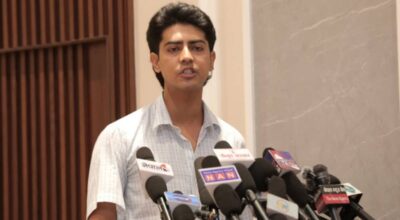


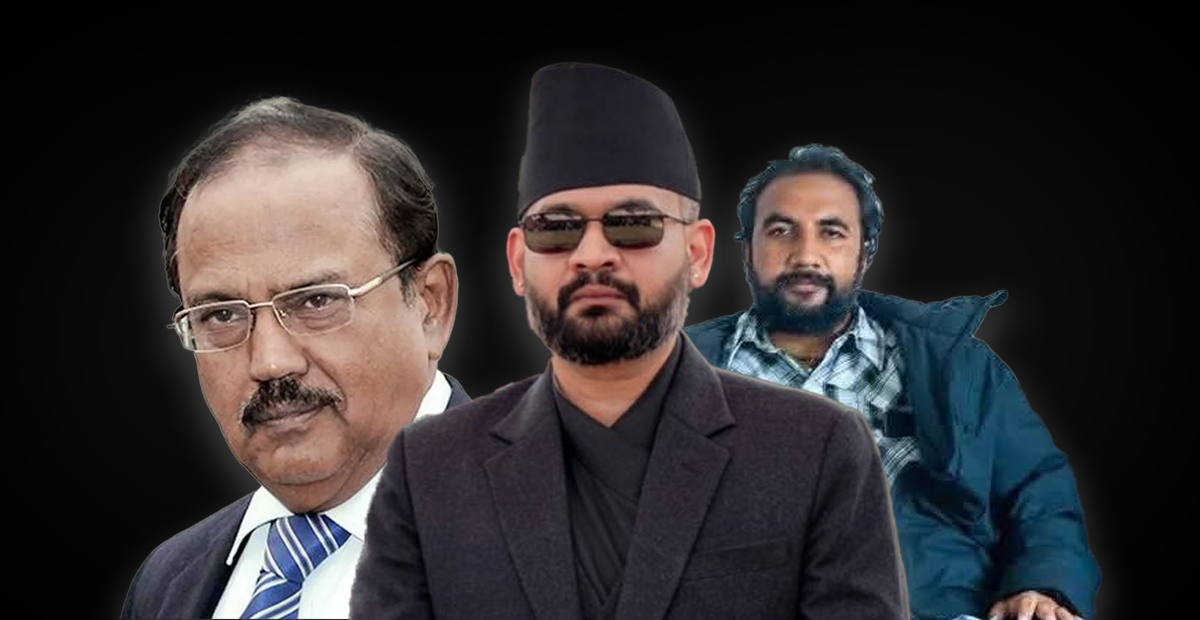
KATHMANDU: Prime Minister Balen Shah has quietly abandoned one of the defining principles of his early foreign policy-maintaining strict distance from foreign diplomats-and has begun pursuing discreet diplomatic engagement through trusted advisers while bypassing Nepal’s Ministry of Foreign Affairs, according to multiple government, military and diplomatic sources.
When he assumed office, Shah argued that previous governments had allowed excessive access to foreign diplomats-from ambassadors to junior embassy officials-into the highest levels of Nepal’s government, claiming such practices had encouraged foreign interference in domestic affairs.
To reinforce that message, he adopted an unwritten policy of refusing one-on-one meetings with foreign diplomats, except in limited circumstances involving heads of government or foreign ministers. However, recent developments indicate a dramatic reversal of that approach.
Secret Delhi mission
In one of the most significant diplomatic moves since taking office, Prime Minister Shah reportedly dispatched his Chief Adviser, Kumar Byanjankar (Ben), to New Delhi in the first week of July and meeting took place without formally informing the Ministry of Foreign Affairs.
Military sources confirmed to Nepal All that Kumar Ben boarded Buddha Air Flight 551 from Kathmandu to Simara on July 3, departing at 7:35 a.m., before making a secret crossing into India via the Raxaul border. According to the same sources, Indian intelligence personnel then facilitated the onward journey to New Delhi. The Directorate of Military Intelligence (DMI) personnel at airport and boarder had swiftly traced the movement and promptly briefed Chief of Army Staff General Ashok Raj Sigdel.
According to senior government sources, Ben held a private meeting with India’s National Security Adviser Ajit Doval on July 05, 2026.
Officials at the Foreign Ministry confirmed that they later became aware the meeting had taken place but said they were never officially briefed about either the visit or the agenda.
Because no Foreign Ministry officials attended the meeting, there is no official government record detailing what was discussed, officials acknowledged.
According to sources who spoke to Nepal All, Nepal Army’s Directorate of Military Intelligence was the first to detect Chief Adviser Kumar Ben’s covert cross-border trip to New Delhi, where he met Indian officials through another intermediary known to have some links with Army Headquarters. After receiving the initial intelligence, military intelligence reportedly conducted further verification and gathered additional information about Ben’s meetings with multiple senior Indian officials during the visit.
Same sources familiar with the matter said Ben travelled as Shah’s special representative, making the meeting an unofficial backchannel between the Prime Minister’s Office and India’s establishment.
Political sources also said Rastriya Swatantra Party (RSP) Chairman Rabi Lamichhane had prior knowledge of Ben’s Delhi visit after being informed by the adviser.
Preparing private meetings with Indian and Chinese ambassadors
Immediately following Ben’s India visit, Prime Minister Shah began preparations for separate one-on-one meetings with Indian Ambassador Naveen Srivastava and Chinese Ambassador Zhang Maoming.
Government sources say the Prime Minister’s Office initiated the process without first notifying the Ministry of Foreign Affairs.
Only after media reports surfaced did Foreign Minister Shishir Khanal seek clarification from Ben, who reportedly responded that the meetings were still being arranged and that the ministry would be formally involved only after the appointments were confirmed.
Security sources have also confirmed that Kumar Ben and other intermediaries acting on behalf of the Prime Minister have held multiple meetings in recent months with Indian Ambassador Naveen Srivastava, Chinese Ambassador Zhang Maoming, and several other diplomats representing countries with significant geopolitical interests in Nepal.
According to the sources, these contacts were conducted outside the normal Foreign Ministry framework and fully secret from the government record. The meetings reportedly served to convey personal messages from Prime Minister Shah and seek cooperation on matters of own interest, while establishing direct communication channels between the Prime Minister’s Office and key foreign missions.
Officials familiar with the contacts described the initiative as an effort to strengthen direct diplomatic engagement through trusted emissaries rather than conventional diplomatic mechanisms.
A sharp departure from earlier policy
The reported outreach represents a significant departure from Shah’s earlier diplomatic stance.
Earlier this year, Indian Foreign Secretary Vikram Misri reportedly cancelled a planned visit to Kathmandu after Shah declined to hold a bilateral meeting, citing his policy of not conducting one-on-one meetings with officials below the level of prime minister or foreign minister.
Similarly, Shah declined to meet Sergio Gor, a special envoy of U.S. President Donald Trump, during his Nepal visit. His only major bilateral one-on-one meeting with a foreign dignitary has been with Asian Development Bank President Masato Kanda-a meeting that officials say took place after persistent persuasion from Finance Minister Swarnim Waglé, who argued that the ADB is Nepal’s largest development partner.
Why the policy shift?
Officials and political insiders point to three factors behind Shah’s apparent diplomatic U-turn.
The first is the growing importance of India in Nepal’s political landscape following RSP Chairman Rabi Lamichhane’s high-profile visit to New Delhi, where he met Prime Minister Narendra Modi, External Affairs Minister S. Jaishankar and National Security Adviser Ajit Doval.
Some within the ruling party believe the Prime Minister wanted to establish his own direct channel with New Delhi rather than rely on party-level contacts.
Mounting domestic political criticism-including controversies over landless settlers, passport procurement, and other governance issues-has placed Shah under increasing pressure, prompting efforts to strengthen Nepal’s external relationships.
Finally, officials say the Prime Minister increasingly prefers trusted advisers to manage politically sensitive diplomatic communication outside the traditional bureaucracy.
The developments suggest a notable transformation in Nepal’s foreign policy practice under Prime Minister Shah-from publicly advocating diplomatic distance to quietly embracing direct, behind-the-scenes engagement with key international partners.