




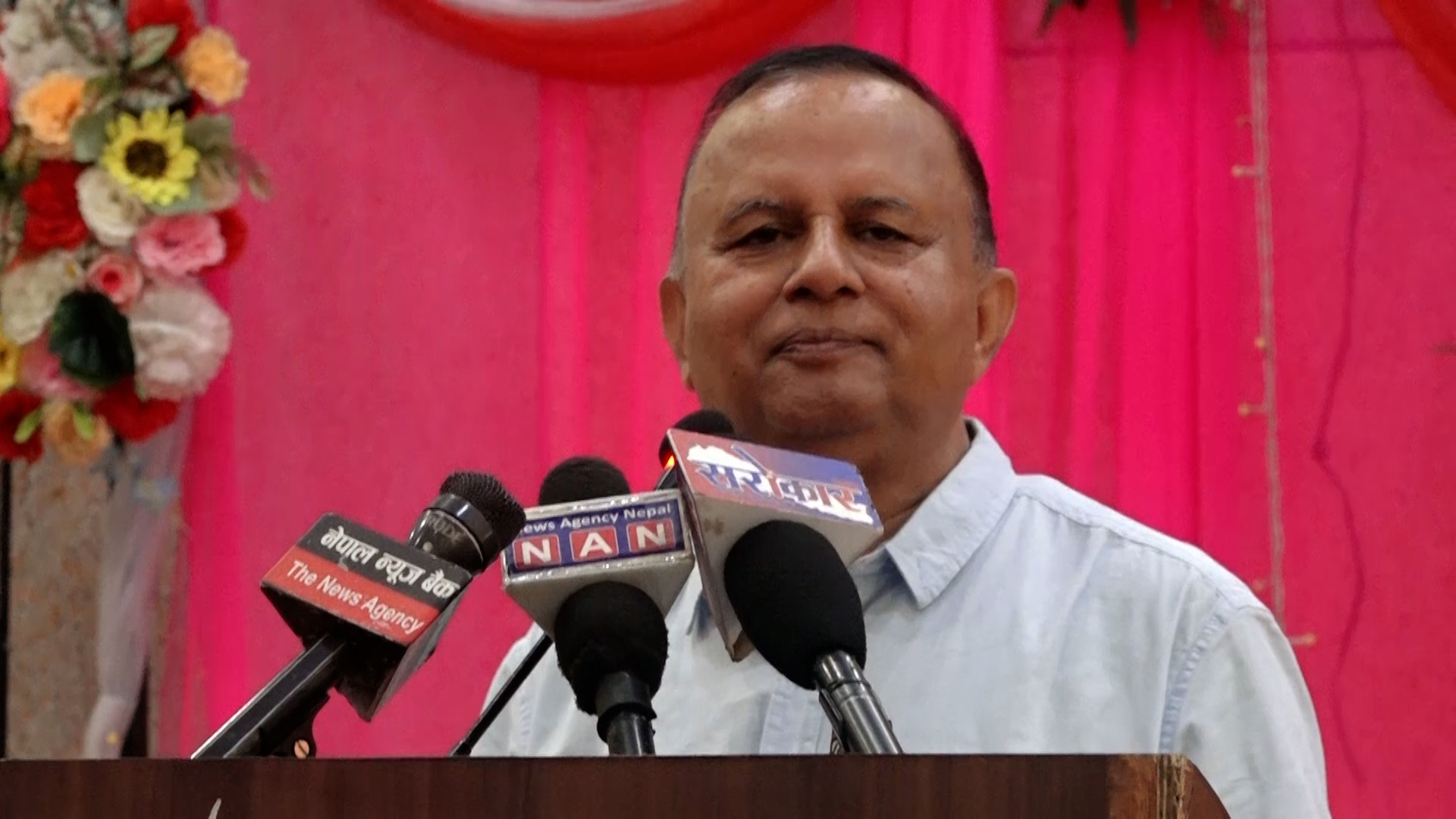
KATHMANDU: CPN-UML General Secretary Shankar Pokharel has remarked that non-Gen Z groups are currently driving unrest in the country in the name of Gen-Z.
Writing on Facebook on Sunday, Pokharel said that even those who claim to be building a new political force appear to be guided and controlled by non-Gen Z actors.
“At present, it is the non-Gen Z groups creating disturbances in the name of Gen-Z that are issuing the orders,” Pokharel wrote. “Even those who are said to be working to build a new force seem to be ruled and directed by them.”
He also accused various interest groups of exploiting the sentiments of Gen Z youths who were killed or injured during the incident of Bhadra 23.
“Self-interested groups are using the sacred emotions of the Gen Z youths who lost their lives and were injured on Bhadra 23 to cover up the truth in every incident,” he said.
Calling Bhadra 23 one of the most tragic events and a black day in Nepal’s history, Pokharel said the incident should not be viewed from a one-sided perspective.
He argued that the situation might have been different if non-Gen Z groups had not encouraged students and children to join the protests, if groups such as TOB and Hami Nepal had not inflamed the crowd, and if some public figures and politicians had not created an atmosphere of political instability by thinking that their turn would come after the government’s fall.
Pokharel also called for an investigation into possible geopolitical interference and the role of interest groups and unseen actors allegedly working against the state.
Questioning whether security agencies were truly incapable of peacefully managing a protest of around 10,000 people, he wrote, “Were our security agencies really in such a helpless state that they could not manage a peaceful demonstration of 10,000 people? Certainly not.”
At the same time, he acknowledged that the firing on youths, the loss of lives and the injuries sustained were extremely serious and unforgivable tragedies.
According to Pokharel, forming conclusions solely on the basis of the Bhadra 23 incident risks ignoring possible conspiracy, provocation and infiltration behind the events.
“To form a one-sided opinion without examining the deeper layers of the incident is to ignore the conspiracy, provocation and infiltration behind it,” he wrote.
He further claimed that the unrest on Bhadra 24 may not have been the result of spontaneous anger but of a planned conspiracy developed over several months, and that the Bhadra 23 incident may also have been orchestrated as part of the same chain of events.
Pokharel stressed the need for an impartial and high-level judicial investigation into all incidents that occurred on Bhadra 23 and 24, saying only such an investigation would reveal the truth and provide genuine justice to the victims. He also expressed confidence that the events of those two days would eventually be investigated.