

The fieldwork for the ethnic caste list of Karmarong community started from Kathmandu, proceeding to Nepalgunj and Talcha through Rara Airport. The study period was during the rainy season in the month of Asar, and the journey was tough due to delays in flights due to bad weather conditions. Although the first trip to Nepalgunj went well, the trip to Talcha got delayed twice as flights were cancelled even after completing the boarding process. The third attempt proved successful when the team got an early morning flight to Talcha.
The jeep was booked from Talcha Airport and traveled through a dusty road to Gamgadhi. Sonam Karmarong and Urgin Namdul Karmarong were receiving us at Hotel Anisha Top with Khadas. Following their hospitality, we ate lunch at the hotel and booked the jeep from Gamgadhi to the settlement site of the Karmarong community. It was surprising to see that there were no asphalted roads in Gamgadhi and Mugu districts. We could hear the sound of the clattering of stones along the dusty road and the river.
The central hub of the Karmarong community consists of Mugum-Karmarong Rural Municipality in Mugu District of Karnali Province. The Chairman of Mugum-Karmarong Rural Municipality, Tshiring Kyapne Lama, and the Vice Chairman, Tshiring Putik Lama, belong to the Karmarong community. Within the 9 wards of the rural municipality, Karmarong people reside in all the wards excluding Mugal Ward No. 2 Mugum and Khas Arya Ward No. 9 Chhayala.
As reported by the municipal chairman, geography and territories of the Karmarong community is situated in Tibet Autonomous Region of China to the north, Jugdulla Rural Municipality, Dolpa, and Patarasi Rural Municipality, Jumla to the south, Se-Phoksundo Rural Municipality, Dolpa to the east, and Chhayanath Rara Municipality, Mugu, and Chankheli Rural Municipality, Humla to the west.
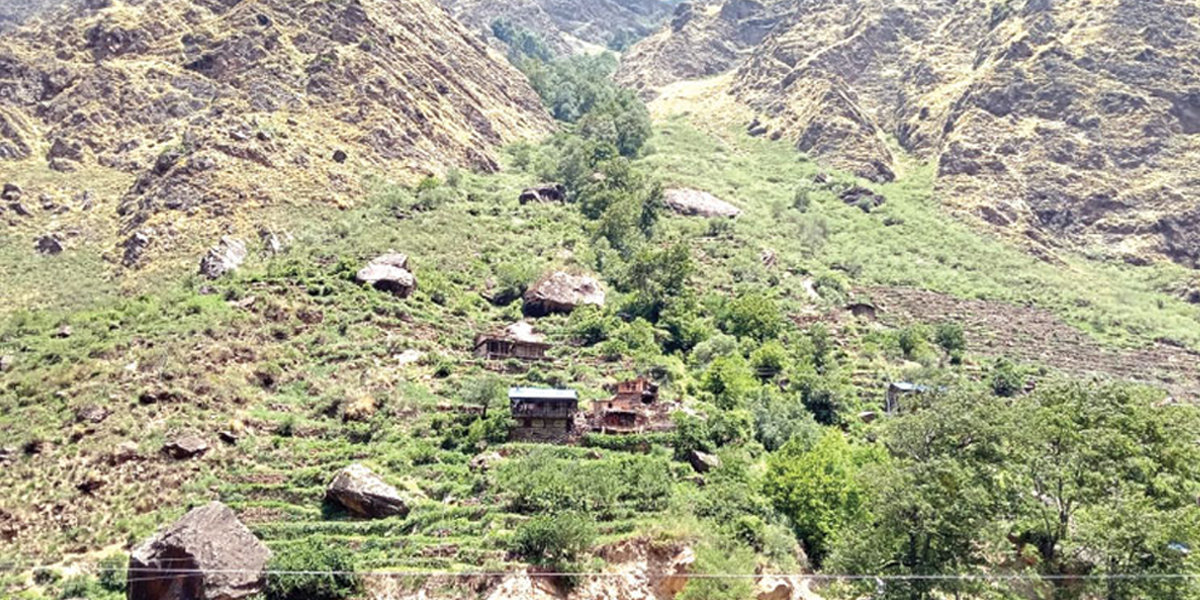
Karmarong Settlement and territories of 13 villages have their own toponyms and loconyms in their own mother language. However, they have different names, each one in the record and Karmarong language. While talking to Sonam, Urgin, Pasang Tshiring and RM chair on the way, Karmarong settlement and habitation is an area rich with great potential. This area is known as an area with great potential for indigenous herbs, crops, wildlife, dances, folk lifestyle, history and identity, as well as tourism scopes. The important herbs found in this area are Yarsagumba, Panch-aunle, Guchchi Mushroom, Satuwa, Chiraito, Forest Garlic, Jimbu, Bhalte, Kutki, Padamachalnu. The roots, bark, leaves, fruits, flowers, seeds, fluid etc. of these plants are all used as medicines.
The indigenous crops found in this area include Chino (porso millet), Kod (finger millet), Phapar (buckwheat), Kaguno (foxtail millet), Latte (amaranthus), Uwa (naked millet). In addition, Sisnu (stinging nettle) is found everywhere. There is a possibility of integrating Sisnu along with other crops into local domestic production and entrepreneurship. Similarly, wild animals including leopards, bears, deer, buffaloes, gorals, jackals, cheetah, and domestic animals including yaks, zopas, zumas, goats, sheep, and bhote dogs are found here. Karmarong also belongs to the Mongolian and Bhot Burmese language families based on ethnicity. Since they live in the northern Himalayan hilly Jadan region of western Nepal, the Pahari people call Karmarong Bhote or Jadan (Bhot), while those living in southern Khasan are called Mon/Mhon. The center of the northern Jadan civilisation is Totngri or the prehistoric period of Xiangxyung in western Bhot, while the center of the southern Khasan civilisation is Sinja in Jumla and Dullu in Dailekh. The Karnali civilisation is the integrated civilisation of Bhot and Mon, Jadan and Khasan.
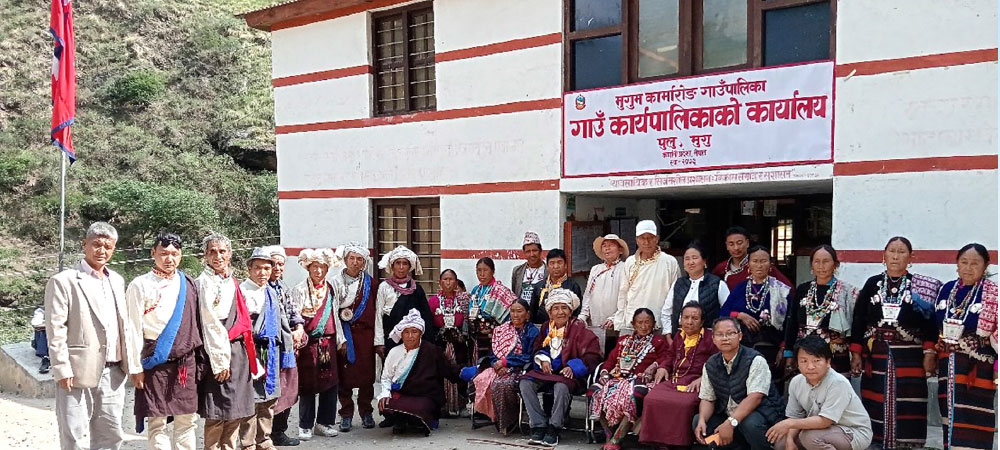
According to the group discussion (2083), the Khas practice Masto and the Jad practice Hyulsa. The Khas are influenced by Indian Hinduism and the Jad by Tibetan Buddhism. Both the Masto and Hyulsa are nature-worshipping Bon or Phons. Over time, Bons are divided into the White Bon and the Black Bon in two branches. The Black Bon, the Mhon, Mhonpa or Khas, appear to have been hinduised and believe in sacrificial worship, while the White Bon, the Phot, Photpa or Jad, and appear to have been Buddhists who believe in non-violence. According to legend, in ancient times, the north-western Himalayan part of present-day Dolpa, the mountain range in the gorge between the Bheri and Karnali rivers, and the watershed area are the origins of Karmarong. In ancient times, Choja was a hunter-wrestler. When he lost a game of wrestling, he lost his four sons to the forest god Karmi Hyulsa. This place is located in Tokjong, Kirmi. Later, after Choja accepted Karmi Hyulsa as a deity, the ancestors of Karmarong have been worshiping Karmi Hyulsa in a clean cave inside a forest covered with trees. The main livelihood of Karmarong is agriculture and animal husbandry. The community raises yaks, cows, sheep, and goats. They raise livestock for manure, ghee, milk, meat, wool, and transportation. Sheep, goats, and Zopas are used for the Himalayan transportation. Honey and salt are exchanged. They make yarn from sheep wool and goat hair and make Liu Matiya, Karak, Dhobo, and Kangja. They sell ready-made goods such as Kamlo and Makcho bags to the Khasan and exchange them for grain or money.
They import sheep and goats from Tibet and sell them in Pokhara. They import salt from Tibet and sell it in the Khasan region. They bring utensils from India and sell them in the villages. The villagers make Konba, Tikcha, Tholma Bhar, and Chujak from reeds. Some people give grain when selling, while others give cash. Long ago, people made a living by extracting copper from the copper mines of Dolfu. There is a custom of exchanging the oil from the Chuli fruit for grain in other villages.
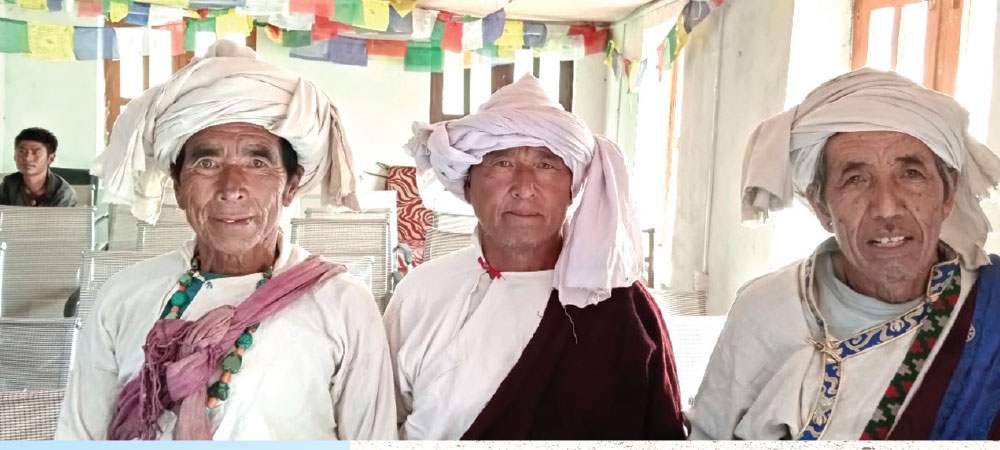
The community has Lakri and Tangri customary laws for the protection, promotion, management and utilisation of forests. Eblang pilgrimage is important in terms of religious, cultural and tourism purposes.
Hindus call it Chhayanath, while Karmarongs call it Eblang. The scenic spot Tok, Puako Nechen religious pilgrimage site, historical Daura village stone (Tahra Sotung), biodiversity, observation of wild animals and birds, scenic mountain views, and Dolfu copper mine are famous for tourist excursions.
The problems in this area include infrastructure, roads, education, healthcare, drinking water, markets, etc. People from this region feel that they live in another country. They have hardly any connections with Kathmandu city. Even when facing such difficulties and hard times, they are seen living their own professions and life. If the development of infrastructure is linked with tourism on food, folk dances, costumes, landscape, scenic views, and the healthy environment of the Karmarong community, then only employment opportunities will be created and their history and folklore will also flourish in the days to come.