

KATHMANDU: Environmental and water resource experts have urged the Kathmandu Metropolitan City (KMC) to reduce its reliance on long-distance water supply systems by prioritizing rainwater harvesting and groundwater recharge to address the Valley’s growing water crisis.
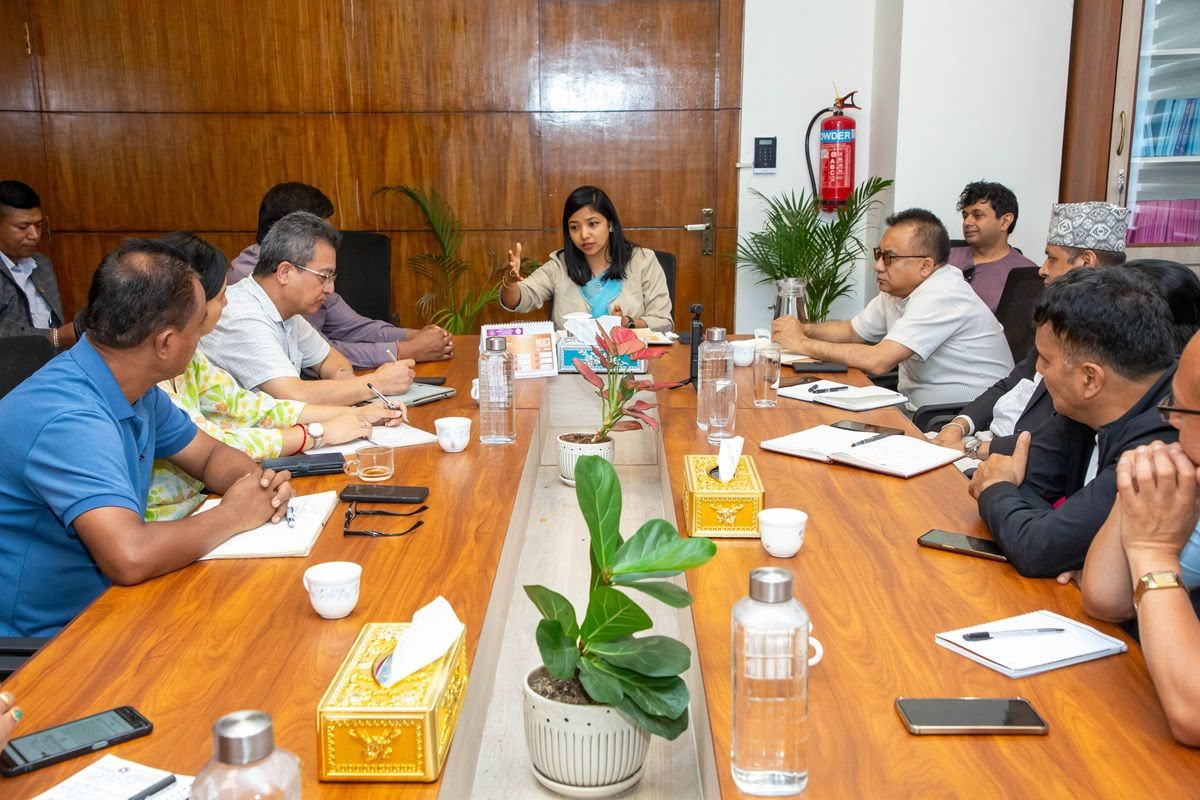
The recommendation was made during a consultation convened by Acting Mayor Sunita Dangol to discuss policies and programs aimed at ensuring sustainable water security and preserving Kathmandu’s blue landscape.
Experts stressed that stabilizing and restoring the city’s declining groundwater table should be an immediate priority. Dangol called for an integrated approach involving government agencies, citizens and civil society, saying water conservation is a shared responsibility rather than an optional initiative.
The meeting brought together officials from KMC’s Urban Planning Commission and departments responsible for infrastructure, urban management, environment, heritage, education and information technology to strengthen interdepartmental coordination.
Urban Planning Commission Vice-Chair Dr. Suman Narasingh Rajbhandari said the city would review previous studies on water conservation and undertake additional research where necessary to develop evidence-based policies.
Water heritage expert Padma Sundar Joshi highlighted Kathmandu’s unique geological conditions, noting that the Valley’s black clay layer is highly suitable for natural groundwater storage. He warned that Kathmandu could face a severe water shortage if the 27-kilometer tunnel supplying Melamchi water is disrupted due to technical problems or climate-related events.
Joshi also urged KMC to immediately ban deep borewells, arguing that restricting excessive groundwater extraction would significantly help protect underground water reserves. He emphasized that ensuring water quality is just as important as increasing water availability.
Experts further cautioned that groundwater recharge systems should be carefully designed to prevent chemicals and pollutants from roads from seeping into underground aquifers.
The discussion also covered technical requirements for groundwater recharge, public incentives, monitoring and evaluation mechanisms, institutional responsibilities, urban flooding, drinking water shortages, wastewater management, and the economic, social and environmental dimensions of water conservation. Officials agreed that future policies should build on past experience while adopting a coordinated, long-term strategy for sustainable urban water management.