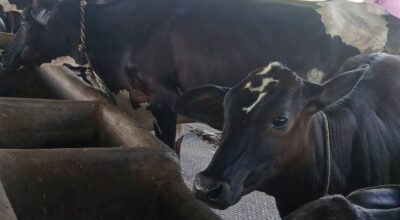


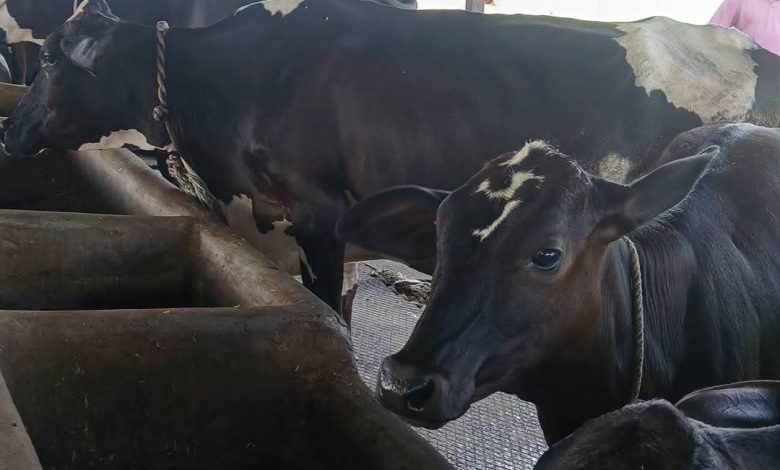
BHOJPUR: Farmers in Bhojpur are increasingly adopting artificial insemination to improve the quality of their cattle and buffaloes and raise milk and meat production.
The technique enables farmers to breed local livestock with improved varieties by using semen from high-quality breeds, resulting in more productive animals.
According to Manoj Pokharel, Information Officer at the Veterinary Hospital and Livestock Services Centre, artificial insemination was carried out on 180 cattle and buffaloes in the district in the last fiscal year.
Another 100 animals have received the service in the current fiscal year 2026/27, indicating a growing uptake of the technique, Pokharel informed.
In a bid to bring the service closer to farming communities, the Centre has been dispatching technical teams to farmers’ homes and livestock sheds, sparing them the hassle of transporting their animals to the service centre, he added.
Farmers are charged Rs 1,000 for artificial insemination in cows and Rs 1,500 for buffaloes, Pokharel said.
The Centre offers Murrah buffalo semen and Holstein or Jersey cattle semen, allowing farmers to choose breeds according to their needs and preferences.
For Upendra Karki of Pokhare, Bhojpur Municipality-8, the service has made livestock breeding considerably easier.
Having used artificial insemination on his cows twice, he said the improved-breed semen had helped increase milk production.
Previously, farmers had to look for suitable bulls or buffaloes for natural breeding, a process that was often difficult and time-consuming.
Artificial insemination has eased that burden, while doorstep technical support has made the service more convenient, Information Officer Karki said.
Centre Chief Pushpa Raj Dahal explained that artificial insemination not only helps upgrade livestock breeds and improve productivity but also gives farmers the flexibility to select breeds suited to their farming objectives.
Technicians additionally guide farmers on the appropriate timing for insemination and provide essential animal health advice.
The Centre hopes wider access to the service will make livestock farming more productive and strengthen its role as a dependable source of income, particularly for dairy farmers.